


The intersection between host-pathogen interactions and metabolism during Vibrio cholerae infection
- PMID: 38215547
- PMCID: PMC12077413
- DOI: 10.1016/j.mib.2023.102421
The intersection between host-pathogen interactions and metabolism during Vibrio cholerae infection
Abstract
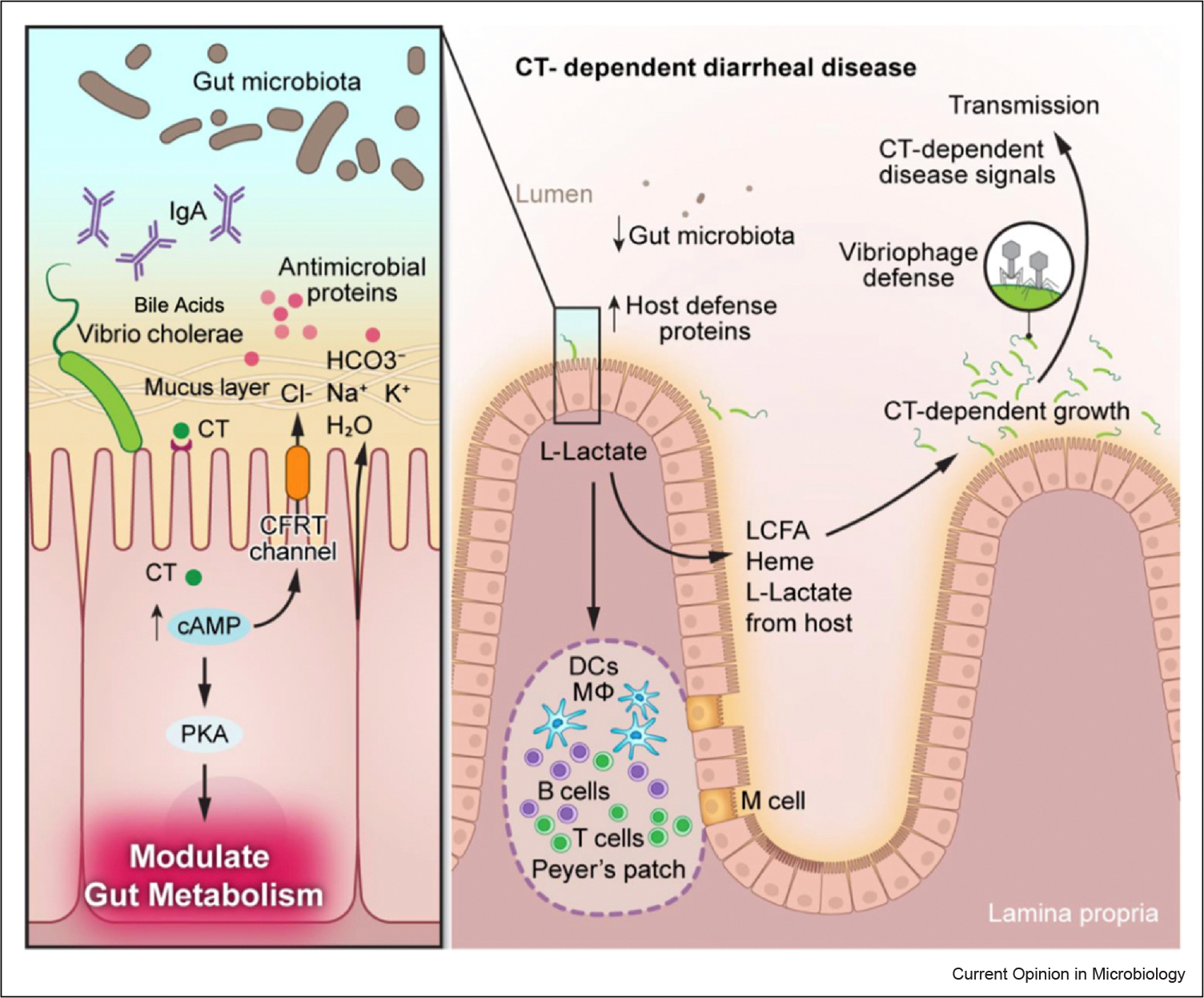
Vibrio cholerae (V. cholerae), the etiological agent of cholera, uses cholera toxin (CT) to cause severe diarrheal disease. Cholera is still a significant cause of mortality worldwide with about half of all cholera cases and deaths occurring in children under five. Owing to the lack of cost-effective vaccination and poor vaccine efficacy in children, there is a need for alternative preventative and therapeutic strategies. Recent advances in our knowledge of the interplay between CT-induced disease and host-pathogen metabolism have opened the door for investigating how modulation of intestinal metabolism by V. cholerae during disease impacts host intestinal immunity, the gut microbiota, and pathogen-phage interactions. In this review article, we examine recent progress in our understanding of host-pathogen interactions during V. cholerae infection and discuss future work deciphering how modulation of gut metabolism during cholera intersects these processes to enable successful fecal-oral transmission of the pathogen.
Published by Elsevier Ltd.
Conflict of interest statement
Declaration of Competing Interest The authors declare no competing interests.
Figures
References
Publication types
MeSH terms
Substances
Grants and funding
LinkOut - more resources
Full Text Sources
Medical
