


Application of the Boruta algorithm to assess the multidimensional determinants of malnutrition among children under five years living in southern Punjab, Pakistan
- PMID: 38216908
- PMCID: PMC10787446
- DOI: 10.1186/s12889-024-17701-z
Application of the Boruta algorithm to assess the multidimensional determinants of malnutrition among children under five years living in southern Punjab, Pakistan
Abstract
Background: Malnutrition causes nutrient deficiencies that have both physical and clinical consequences in severe acute malnutrition children. Globally, there were 47 million wasted children under the age of five in 2019. One in four were located in sub-Saharan Africa, with half being in South Asia. This study aims to apply the Boruta algorithm to identify the determinants of undernutrition among children under five living in Dera Ghazi Khan, one of the marginalized districts of densely populated Punjab Province in Pakistan.
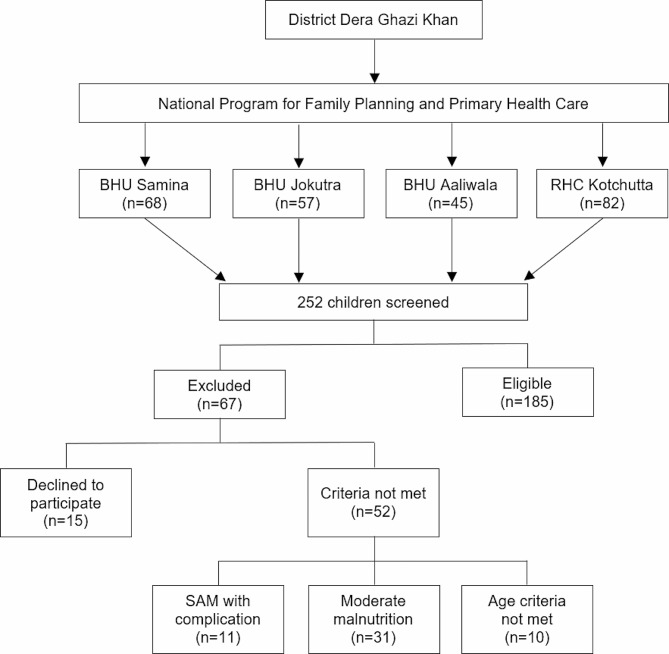
Methods: A multicenter cross-sectional study design was used to collect data from 185 children with severe acute malnutrition aged under five years visiting the OTPs centers located in Dera Ghazi Khan, Punjab, Pakistan. A purposive sampling technique was used to collect data using a pretested structured questionnaire from parents/caregivers regarding family sociodemographic characteristics, child nutrition, and biological and healthcare characteristics. Anthropometric measurements, including height, weight, and mid-upper arm circumference, were collected. The Boruta models were used to incorporate the children's anthropometric, nutritional, and household factors to determine the important predictive variables for undernutrition using the Boruta package in R studio.
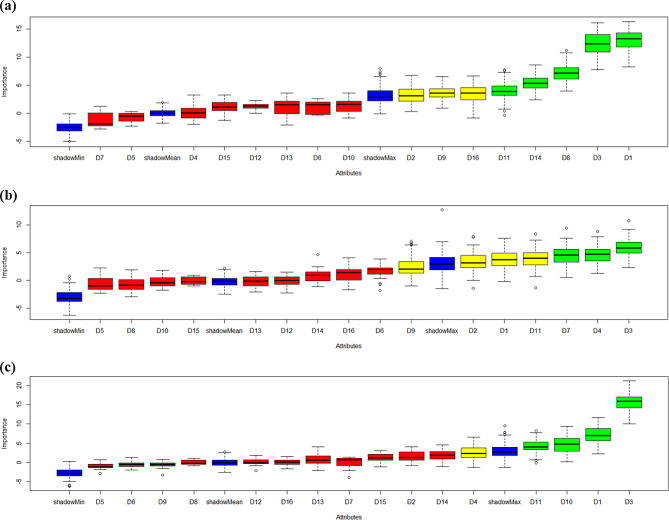
Results: This study included 185 children, with a mean age of 15.36 ± 10.23 months and an MUAC of 10.19 ± 0.96 cm. The Boruta analysis identifies age, mid-upper arm circumference, weaning practices, and immunization status as important predictors of undernutrition. Income per month, exclusive breastfeeding, and immunization status were found to be key factors of undernutrition in children under the age of five.
Conclusion: This study highlights age, mid-upper arm circumference, weaning practices, and immunization status as key determinants of weight-for-height and weight-for-age in children under five years. It also suggests that economic context may influence undernutrition. The findings can guide targeted strategies for combating undernutrition.
Keywords: Malnutrition; Stunting; Undernutrition; Wasting.
© 2024. The Author(s).
Conflict of interest statement
RZ and FF are Associate Editors at BMC Public Health. All the other authors declare no conflict of interest.
Figures
References
-
- WHO child growth standards and the identification of severe acute malnutrition in infants and children: a joint statement by the World Health Organization and the United Nations children’s fund. Geneva: World Health Organization; 2009. Available from: http://www.ncbi.nlm.nih.gov/books/NBK200775/ - PubMed
-
- Levels and trends in child malnutrition: UNICEF/WHO/The world bank group joint child malnutrition estimates. Key findings of the 2021 edition. Available from: https://www.who.int/publications-detail-redirect/9789240025257
-
- Key findings of National Nutrition Survey Pakistan. 2018. UNICEF; 2019; Available from: https://www.unicef.org/pakistan/media/1951/file/Final
Publication types
MeSH terms
LinkOut - more resources
Full Text Sources
Medical
