


Phenotypic and genotypic assessment of iron acquisition in diverse bovine-associated non-aureus staphylococcal strains
- PMID: 38217046
- PMCID: PMC10785429
- DOI: 10.1186/s13567-023-01260-z
Phenotypic and genotypic assessment of iron acquisition in diverse bovine-associated non-aureus staphylococcal strains
Abstract
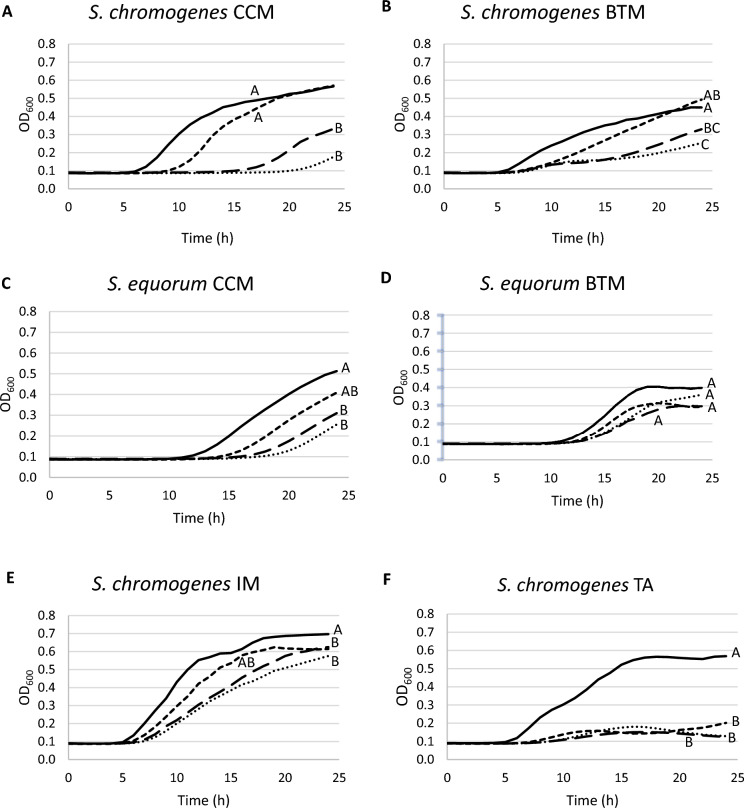
Although the role of iron in bacterial infections has been well described for Staphylococcus (S.) aureus, iron acquisition in (bovine-associated) non-aureus staphylococci and mammaliicocci (NASM) remains insufficiently mapped. This study aimed at elucidating differences between four diverse bovine NASM field strains from two species, namely S. chromogenes and S. equorum, in regards to iron uptake (with ferritin and lactoferrin as an iron source) and siderophore production (staphyloferrin A and staphyloferrin B) by investigating the relationship between the genetic basis of iron acquisition through whole genome sequencing (WGS) with their observed phenotypic behavior. The four field strains were isolated in a previous study from composite cow milk (CCM) and bulk tank milk (BTM) in a Flemish dairy herd. Additionally, two well-studied S. chromogenes isolates originating from a persistent intramammary infection and from a teat apex were included for comparative purpose in all assays. Significant differences between species and strains were identified. In our phenotypical iron acquisition assay, while lactoferrin had no effect on growth recovery for all strains in iron deficient media, we found that ferritin served as an effective source for growth recovery in iron-deficient media for S. chromogenes CCM and BTM strains. This finding was further corroborated by analyzing potential ferritin iron acquisition genes using whole-genome sequencing data, which showed that all S. chromogenes strains contained hits for all three proposed ferritin reductive pathway genes. Furthermore, a qualitative assay indicated siderophore production by all strains, except for S. equorum. This lack of siderophore production in S. equorum was supported by a quantitative assay, which revealed significantly lower or negligible siderophore amounts compared to S. aureus and S. chromogenes. The WGS analysis showed that all tested strains, except for S. equorum, possessed complete staphyloferrin A (SA)-synthesis and export operons, which likely explains the phenotypic absence of siderophore production in S. equorum strains. While analyzing the staphyloferrin A and staphyloferrin B operon landscapes for all strains, we noticed some differences in the proteins responsible for iron acquisition between different species. However, within strains of the same species, the siderophore-related proteins remained conserved. Our findings contribute valuable insights into the genetic elements associated with bovine NASM pathogenesis.
Keywords: Dairy cows; Staphylococcus chromogenes; Staphylococcus equorum; WGS; ferritin; iron-acquisition; lactoferrin; mastitis; non-aureus staphylococci; siderophore.
© 2024. The Author(s).
Conflict of interest statement
The authors declare that they have no competing interests.
Figures


References
-
- Hogeveen H, Steeneveld W, Wolf CA. Production diseases reduce the efficiency of dairy production: a review of the results, methods, and approaches regarding the economics of mastitis. Annu Rev Resour Econ. 2019;11:289–312.
-
- Madhaiyan M, Wirth JS, Saravanan VS. Phylogenomic analyses of the Staphylococcaceae family suggest the reclassification of five species within the genus Staphylococcus as heterotypic synonyms, the promotion of five subspecies to novel species, the taxonomic reassignment of five Staphylococcus species to Mammaliicoccus gen. nov., and the formal assignment of Nosocomiicoccus to the family Staphylococcaceae. Int J Syst Evol Microbiol. 2020;70:5926–5936. - PubMed
-
- Valckenier D, Piepers S, De Visscher A, Bruckmaier RM, De Vliegher S. Effect of intramammary infection with non-aureus staphylococci in early lactation in dairy heifers on quarter somatic cell count and quarter milk yield during the first 4 months of lactation. J Dairy Sci. 2019;102:6442–6453. - PubMed
-
- Valckenier D, Piepers S, De Visscher A, De Vliegher S. The effect of intramammary infection in early lactation with non-aureus staphylococci in general and Staphylococcus chromogenes specifically on quarter milk somatic cell count and quarter milk yield. J Dairy Sci. 2020;103:768–782. - PubMed
-
- Valckenier D, Piepers S, Schukken YH, De Visscher A, Boyen F, Haesebrouck F, De Vliegher S. Longitudinal study on the effects of intramammary infection with non-aureus staphylococci on udder health and milk production in dairy heifers. J Dairy Sci. 2021;104:899–914. - PubMed
MeSH terms
Substances
LinkOut - more resources
Full Text Sources
Medical
Molecular Biology Databases
Miscellaneous
