


CompARE: study protocol for a phase III randomised controlled platform trial comparing alternative regimens for escalating treatment of intermediate and high-risk oropharyngeal cancer
- PMID: 38221636
- PMCID: PMC10788973
- DOI: 10.1186/s13063-023-07881-1
CompARE: study protocol for a phase III randomised controlled platform trial comparing alternative regimens for escalating treatment of intermediate and high-risk oropharyngeal cancer
Abstract
Background: Patients with intermediate and high-risk oropharyngeal cancer (OPC) have poorer response to standard treatment and poorer overall survival compared to low-risk OPC. CompARE is designed to test alternative approaches to intensified treatment for these patients to improve survival.
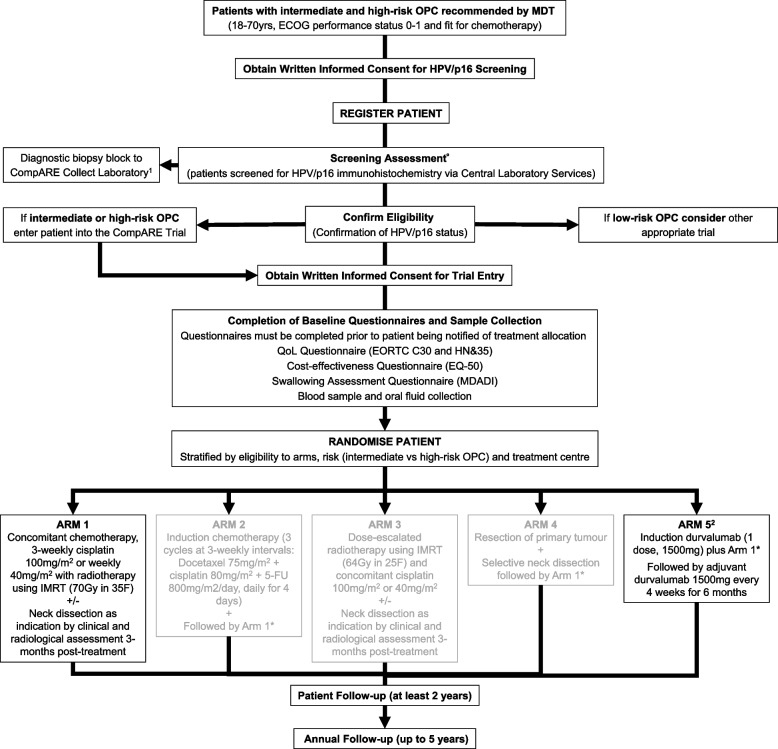
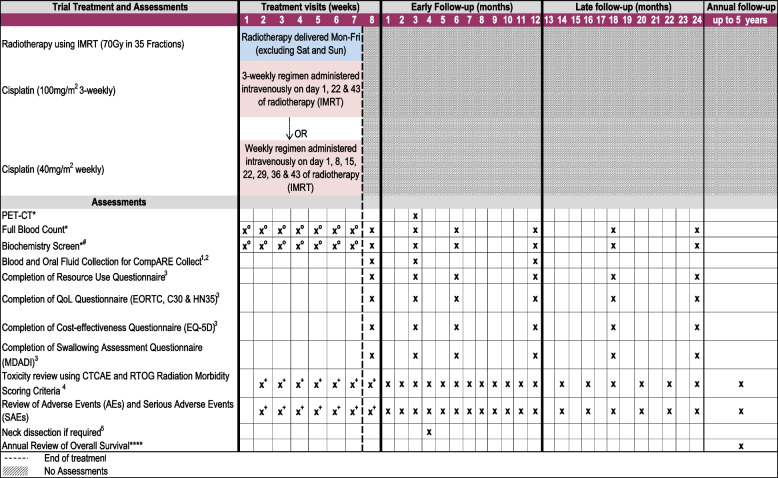
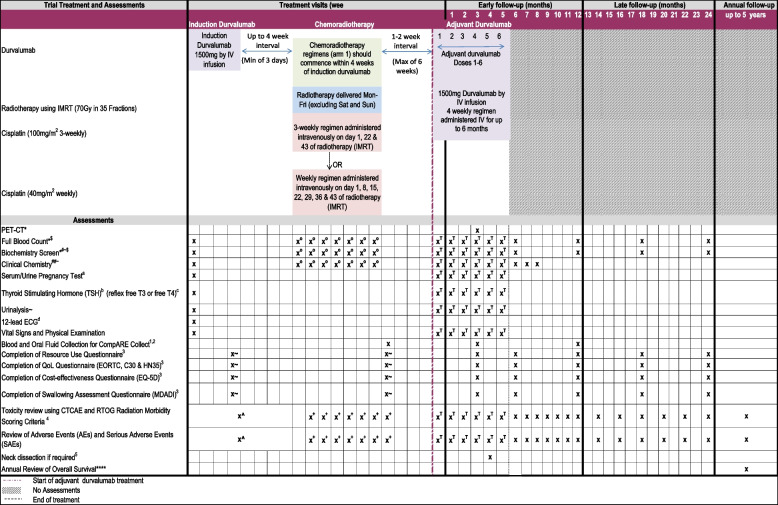
Methods: CompARE is a pragmatic phase III, open-label, multicenter randomised controlled trial with an adaptive multi-arm, multi-stage design and an integrated QuinteT Recruitment Intervention. Eligible OPC patients include those with human papillomavirus (HPV) negative, T1-T4, N1-N3 or T3-4, N0, or HPV positive N3, T4, or current smokers (or ≥ 10 pack years previous smoking history) with T1-T4, N2b-N3. CompARE was originally designed with four arms (one control [arm 1] and three experimental: arm 2-induction chemotherapy followed by arm 1; arm 3-dose-escalated radiotherapy plus concomitant cisplatin; and arm 4-resection of primary followed by arm 1). The three original experimental arms have been closed to recruitment and a further experimental arm opened (arm 5-induction durvalumab followed by arm 1 and then adjuvant durvalumab). Currently recruiting are arm 1 (control): standard treatment of 3-weekly cisplatin 100 mg/m2 or weekly 40 mg/m2 with intensity-modulated radiotherapy using 70 Gy in 35 fractions ± neck dissection determined by clinical and radiological assessment 3 months post-treatment, and arm 5 (intervention): one cycle of induction durvalumab 1500 mg followed by standard treatment then durvalumab 1500 mg every 4 weeks for a total of 6 months. The definitive and interim primary outcome measures are overall survival time and event-free survival (EFS) time, respectively. Secondary outcome measures include quality of life, toxicity, swallowing outcomes, feeding tube incidence, surgical complication rates, and cost-effectiveness. The design anticipates that after approximately 7 years, 84 required events will have occurred to enable analysis of the definitive primary outcome measure for this comparison. Planned interim futility analyses using EFS will also be performed.
Discussion: CompARE is designed to be efficient and cost-effective in response to new data, emerging new treatments or difficulties, with the aim of bringing new treatment options for these patients.
Trial registration: ISRCTN ISRCTN41478539 . Registered on 29 April 2015.
Keywords: Adaptive multi-arm multi-stage design; Clinical trial; Oropharyngeal cancer; QuinteT recruitment intervention.
© 2024. The Author(s).
Conflict of interest statement
HM received honoraria from AstraZeneca and travel support from Merck and has been on advisory boards for Eisai Inc., Nanobiotix, and Merck. AK has received fees for consulting, advisory, speaker’s roles, and/or research funding from PUMA BioTechnology, AstraZeneca, Merck, MSD, Bristol-Myers Squibb, and Avvinity Therapeutics. HM, PG, AH, PS, MF, MS, and VP received funds from Cancer Research UK and AstraZeneca to fund this study. All other authors declare that they have no competing interests.
Figures
References
Publication types
MeSH terms
Substances
Grants and funding
LinkOut - more resources
Full Text Sources
Miscellaneous
