


Doxorubicin-induced cardiotoxicity and risk factors
- PMID: 38222069
- PMCID: PMC10784684
- DOI: 10.1016/j.ijcha.2023.101332
Doxorubicin-induced cardiotoxicity and risk factors
Abstract
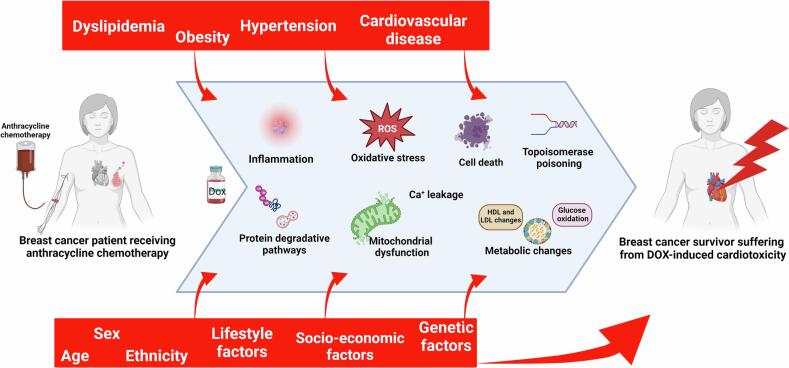
Doxorubicin (DOX) is an anthracycline antibiotic widely used as a chemotherapeutic agent to treat solid tumours and hematologic malignancies. Although useful in the treatment of cancers, the benefit of DOX is limited due to its cardiotoxic effect that is observed in a large number of patients. In the literature, there is evidence that the presence of various factors may increase the risk of developing DOX-induced cardiotoxicity. A better understanding of the role of these different factors in DOX-induced cardiotoxicity may facilitate the choice of the therapeutic approach in cancer patients suffering from various cardiovascular risk factors. In this review, we therefore discuss the latest findings in both preclinical and clinical research suggesting a link between DOX-induced cardiotoxicity and various risk factors including sex, age, ethnicity, diabetes, dyslipidaemia, obesity, hypertension, cardiovascular disease and co-medications.
Keywords: Cardiovascular risk; Chemotherapy; Diabetes; Doxorubicin; Toxicity.
© 2023 The Authors.
Conflict of interest statement
The authors declare that they have no known competing financial interests or personal relationships that could have appeared to influence the work reported in this paper.
Figures

References
-
- World Health Organisation, Cancer, WHO Press, Geneva, 2021 [updated 21 September, Available from: https://www.who.int/news-room/fact-sheets/detail/cancer.
LinkOut - more resources
Full Text Sources
