


Compressive sensing for polarization sensitive optical coherence tomography
- PMID: 38222471
- PMCID: PMC10786634
- DOI: 10.1088/1361-6463/abf958
Compressive sensing for polarization sensitive optical coherence tomography
Abstract
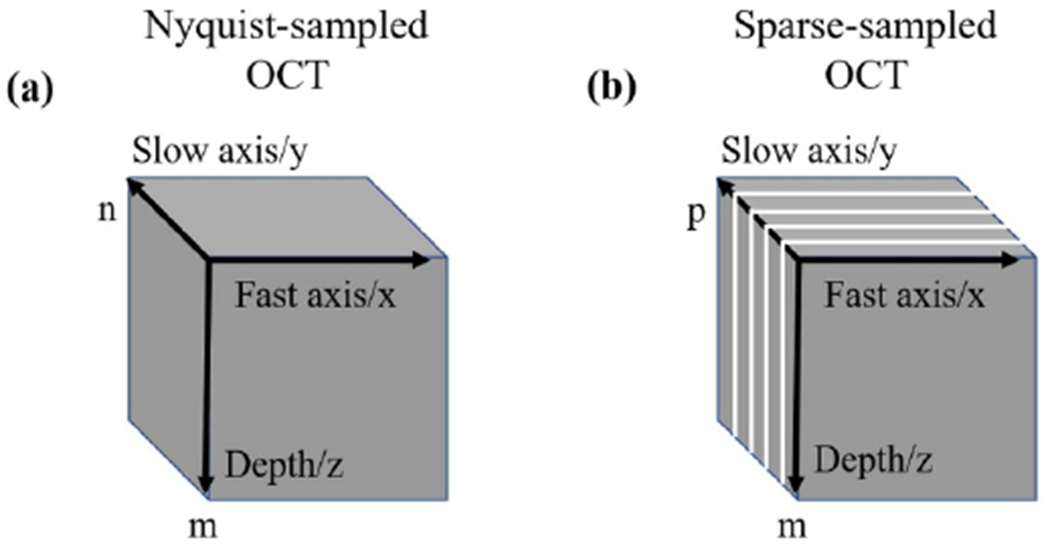
In this report, we report on the implementation of compressive sensing (CS) and sparse sampling in polarization sensitive optical coherence tomography (PS-OCT) to reduce the number of B-scans (frames consisting of an array of A-scans, where each represents a single depth profile of reflections) required for effective volumetric (3D dataset composed of an array of B-scans) PS-OCT measurements (i.e. OCT intensity, and phase retardation) reconstruction. Sparse sampling of PS-OCT is achieved through randomization of step sizes along the slow-axis of PS-OCT imaging, covering the same spatial ranges as those with equal slow-axis step sizes, but with a reduced number of B-scans. Tested on missing B-scan rates of 25%, 50% and 75%, we found CS could reconstruct reasonably good (as evidenced by a correlation coefficient >0.6) PS-OCT measurements with a maximum reduced B-scan rate of 50%, thereby accelerating and doubling the rate of volumetric PS-OCT measurements.
Keywords: compressive sensing; polarization sensitive optical coherence tomography; sparse sampling.
Conflict of interest statement
Conflict of interest S A B is co-founder of Diagnostic Photonics, Inc. which is commercializing interferometric synthetic aperture microscopy and OCT for intraoperative imaging applications.
Figures
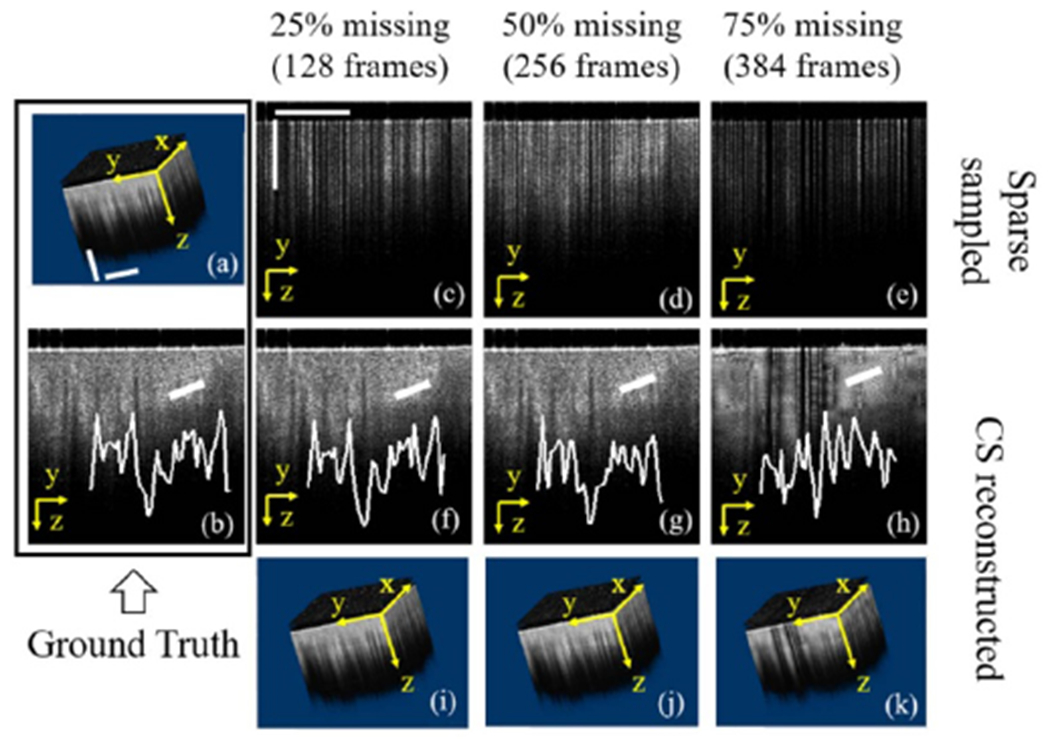
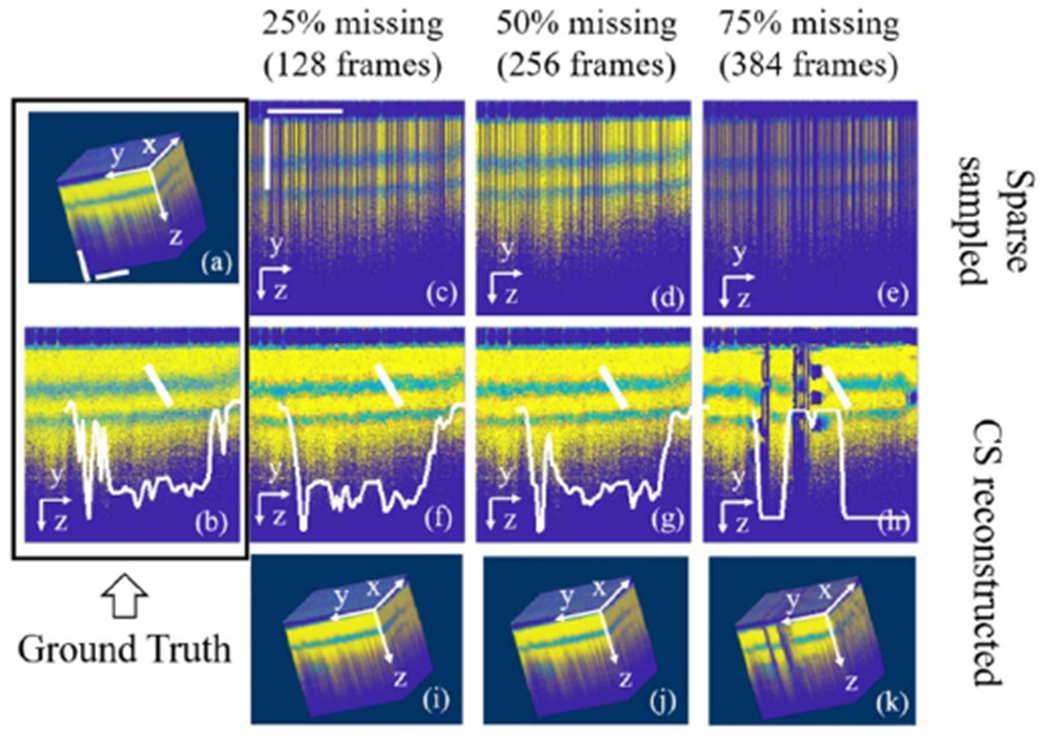
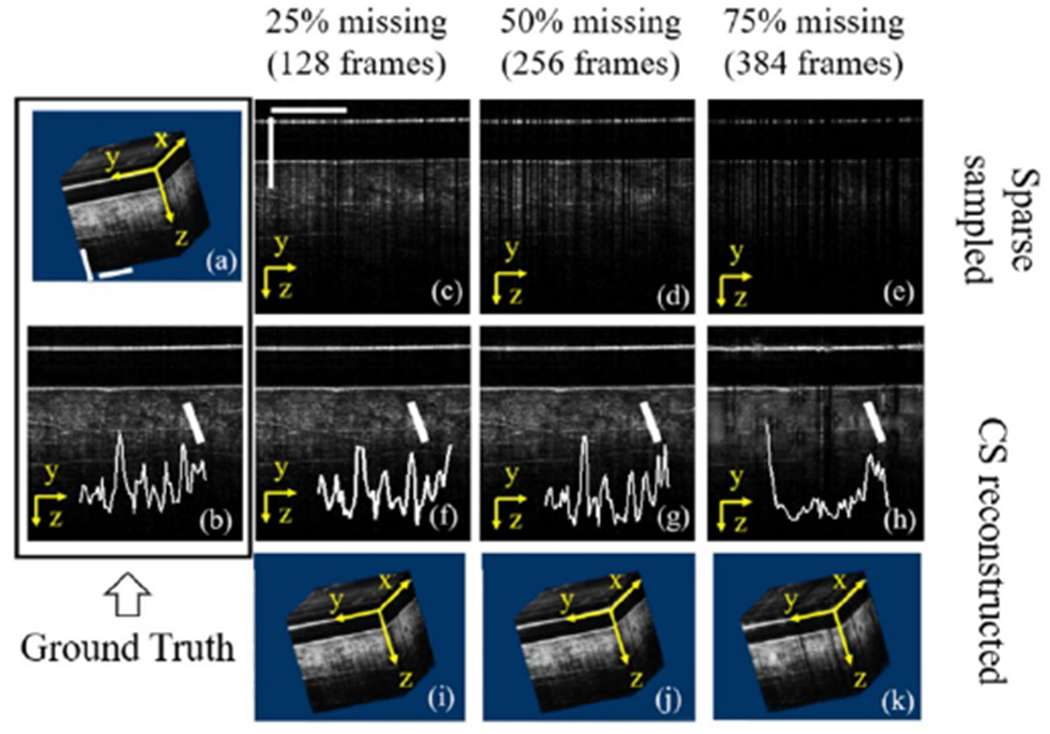
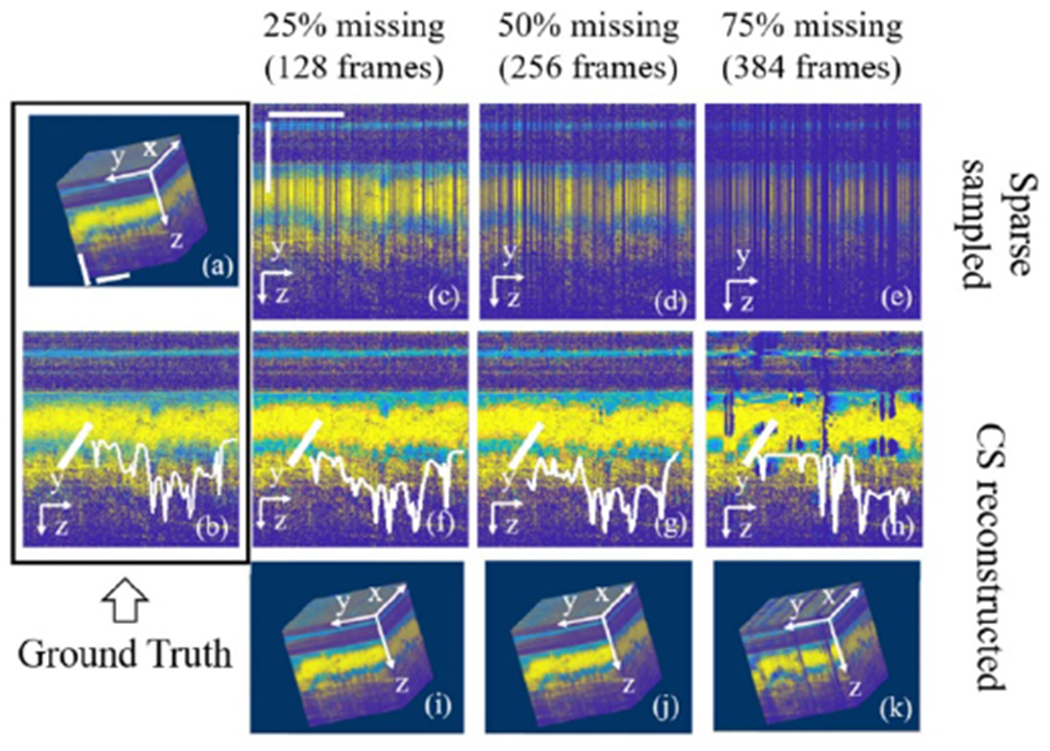
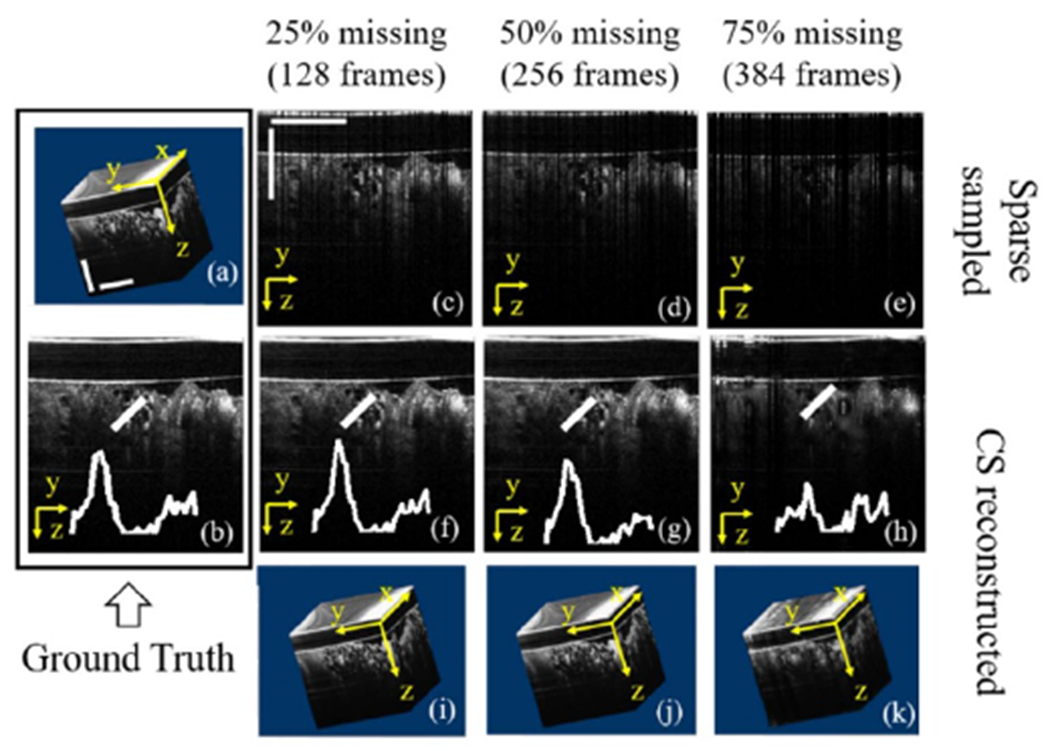
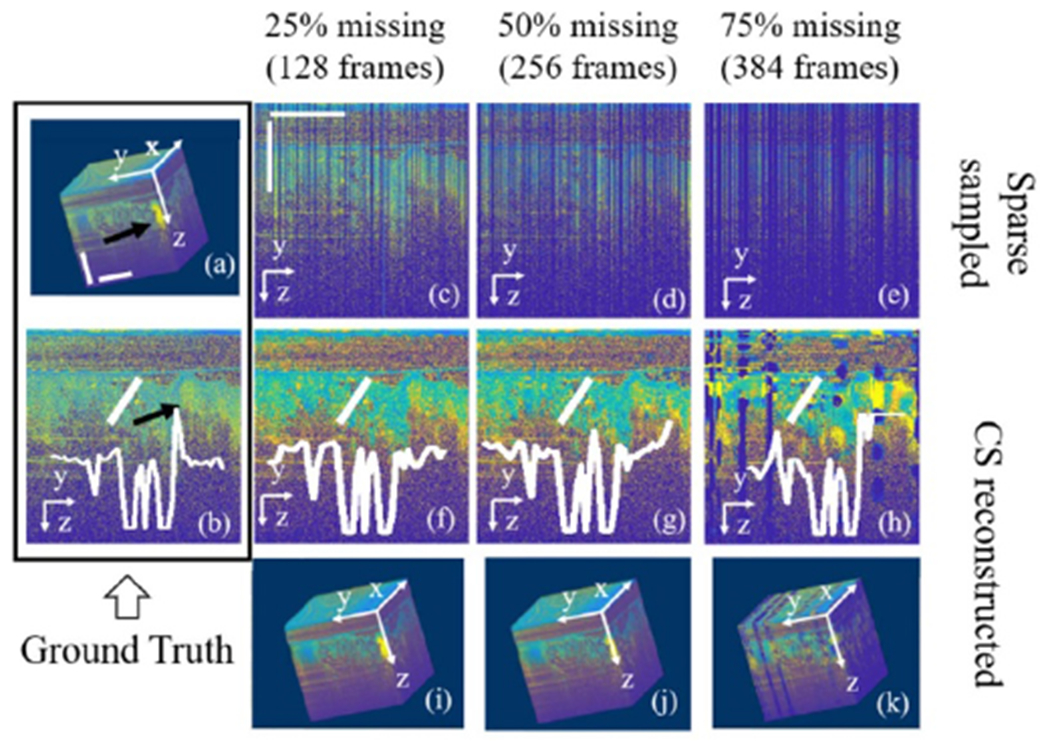
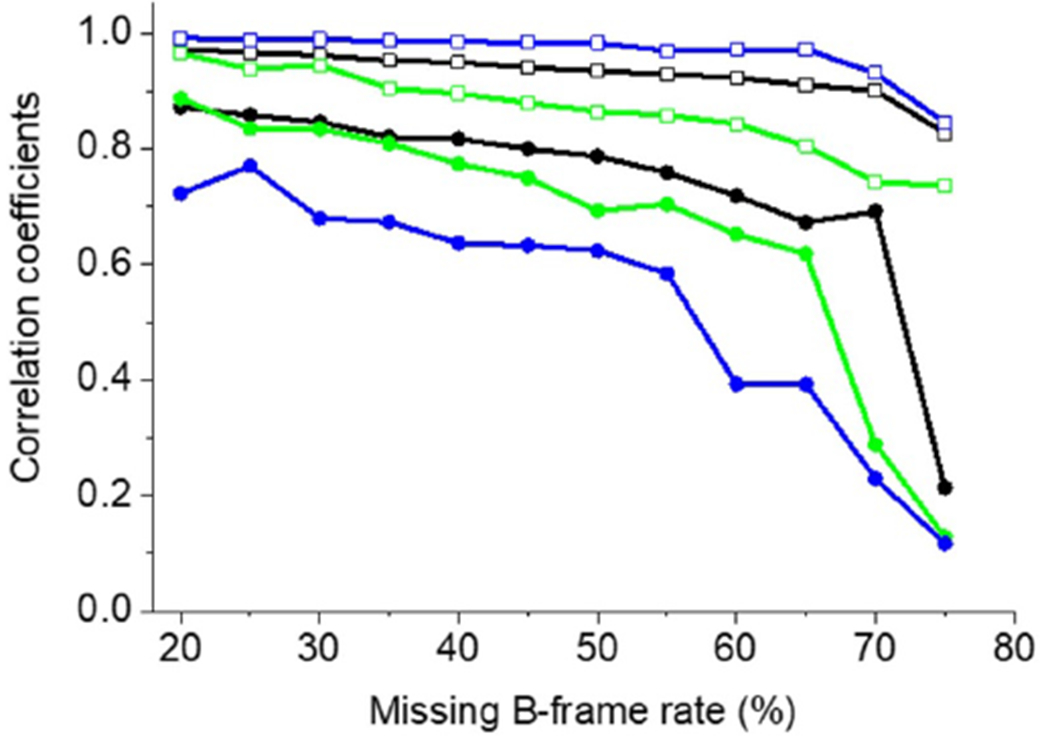
 ) and PS-OCT phase retardation (
 ) images, of molded plastics (green curves), ex vivo chicken breast (black curves), and ex vivo human breast tumor tissue (blue curves), versus missing B-scan rate.
References
Grants and funding
LinkOut - more resources
Full Text Sources