


Effects of Bacillus Calmette-Guérin on immunometabolism, microbiome and liver diseases⋆
- PMID: 38223885
- PMCID: PMC10786626
- DOI: 10.1016/j.livres.2023.05.001
Effects of Bacillus Calmette-Guérin on immunometabolism, microbiome and liver diseases⋆
Erratum in
-
Erratum regarding missing declaration of competing interest statements in previously published articles.Liver Res. 2023 Oct 3;7(3):272-273. doi: 10.1016/j.livres.2023.08.002. eCollection 2023 Sep. Liver Res. 2023. PMID: 39958383 Free PMC article.
Abstract
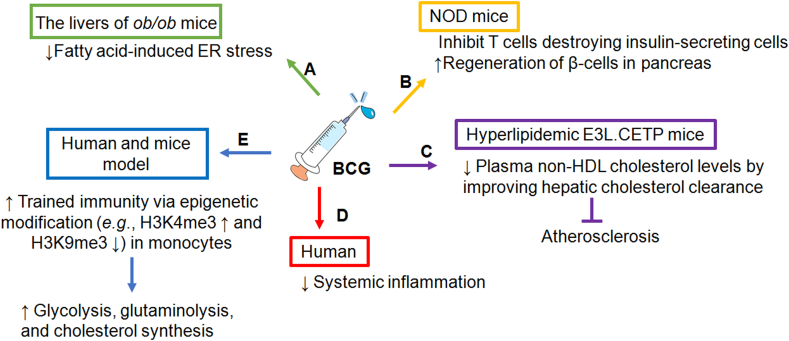
Metabolic diseases have overtaken infectious diseases as the most serious public health issue and economic burden in most countries. Moreover, metabolic diseases increase the risk of having infectious diseases. The treatment of metabolic disease may require a long-term strategy of taking multiple medications, which can be costly and have side effects. Attempts to expand the therapeutic use of vaccination to prevent or treat metabolic diseases have attracted significant interest. A growing body of evidence indicates that Bacillus Calmette-Guérin (BCG) offers protection against non-infectious diseases. The non-specific effects of BCG occur likely due to the induction of trained immunity. In this regard, understanding how BCG influences the development of chronic metabolic health including liver diseases would be important. This review focuses on research on BCG, the constellation of disorders associated with metabolic health issues including liver diseases and diabetes as well as how BCG affects the gut microbiome, immunity, and metabolism.
Keywords: Bacillus Calmette-Guérin (BCG); Diabetes; Gut microbiota; Liver disease; Metabolic diseases; Trained immunity; Vaccination.
Conflict of interest statement
Declarations of competing interest The authors declare that they have no conflict of interest
Figures

References
-
- Grundy S.M., Cleeman J.I., Daniels S.R., et al. Diagnosis and management of the metabolic syndrome: an American heart association/national heart, lung, and blood institute scientific statement: executive summary. Crit Pathw Cardiol. 2005;4:198–203. doi: 10.1097/00132577-200512000-00018. - DOI - PubMed