


Methodology for biomarker discovery with reproducibility in microbiome data using machine learning
- PMID: 38225565
- PMCID: PMC10789030
- DOI: 10.1186/s12859-024-05639-3
Methodology for biomarker discovery with reproducibility in microbiome data using machine learning
Abstract
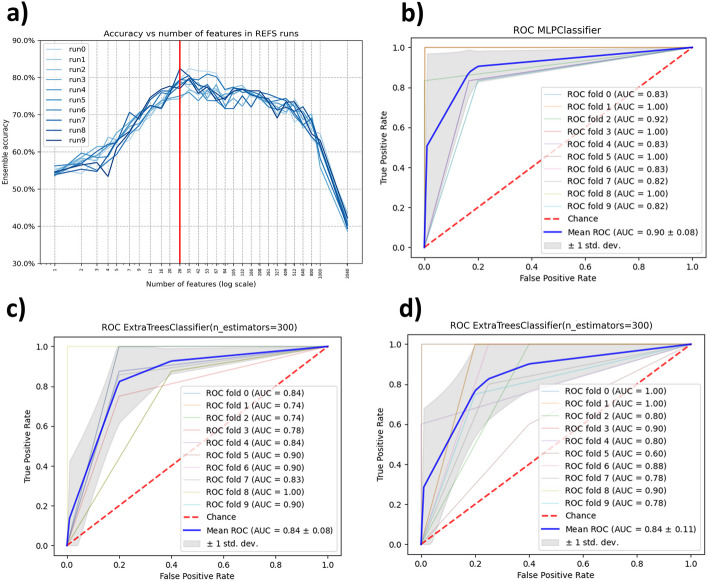
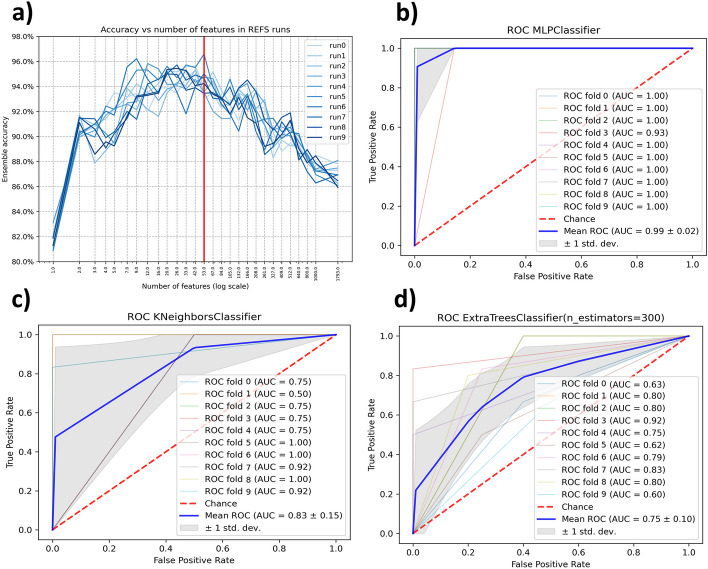
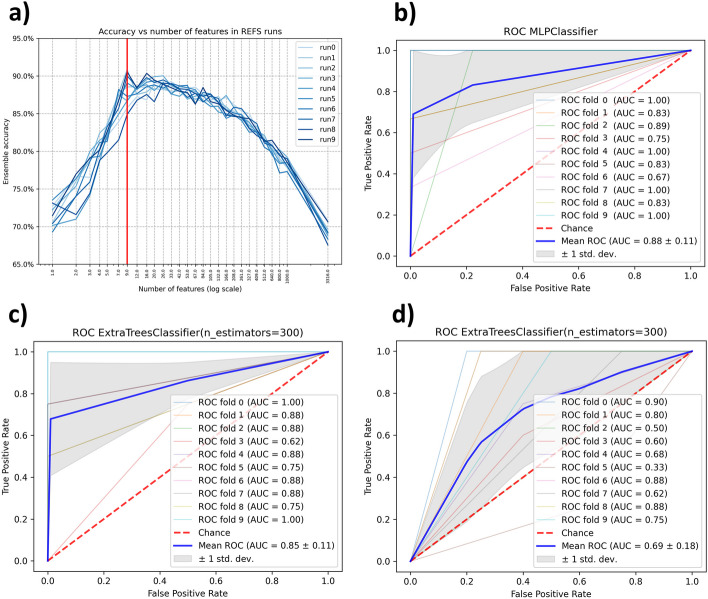
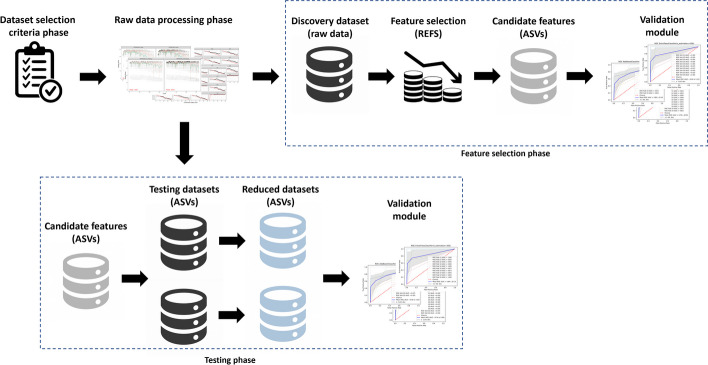
Background: In recent years, human microbiome studies have received increasing attention as this field is considered a potential source for clinical applications. With the advancements in omics technologies and AI, research focused on the discovery for potential biomarkers in the human microbiome using machine learning tools has produced positive outcomes. Despite the promising results, several issues can still be found in these studies such as datasets with small number of samples, inconsistent results, lack of uniform processing and methodologies, and other additional factors lead to lack of reproducibility in biomedical research. In this work, we propose a methodology that combines the DADA2 pipeline for 16s rRNA sequences processing and the Recursive Ensemble Feature Selection (REFS) in multiple datasets to increase reproducibility and obtain robust and reliable results in biomedical research.
Results: Three experiments were performed analyzing microbiome data from patients/cases in Inflammatory Bowel Disease (IBD), Autism Spectrum Disorder (ASD), and Type 2 Diabetes (T2D). In each experiment, we found a biomarker signature in one dataset and applied to 2 other as further validation. The effectiveness of the proposed methodology was compared with other feature selection methods such as K-Best with F-score and random selection as a base line. The Area Under the Curve (AUC) was employed as a measure of diagnostic accuracy and used as a metric for comparing the results of the proposed methodology with other feature selection methods. Additionally, we use the Matthews Correlation Coefficient (MCC) as a metric to evaluate the performance of the methodology as well as for comparison with other feature selection methods.
Conclusions: We developed a methodology for reproducible biomarker discovery for 16s rRNA microbiome sequence analysis, addressing the issues related with data dimensionality, inconsistent results and validation across independent datasets. The findings from the three experiments, across 9 different datasets, show that the proposed methodology achieved higher accuracy compared to other feature selection methods. This methodology is a first approach to increase reproducibility, to provide robust and reliable results.
Keywords: Machine learning; Microbiome; Reproducibility.
© 2024. The Author(s).
Conflict of interest statement
The authors declare that they have no competing interests.
Figures

References
MeSH terms
Substances
LinkOut - more resources
Full Text Sources
Medical
