


Does the birth plan match what is relevant to women? Preferences of Spanish women when giving birth
- PMID: 38225596
- PMCID: PMC10789003
- DOI: 10.1186/s12905-023-02856-5
Does the birth plan match what is relevant to women? Preferences of Spanish women when giving birth
Abstract
Background: To support women in making shared decisions, it is important to know what is relevant to them. The aim is to explore which of the options included in birth plans (BP) are of most interest to women, and which are more controversial. In addition, the possible association of this variability with personal characteristics.
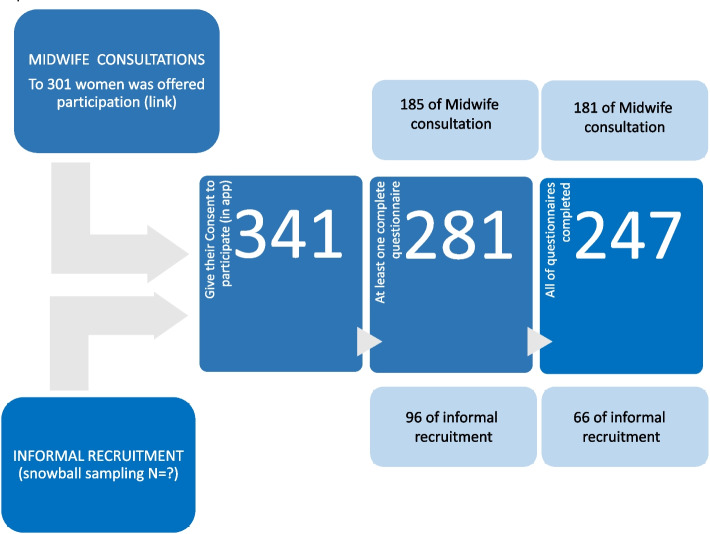
Methods: The data are part of a cross-sectional descriptive study, carried out in xxx, on the clinimetric characteristics of two instruments to measure women's needs in labour and postpartum. Women were recruited consecutively by their midwives during pregnancy check-ups, receive a link to a digital questionnaire and were allowed to provide links to the questionnaires to other pregnant women. Women were asked to determine their level of agreement with statements about the birth environment, accompaniment, pain relief, medical intervention and neonatal care. The relationship between agreement with each statement, socio-demographic variables and fear of childbirth (W-DEQ-A) was analysed using a combination of descriptive statistics to analyse frequencies, and regression models to test the effect of socio-demographic variables and fear of childbirth on those items with the greatest variability.
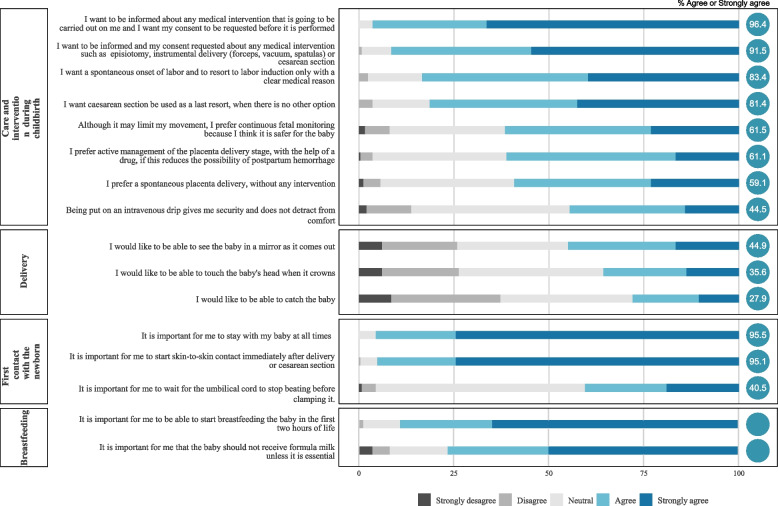
Results: Two hundred forty-seven women responded. More than 90% preferred a hospital delivery, with information about and control over medical intervention, accompanied by their partner and continuous skin-to-skin contact with the newborn. There are other questions to which women attach less importance or which show greater variability, related to more clinical aspects, like foetal monitoring, placenta delivery, or cord clamping… Various factors are related to this variability; parity, nationality, educational level, risk factor or fear of childbirth are the most important.
Conclusions: Some items referring to the need for information and participation are practically unanimous among women, while other items on technical interventions generate greater variability. That should make us think about which ones require a decision after information and which ones should be included directly. The choice of more interventional deliveries is strongly associated with fear of childbirth.
Keywords: Birth plan; Birth preference; Maternity care; Shared decision-making; women’s views.
© 2024. The Author(s).
Conflict of interest statement
The authors declare no competing interests.
Figures


References
-
- England NHS . Statutory guidance for clinical commissioning groups and NHS England. 2017. Involving people in their own health and care.
-
- Shareef N, Scholten N, Nieuwenhuijze M, Stramrood C, de Vries M, van Dillen J. The role of birth plans for shared decision-making around birth choices of pregnant women in maternity care: a scoping review. Women Birth. 2022:S1871–5192. - PubMed
Publication types
MeSH terms
LinkOut - more resources
Full Text Sources
Medical
