. 2024 Apr;38(4):741-750.
doi: 10.1038/s41375-024-02136-7. Epub 2024 Jan 16.

Inflammatory recruitment of healthy hematopoietic stem and progenitor cells in the acute myeloid leukemia niche

Affiliations

Inflammatory recruitment of healthy hematopoietic stem and progenitor cells in the acute myeloid leukemia niche

Ding-Wen Chen et al. Leukemia. 2024 Apr.

Abstract

Inflammation in the bone marrow (BM) microenvironment is a constitutive component of leukemogenesis in acute myeloid leukemia (AML). Current evidence suggests that both leukemic blasts and stroma secrete proinflammatory factors that actively suppress the function of healthy hematopoietic stem and progenitor cells (HSPCs). HSPCs are also cellular components of the innate immune system, and we reasoned that they may actively propagate the inflammation in the leukemic niche. In two separate congenic models of AML we confirm by evaluation of the BM plasma secretome and HSPC-selective single-cell RNA sequencing (scRNA-Seq) that multipotent progenitors and long-lived stem cells adopt inflammatory gene expression programs, even at low leukemic infiltration of the BM. In particular, we observe interferon gamma (IFN-γ) pathway activation, along with secretion of its chemokine target, CXCL10. We show that AML-derived nanometer-sized extracellular vesicles (EVAML) are sufficient to trigger this inflammatory HSPC response, both in vitro and in vivo. Altogether, our studies indicate that HSPCs are an unrecognized component of the inflammatory adaptation of the BM by leukemic cells. The pro-inflammatory conversion and long-lived presence of HSPCs in the BM along with their regenerative re-expansion during remission may impact clonal selection and disease evolution.


Conflict of interest statement

The authors declare no competing interests.

Figures
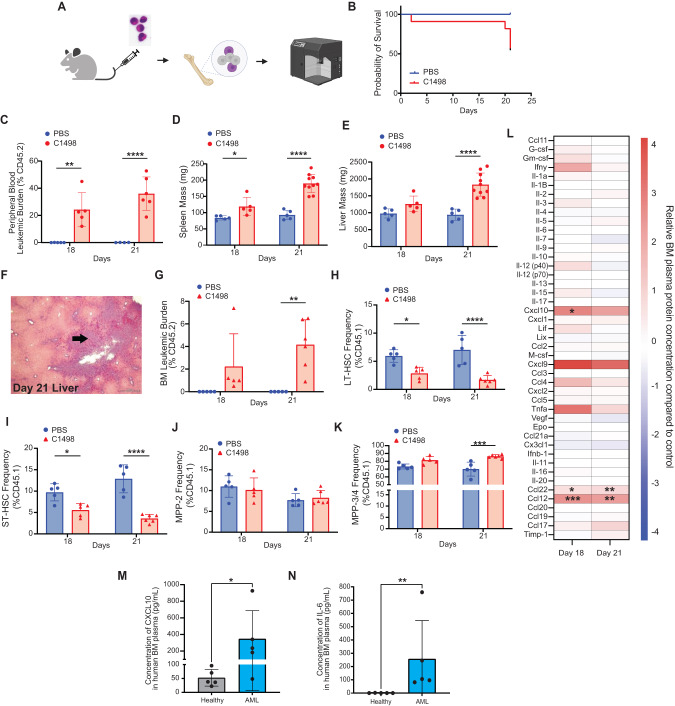
Fig. 1
Fig. 1. AML elicits compartmental inflammation in BM microenvironment.
A Schematic of the experimental approach utilizing C1498 AML mouse model (n = 5). Endpoint analyses were performed 18- and 21-days post C1498 injection. B Survival probability C1498-engrafted mice compared to control. Detectable leukemic burden in PB (C), changes in spleen (D) and liver size (E), and evidence of extramedullary leukemic burden in liver (F) in C1498-engrafted mice. Detectable leukemic burden in BM (G), and analysis of residual HSPC subpopulation: LT-HSC (H), ST-HSC (I), MPP-2 (J), and MPP-3/4 (K) in C1498-engrafted mice. L Multiplex analysis of BM plasma in C1498-engrafted mice showed upregulated pro-inflammatory cytokine production compared to control. Validation studies using human BM plasma samples showed elevated pro-inflammatory cytokines, CXCL10 (M) and IL-6 (N) (n = 5). Values expressed as mean ± standard deviation (s.d.), Statistical significance was calculated using ANOVA. *p < 0.05; **P < 0.01; ***P < 0.001.
Fig. 2
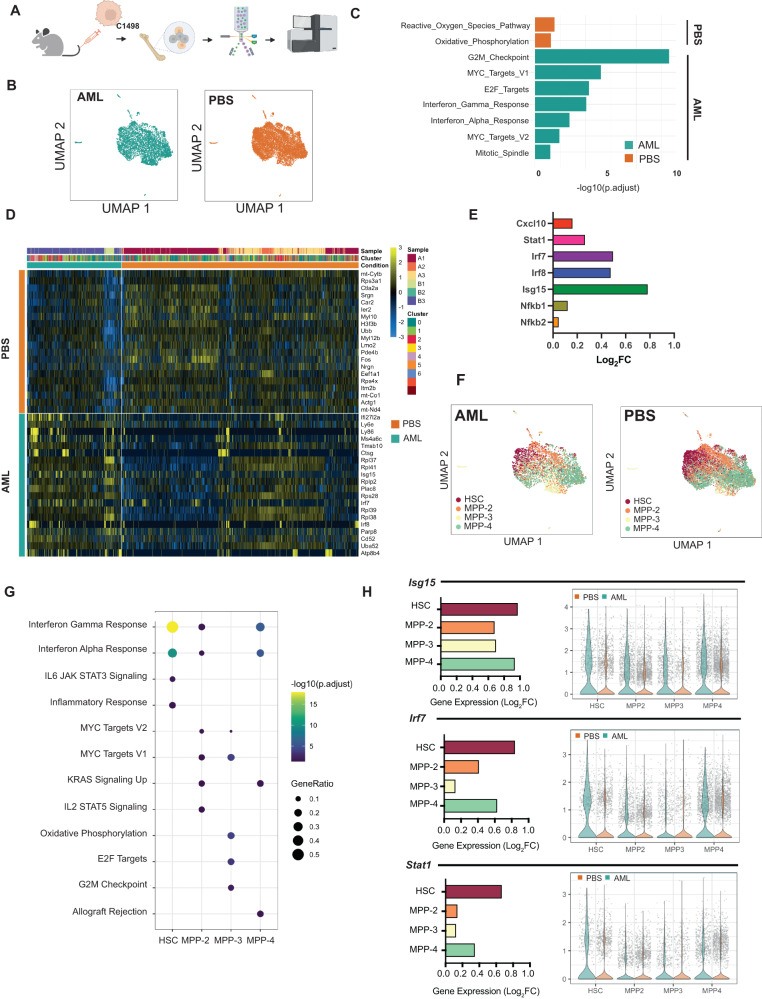
Fig. 2. Single-cell transcriptomic analysis reveals hematopoietic stem and progenitor subpopulations exhibit an active inflammatory state in AML.
A HSPCs from C1498-engrafted AML mice (day 21) were subjected to gene expression analysis (n = 3). B UMAP of single-cell RNA-sequenced (scRNA-Seq) HSPCs from PBS and AML mice. C Gene set enrichment analysis (GSEA) analysis of pathways enriched in HSPCs in AML. D Heatmap of top 20 differentially expressed genes by HSPCs in AML and control. E Gene expression of selected inflammation-related transcripts in AML. F UMAP of HSPC clusters defined into HSC and progenitor subpopulations (MPP-2, MPP-3, MPP-4). G GSEA analysis of pathways enriched in HSPC subpopulation in AML. H Gene expression of selected inflammation associated genes expressed in HSPC subpopulations in AML. Values expressed as mean ± s.d., Statistical significance calculated using ANOVA. *p < 0.05; **P < 0.01; ***P < 0.001.
Fig. 3
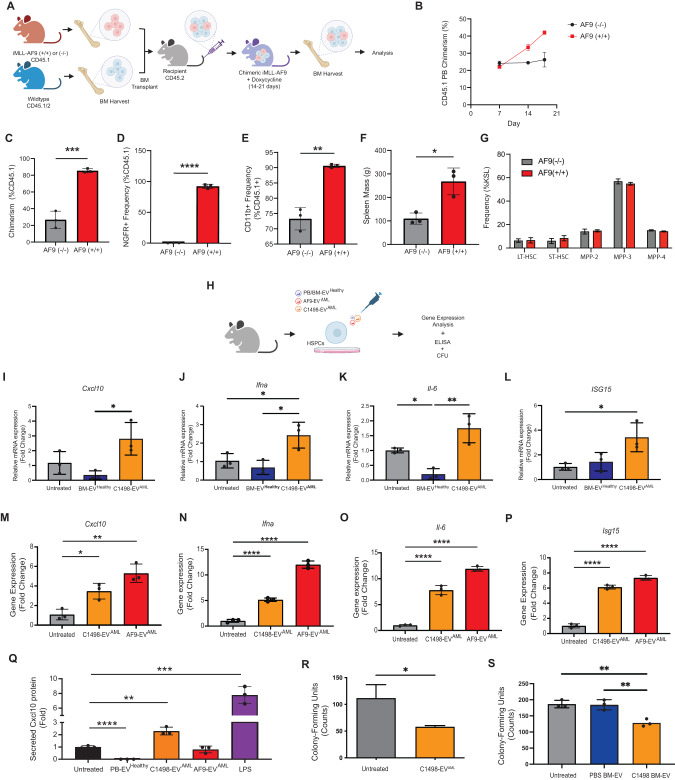
Fig. 3. EVAML incites inflammatory responses in HSPCs.
A A schematic of iMLL-AF9 chimeric mouse model generation. B Assessment of leukemic hematopoietic fraction (CD45.1+) in the PB over the course of doxycycline induction. BM was assessed after 18 days of induction (n = 3) for leukemic fraction chimerism (C), the frequency of MLL-AF9-expressing cells (based on NGFR expression; cell expresses MLL-AF9-IRES-NGFR) (D), and myeloid cell frequency (E) in the leukemic fraction of the BM. F Spleen size and (G) LT-HSC (Lin cKit+ Sca1+ Flk2- Cd150+ Cd48), ST-HSC (Lin cKit+ Sca1+ Flk2 Cd150 Cd48), MPP-2 (Lin cKit+ Sca1+ Flk2 Cd150+ Cd48+), MPP-3 (Lin cKit+ Sca1+ Flk2 Cd150 Cd48+), MPP-4 (Lin cKit+ Sca1+ Flk2+ Cd150 Cd48+) frequency were assessed (n = 3). H The role for EVAML in inciting inflammatory responses in HSPCs were carried out by challenging FACS-sorted HSPCs (HSPCs sorted and pool from n = 3 mice per experiment) with EVAML. I, L Comparison of HSPC gene expression following 2 h exposure with EV derived from C1498 (C1498-EVAML) and healthy BM (BM-EVHealthy) (n = 3). M, P Comparison of HSPC gene expression following exposure with EVAML from both C1498 and iMLL-AF9 blasts (AF9-EVAML) (n = 3). Q HSPC-secreted Cxcl10 were assessed 72 h following EVAML exposure using ELISA. (R) Methylcellulose assay analysis of HSPC colony forming unit counts following 72 h challenge with either C1498-EVAML (n = 3), or (S) EVs from the BM plasma of C1498-engrafted mice and PBS-injected mice (n = 3). Values expressed as mean ± s.d., Statistical significance calculated using ANOVA and Student’s t-test. *p < 0.05; **p < 0.01; ***p < 0.001; ****p < 0.0001.
Fig. 4
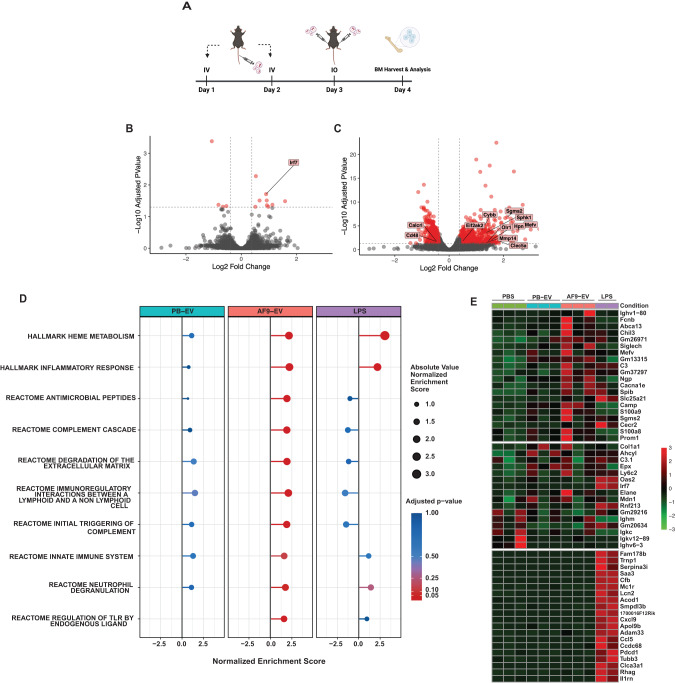
Fig. 4. EVAML incites inflammatory responses in HSPCs in vivo.
A B6 CD45.1 mice were serially injected with AF9-EVAML (2E9 particles/day) for 3 days (n = 3). Mice received either PBS or PB-EV (2E9 particles/day) served as negative controls. HSPCs from injected mice were harvested 24 h the last injection and subjected to RNA-Seq analysis. Volcano plots illustrating differential HSPCs gene expression between: (B) PB-EV and (C) AF9-EVAML. D GSEA analysis of differential expressed genes in HSPCs from AF9-EVAML showed enriched inflammatory related pathways compared to vehicle control (PBS-injected). E Heatmap of top 20 inflammatory targets significantly upregulated in HSPCs from AF9-EVAML- (top), PB-EV- (mid), and LPS- injected (lower panel) mice compared to vehicle control (PBS-injected).
Fig. 5
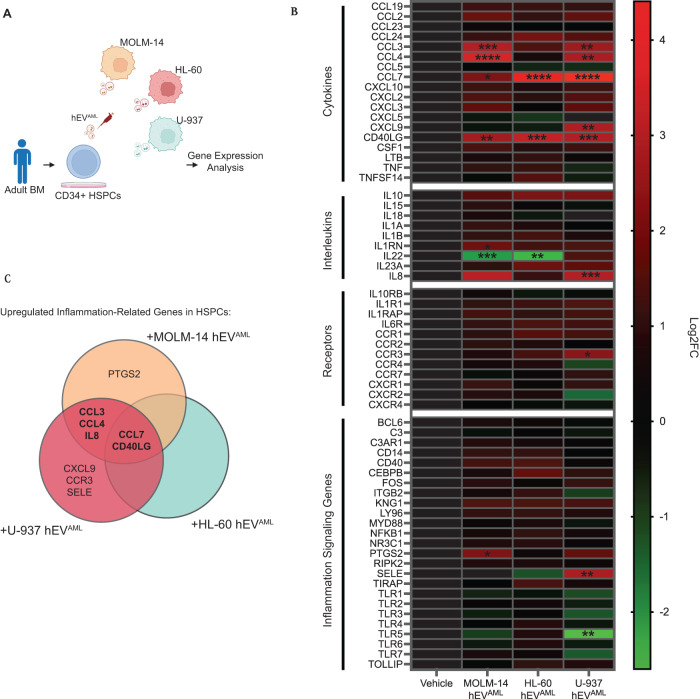
Fig. 5. Inflammatory signaling in human CD34 HSPCs following human AML-derived EVAML exposure.
A Schematic of hEVAML challenge on BM CD34 cells ex vivo. B Averaged gene expression analysis of CD34 cells following MOLM-14- (n = 4), HL-60- (n = 4), and U-937-(n = 4) hEVAML. C Venn diagram of the inflammatory gene expression profile in HSPCs challenged with different hEVAML. Statistical significance calculated using ANOVA. *p < 0.05; **p < 0.01; ***p < 0.001; ****p < 0.0001.

References

    1. De Kouchkovsky I, Abdul-Hay M. Acute myeloid leukemia: a comprehensive review and 2016 update. Blood Cancer J. 2016;6:e441. doi: 10.1038/bcj.2016.50. - DOI - PMC - PubMed
    1. Siegel RL, Miller KD, Fuchs HE, Jemal A. Cancer statistics, 2022. CA: A Cancer J Clin. 2022;72:7–33. - PubMed
    1. Hornick NI, Doron B, Abdelhamed S, Huan J, Harrington CA, Shen R, et al. AML suppresses hematopoiesis by releasing exosomes that contain microRNAs targeting c-MYB. Sci Signal. 2016;9:ra88. doi: 10.1126/scisignal.aaf2797. - DOI - PubMed
    1. Abdelhamed S, Butler JT, Doron B, Halse A, Nemecek E, Wilmarth PA, et al. Extracellular vesicles impose quiescence on residual hematopoietic stem cells in the leukemic niche. EMBO Rep. 2019;20:e47546. doi: 10.15252/embr.201847546. - DOI - PMC - PubMed
    1. Binder S, Luciano M, Horejs-Hoeck J. The cytokine network in acute myeloid leukemia (AML): A focus on pro- and anti-inflammatory mediators. Cytokine Growth Factor Rev. 2018;43:8–15. doi: 10.1016/j.cytogfr.2018.08.004. - DOI - PubMed

Publication types

MeSH terms