


"KAIZEN" method realizing implementation of deep-learning models for COVID-19 CT diagnosis in real world hospitals
- PMID: 38243054
- PMCID: PMC10799049
- DOI: 10.1038/s41598-024-52135-y
"KAIZEN" method realizing implementation of deep-learning models for COVID-19 CT diagnosis in real world hospitals
Abstract
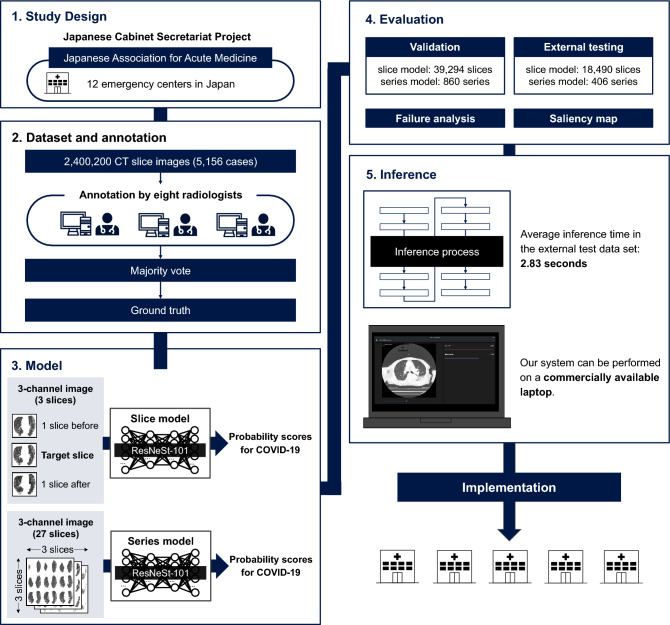
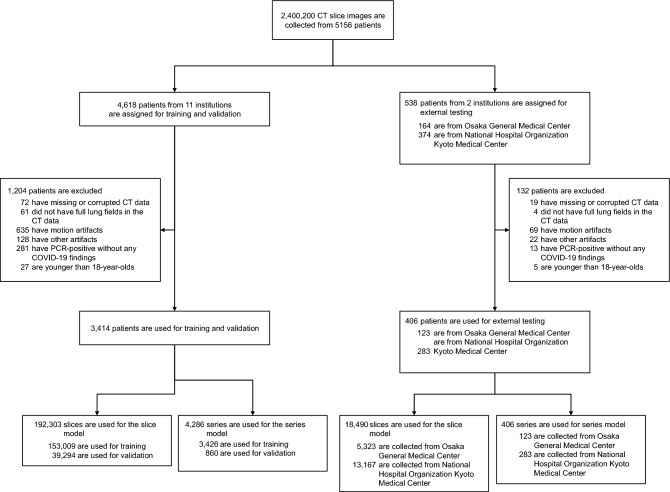
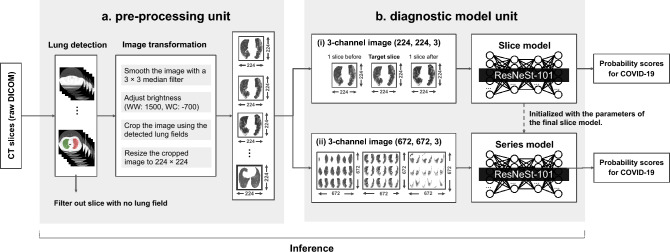
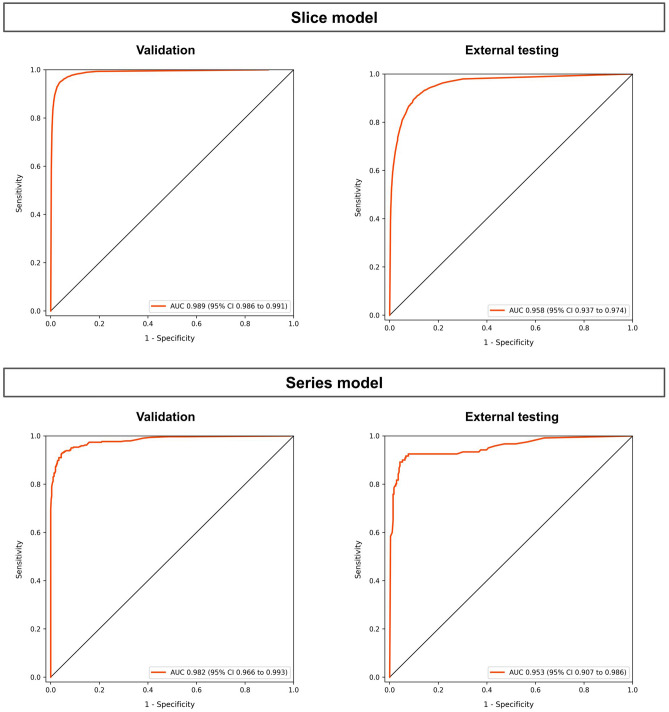
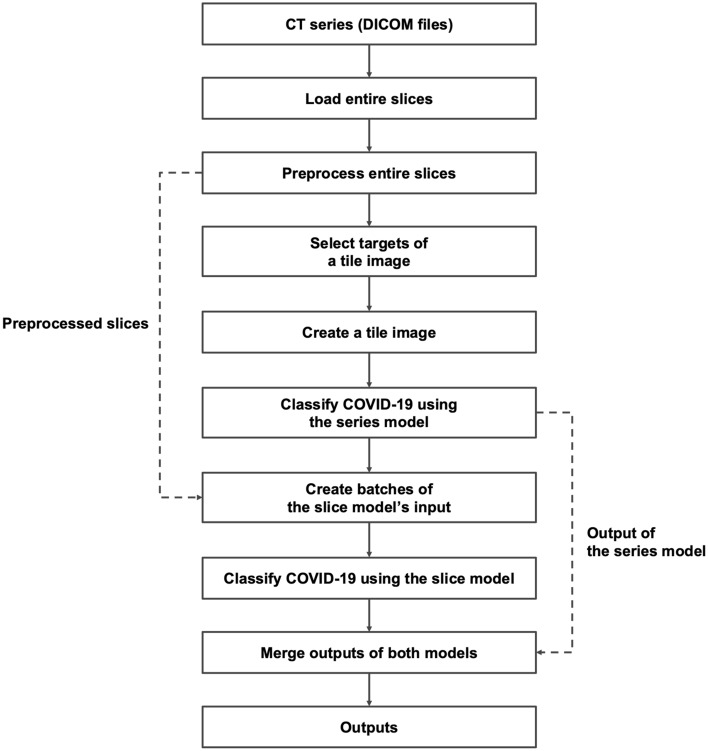
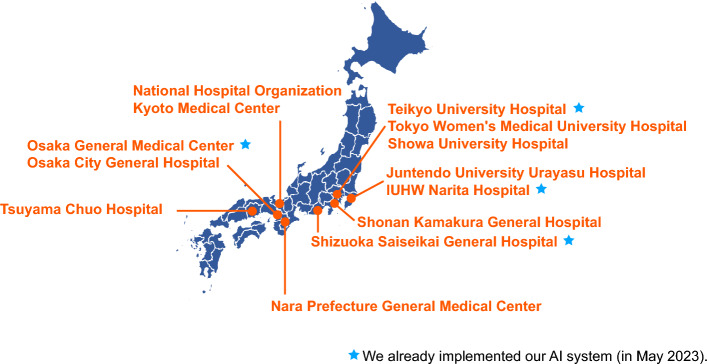
Numerous COVID-19 diagnostic imaging Artificial Intelligence (AI) studies exist. However, none of their models were of potential clinical use, primarily owing to methodological defects and the lack of implementation considerations for inference. In this study, all development processes of the deep-learning models are performed based on strict criteria of the "KAIZEN checklist", which is proposed based on previous AI development guidelines to overcome the deficiencies mentioned above. We develop and evaluate two binary-classification deep-learning models to triage COVID-19: a slice model examining a Computed Tomography (CT) slice to find COVID-19 lesions; a series model examining a series of CT images to find an infected patient. We collected 2,400,200 CT slices from twelve emergency centers in Japan. Area Under Curve (AUC) and accuracy were calculated for classification performance. The inference time of the system that includes these two models were measured. For validation data, the slice and series models recognized COVID-19 with AUCs and accuracies of 0.989 and 0.982, 95.9% and 93.0% respectively. For test data, the models' AUCs and accuracies were 0.958 and 0.953, 90.0% and 91.4% respectively. The average inference time per case was 2.83 s. Our deep-learning system realizes accuracy and inference speed high enough for practical use. The systems have already been implemented in four hospitals and eight are under progression. We released an application software and implementation code for free in a highly usable state to allow its use in Japan and globally.
© 2024. The Author(s).
Conflict of interest statement
Naoki Okada received grants from the Japanese Cabinet Secretariat (438-2020-5E, 834-2021-4A, 847-2022-2C, 847-2022-2D). Naoki Okada and Shusuke Inoue are board members of fcuro inc. Shun Honda and Yuichiro Hirano are employees of fcuro inc. Other authors declare no competing interests.
Figures
References
-
- World Health Organization. Laboratory testing for coronavirus disease 2019 (COVID-19) in suspected human cases: Interim guidance (2020) https://apps.who.int/iris/bitstream/handle/10665/331329/WHO-COVID-19-lab....
MeSH terms
Grants and funding
LinkOut - more resources
Full Text Sources
Medical
