


The role of stromal cells in epithelial-mesenchymal plasticity and its therapeutic potential
- PMID: 38244071
- PMCID: PMC10799841
- DOI: 10.1007/s12672-024-00867-8
The role of stromal cells in epithelial-mesenchymal plasticity and its therapeutic potential
Abstract
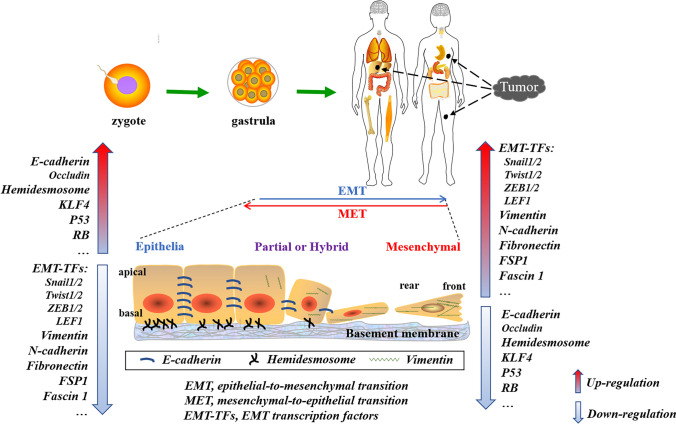
The epithelial-mesenchymal transition (EMT) is a critical tumor invasion and metastasis process. EMT enables tumor cells to migrate, detach from their original location, enter the circulation, circulate within it, and eventually exit from blood arteries to colonize in foreign sites, leading to the development of overt metastases, ultimately resulting in death. EMT is intimately tied to stromal cells around the tumor and is controlled by a range of cytokines secreted by stromal cells. This review summarizes recent research on stromal cell-mediated EMT in tumor invasion and metastasis. We also discuss the effects of various stromal cells on EMT induction and focus on the molecular mechanisms by which several significant stromal cells convert from foes to friends of cancer cells to fuel EMT processes via their secretions in the tumor microenvironment (TME). As a result, a better knowledge of the role of stromal cells in cancer cells' EMT may pave the path to cancer eradication.
Keywords: EMT; Secretions; Stromal cells; Tumor metastasis; Tumor microenvironments.
© 2024. The Author(s).
Conflict of interest statement
All authors declare they have no conflict interest.
Figures


References
Publication types
LinkOut - more resources
Full Text Sources
Research Materials