


An analysis of emerging food safety and fraud risks of novel insect proteins within complex supply chains
- PMID: 38245539
- PMCID: PMC10799884
- DOI: 10.1038/s41538-023-00241-y
An analysis of emerging food safety and fraud risks of novel insect proteins within complex supply chains
Abstract
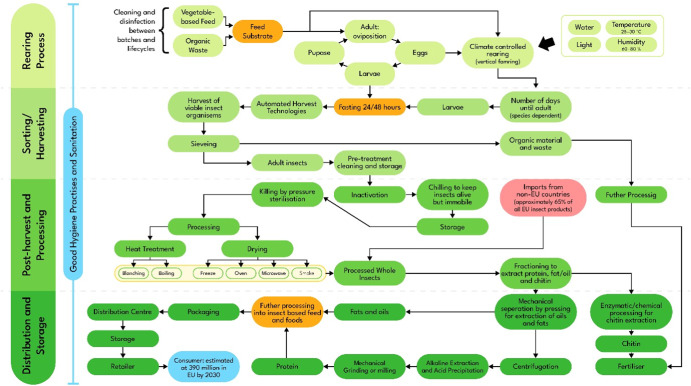
Food consumption play a crucial role in human life, yet conventional food production and consumption patterns can be detrimental to the environment. Thus, research and development has been directed towards alternative proteins, with edible insects being promising sources. Edible insects have been recognised for their sustainable benefits providing protein, with less emission of greenhouse gas, land and water usage compared to sources, such as beef, chicken, and dairy products. Among the over 2000 known edible insect species, only four, namely yellow mealworm (Tenebrio molitor), migratory locust/grasshopper (Locusta migratoria), grain mould beetle, also known as lesser mealworm which is a larval form of Alphitobius diaperinus (from the family of Tenebrionidae of darkling beetles) and house cricket (Acheta domesticus), are currently authorised in specific products through specific producers in the EU. The expansion of such foods into Western diets face challenges such as consumer barriers, gaps in microbiological and chemical safety hazard data during production and processing, and the potential for fraudulent supply chain activity. The main aim of this study was to map the supply chain, through interviews with personnel along the supply chain, coupled with searches for relevant publications and governmental documents. Thus, the main potential points of food safety and fraud along the edible insect supply chain were identified. Feed substrate was identified as the main area of concern regarding microbiological and chemical food safety and novel processing techniques were forecast to be of most concern for future fraudulent activity. Despite the on-going authorisation of insect species in many countries there are substantial food safety and authenticity information gaps in this industry that need to be addressed before edible insects can be viewed as a safe and sustainable protein sources by Western consumers.
© 2024. The Author(s).
Conflict of interest statement
The authors declare no competing Financial Interests. Author C.T.E. is Editor-in-Chief of npj Science of Food. C.T.E. was not involved in the journal’s review of, or decisions related to, this manuscript.
Figures
References
-
- Jantzen, Da Silva, L. Edible insects: An alternative of nutritional, functional and bioactive compounds. Food Chem. 311, 126022–126033 (2020). - PubMed
-
- EY Food and Agriculture. Protein reimagined: challenges and opportunities in the alternative meat industry (2021). Available from: https://www.ey.com/en_us/food-system-reimagined/protein-reimagined-chall....
-
- Jongema, Y. World List of Edible Insects. Wageningen Laboratory of Entomology (2012). Available from: https://www.wur.nl/upload_mm/7/4/1/ca8baa25-b035–4bd2–9fdc-a7df1405519aW....
-
- Miglietta P, De Leo F, Ruberti M, Massari S. Mealworms for food: a water footprint perspective. Water. 2015;7:6190–6203. doi: 10.3390/w7116190. - DOI
Publication types
LinkOut - more resources
Full Text Sources
