


The IFSD Score-A Practical Prognostic Model for Invasive Fungal Spondylodiscitis
- PMID: 38248971
- PMCID: PMC10819940
- DOI: 10.3390/jof10010061
The IFSD Score-A Practical Prognostic Model for Invasive Fungal Spondylodiscitis
Abstract
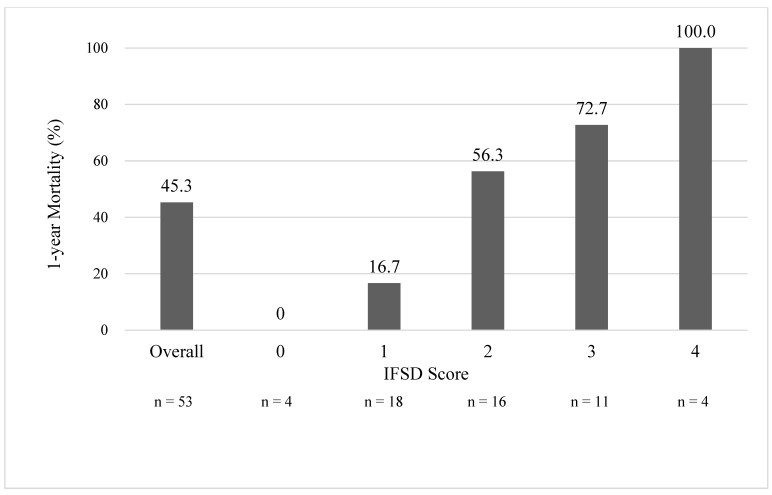
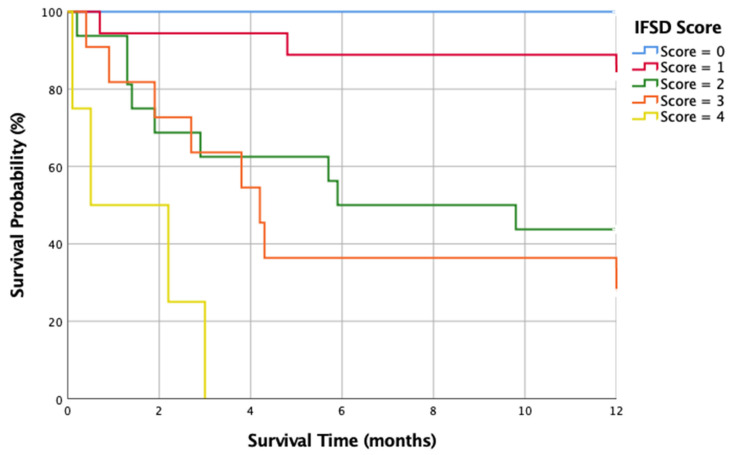
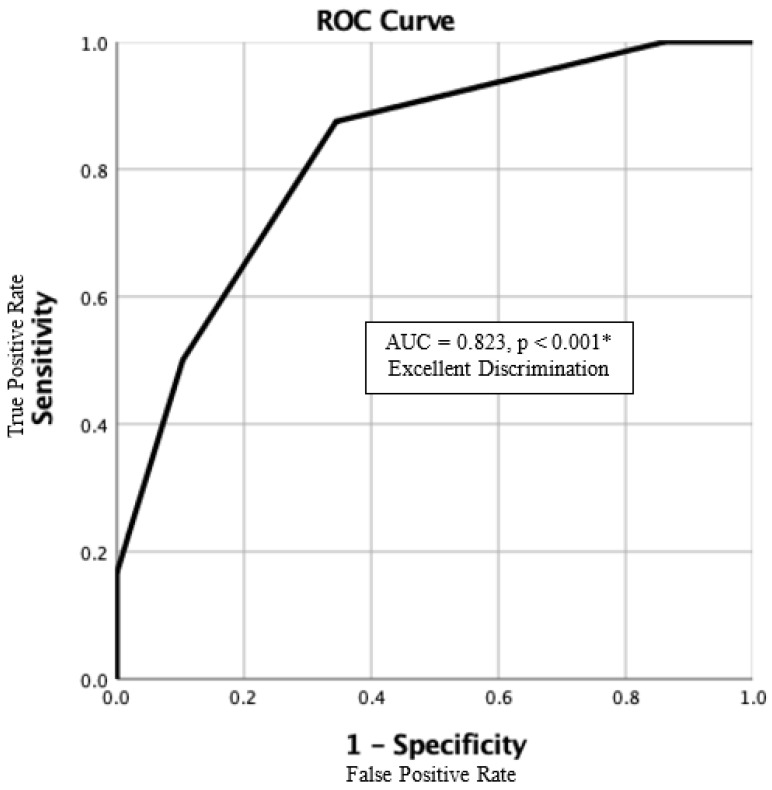
Objectives: Invasive fungal spondylodiscitis (IFSD) is rare and could be lethal in certain circumstances. The previous literature revealed limited data concerning its outcomes. This study aimed to establish a risk-scoring system to predict the one-year mortality rate of this disease. Methods: A total of 53 patients from a multi-centered database in Taiwan were included in this study. All the clinicopathological and laboratory data were retrospectively analyzed. Variables strongly related to one-year mortality were identified using a multivariate Cox proportional hazards model. A receiver operating characteristic (ROC) curve was used to express the performance of our IFSD scoring model. Results: Five strong predictors were included in the IFSD score: predisposing immunocompromised state, the initial presentation of either radiculopathy or myelopathy, initial laboratory findings of WBC > 12.0 or <0.4 103/µL, hemoglobin < 8 g/dL, and evidence of candidemia. One-year mortality rates for patients with IFSD scores of 0, 1, 2, 3, and 4 were 0%, 16.7%, 56.3%, 72.7%, and 100%, respectively. The area under the curve of the ROC curve was 0.823. Conclusions: We developed a practical scoring model with easily obtained demographic, clinical, and laboratory parameters to predict the probability of one-year mortality in patients with IFSD. However, more large-scale and international validations would be necessary before this scoring model is commonly used.
Keywords: Aspergillus; Candida; Chang Gung Research Database; fungus; invasive fungal infection; mortality; osteomyelitis; spondylodiscitis.
Conflict of interest statement
All authors declare no conflicts of interest.
Figures
References
-
- Beronius M., Bergman B., Andersson R. Vertebral osteomyelitis in Göteborg, Sweden: A retrospective study of patients during 1990–1995. Scand. J. Infect. Dis. 2001;33:527–532. - PubMed
Grants and funding
LinkOut - more resources
Full Text Sources
