


Degradable Polymeric Bio(nano)materials and Their Biomedical Applications: A Comprehensive Overview and Recent Updates
- PMID: 38257005
- PMCID: PMC10818796
- DOI: 10.3390/polym16020206
Degradable Polymeric Bio(nano)materials and Their Biomedical Applications: A Comprehensive Overview and Recent Updates
Abstract
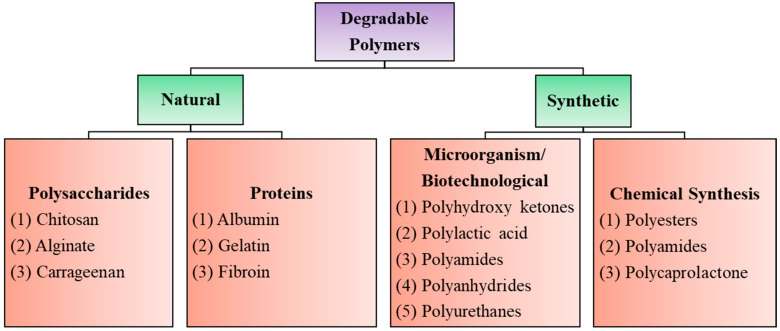
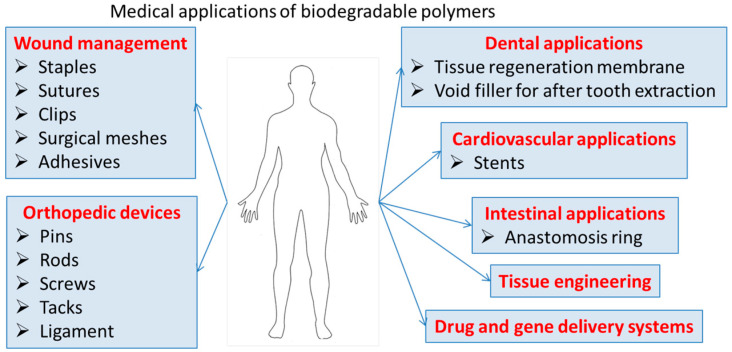
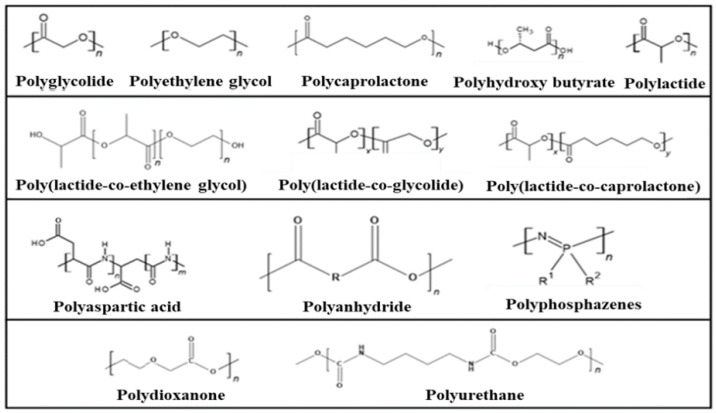
Degradable polymers (both biomacromolecules and several synthetic polymers) for biomedical applications have been promising very much in the recent past due to their low cost, biocompatibility, flexibility, and minimal side effects. Here, we present an overview with updated information on natural and synthetic degradable polymers where a brief account on different polysaccharides, proteins, and synthetic polymers viz. polyesters/polyamino acids/polyanhydrides/polyphosphazenes/polyurethanes relevant to biomedical applications has been provided. The various approaches for the transformation of these polymers by physical/chemical means viz. cross-linking, as polyblends, nanocomposites/hybrid composites, interpenetrating complexes, interpolymer/polyion complexes, functionalization, polymer conjugates, and block and graft copolymers, are described. The degradation mechanism, drug loading profiles, and toxicological aspects of polymeric nanoparticles formed are also defined. Biomedical applications of these degradable polymer-based biomaterials in and as wound dressing/healing, biosensors, drug delivery systems, tissue engineering, and regenerative medicine, etc., are highlighted. In addition, the use of such nano systems to solve current drug delivery problems is briefly reviewed.
Keywords: biomedical applications; chemical modification; degradable polymers; polymeric nanoparticles.
Conflict of interest statement
The authors declare no conflict of interest.
Figures
References
-
- Merlettini A. Ph.D. Thesis. Università di Bologna; Bologna, Italy: 2019. Micro-Nanostructured Polymeric Materials with Specific Functionalities for Advanced Biomedical Applications.
-
- Prajapati S.K., Jain A., Jain A., Jain S. Biodegradable polymers and constructs A novel approach in drug delivery. Eur. Polym. J. 2019;120:109191–109206. doi: 10.1016/j.eurpolymj.2019.08.018. - DOI
Publication types
LinkOut - more resources
Full Text Sources
Miscellaneous
