


Direct Pellet Three-Dimensional Printing of Polybutylene Adipate-co-Terephthalate for a Greener Future
- PMID: 38257066
- PMCID: PMC10820913
- DOI: 10.3390/polym16020267
Direct Pellet Three-Dimensional Printing of Polybutylene Adipate-co-Terephthalate for a Greener Future
Abstract
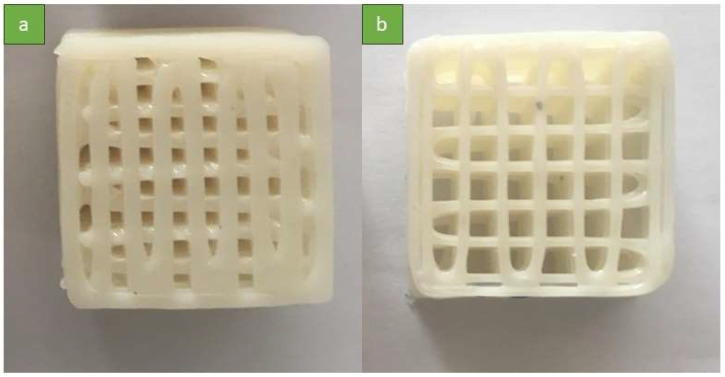
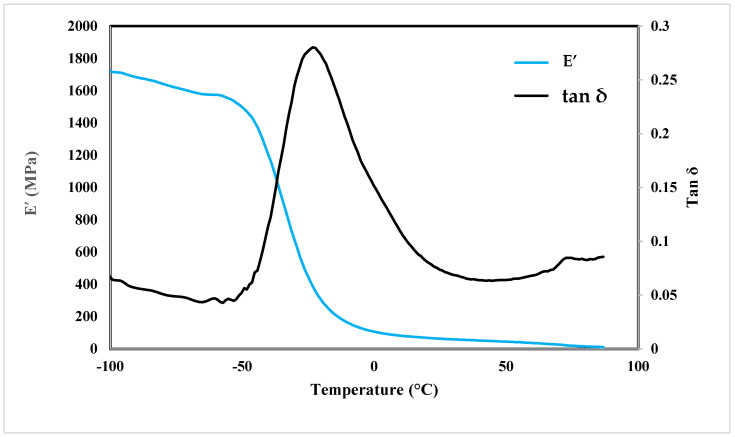
The widespread use of conventional plastics in various industries has resulted in increased oil consumption and environmental pollution. To address these issues, a combination of plastic recycling and the use of biodegradable plastics is essential. Among biodegradable polymers, poly butylene adipate-co-terephthalate (PBAT) has attracted significant attention due to its favorable mechanical properties and biodegradability. In this study, we investigated the potential of using PBAT for direct pellet printing, eliminating the need for filament conversion. To determine the optimal printing temperature, three sets of tensile specimens were 3D-printed at varying nozzle temperatures, and their mechanical properties and microstructure were analyzed. Additionally, dynamic mechanical thermal analysis (DMTA) was conducted to evaluate the thermal behavior of the printed PBAT. Furthermore, we designed and printed two structures with different infill percentages (40% and 60%) to assess their compressive strength and energy absorption properties. DMTA revealed that PBAT's glass-rubber transition temperature is approximately -25 °C. Our findings demonstrate that increasing the nozzle temperature enhances the mechanical properties of PBAT. Notably, the highest nozzle temperature of 200 °C yielded remarkable results, with an elongation of 1379% and a tensile strength of 7.5 MPa. Moreover, specimens with a 60% infill density exhibited superior compressive strength (1338 KPa) and energy absorption compared with those with 40% infill density (1306 KPa). The SEM images showed that with an increase in the nozzle temperature, the quality of the print was greatly improved, and it was difficult to find microholes or even a layered structure for the sample printed at 200 °C.
Keywords: 3D printing; PBAT; biodegradable plastics; material extrusion; mechanical properties; nozzle temperature.
Conflict of interest statement
The authors declare no conflicts of interest.
Figures




References
-
- Kanwal A., Zhang M., Sharaf F., Li C. Polymer pollution and its solutions with special emphasis on Poly (butylene adipate terephthalate (PBAT)) Polym. Bull. 2022;79:9303–9330. doi: 10.1007/s00289-021-04065-2. - DOI
-
- Jian J., Xiangbin Z., Xianbo H. An overview on synthesis, properties and applications of poly(butylene-adipate-co-terephthalate)–PBAT. Adv. Ind. Eng. Polym. Res. 2020;3:19–26. doi: 10.1016/j.aiepr.2020.01.001. - DOI
-
- Kanwal A., Zhang M., Sharaf F., Li C. Enzymatic degradation of poly (butylene adipate co-terephthalate) (PBAT) copolymer using lipase B from Candida antarctica (CALB) and effect of PBAT on plant growth. Polym. Bull. 2022;79:9059–9073. doi: 10.1007/S00289-021-03946-W/METRICS. - DOI
-
- Witt U., Einig T., Yamamoto M., Kleeberg I., Deckwer W.D., Müller R.J. Biodegradation of aliphatic–aromatic copolyesters: Evaluation of the final biodegradability and ecotoxicological impact of degradation intermediates. Chemosphere. 2001;44:289–299. doi: 10.1016/S0045-6535(00)00162-4. - DOI - PubMed
-
- Weng Y.X., Jin Y.J., Meng Q.Y., Wang L., Zhang M., Wang Y.Z. Biodegradation behavior of poly(butylene adipate-co-terephthalate) (PBAT), poly(lactic acid) (PLA), and their blend under soil conditions. Polym. Test. 2013;32:918–926. doi: 10.1016/J.POLYMERTESTING.2013.05.001. - DOI
LinkOut - more resources
Full Text Sources
