


Evaluation of the Feasibility of In Vitro Metabolic Interruption of Trimethylamine with Resveratrol Butyrate Esters and Its Purified Monomers
- PMID: 38257342
- PMCID: PMC10820948
- DOI: 10.3390/molecules29020429
Evaluation of the Feasibility of In Vitro Metabolic Interruption of Trimethylamine with Resveratrol Butyrate Esters and Its Purified Monomers
Abstract
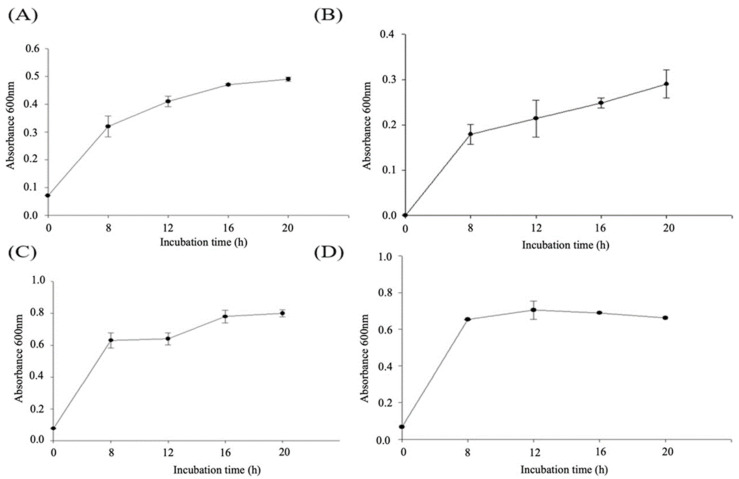
Resveratrol (RSV), obtained from dietary sources, has been shown to reduce trimethylamine oxide (TMAO) levels in humans, and much research indicates that TMAO is recognized as a risk factor for cardiovascular disease. Therefore, this study investigated the effects of RSV and RSV-butyrate esters (RBE) on the proliferation of co-cultured bacteria and HepG2 cell lines, respectively, and also investigated the changes in trimethylamine (TMA) and TMOA content in the medium and flavin-containing monooxygenase-3 (FMO3) gene expression. This study revealed that 50 µg/mL of RBE could increase the population percentage of Bifidobacterium longum at a rate of 53%, while the rate was 48% for Clostridium asparagiforme. In contrast, co-cultivation of the two bacterial strains effectively reduced TMA levels from 561 ppm to 449 ppm. In addition, regarding TMA-induced HepG2 cell lines, treatment with 50 μM each of RBE, 3,4'-di-O-butanoylresveratrol (ED2), and 3-O-butanoylresveratrol (ED4) significantly reduced FMO3 gene expression from 2.13 to 0.40-1.40, which would also contribute to the reduction of TMAO content. This study demonstrated the potential of RBE, ED2, and ED4 for regulating TMA metabolism in microbial co-cultures and cell line cultures, which also suggests that the resveratrol derivative might be a daily dietary supplement that will be beneficial for health promotion in the future.
Keywords: co-cultured; metabolism; probiotic; short-chain fatty acid (SCFA); trimethylamine-N-oxide (TMAO).
Conflict of interest statement
The authors declare that they have no known competing financial interests or personal relationships that could have appeared to influence the work reported in this paper.
Figures


References
-
- Roncal C., Martínez-Aguilar E., Orbe J., Ravassa S., Fernandez-Montero A., Saenz-Pipaon G., Ugarte A., Estella-Hermoso de Mendoza A., Rodriguez J.A., Fernández-Alonso S., et al. Trimethylamine-N-Oxide (TMAO) Predicts Cardiovascular Mortality in Peripheral Artery Disease. Sci. Rep. 2019;9:15580. doi: 10.1038/s41598-019-52082-z. - DOI - PMC - PubMed
MeSH terms
Substances
Grants and funding
- 112-2221-E-992 -002 -MY3/National Science and Technology Council funded this research, the Republic of China
- 111-2622-E-992-007-/National Science and Technology Council funded this research, the Republic of China
- 111-2221-E-328-001-MY3/National Science and Technology Council funded this research, the Republic of China
- 110-2320-B-992-001-MY3/National Science and Technology Council funded this research, the Republic of China
LinkOut - more resources
Full Text Sources
