


Predictors of sustained physical activity: behaviour, bodily health, and the living environment
- PMID: 38260099
- PMCID: PMC10800461
- DOI: 10.3389/fphys.2023.1213075
Predictors of sustained physical activity: behaviour, bodily health, and the living environment
Abstract
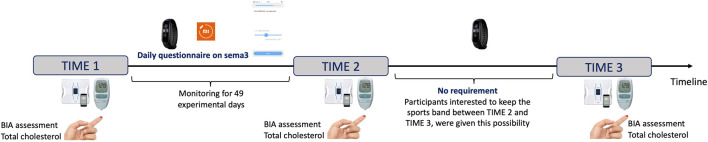
This study examined the determinants of sustained physical activity. Eighty-four participants undertook a 7-weeks walking regime (i.e., a 1-h biometrically-monitored walk, at least 5 days/week), with bioelectrical impedance (BIA) and total cholesterol capillary blood measurements performed before and after programme. To investigate behavioural habit formation, 7 weeks after walking termination, all participants were interviewed and (health) re-tested. Data were modelled with an artificial neural network (ANN) cascading algorithm. Our results highlight the successful prediction of continued physical activity by considering one's physical fitness state, the environmental living context, and risk for cardiovascular disease. Importantly, those artificial neural network models also taking body mass index (BMI) and blood cholesterol as predictors excel at predicting walking continuation (i.e., predictions with 93% predictability). These results are first to highlight the type and importance of available physiological drivers in maintaining a sustained physical activity regime such as walking. They are discussed within the framework of habit formation and the nowadays health and/or wellbeing focus.
Keywords: Artificial Neural Networks (ANNs); BMI; blood cholesterol; environment; health; physical activity; risk for cardiovascular disease (CVD); walking.
Copyright © 2024 Diaconașu, Stoleriu, Câmpanu, Andrei, Boncu, Honceriu, Mocanu and Juravle.
Conflict of interest statement
The authors declare that the research was conducted in the absence of any commercial or financial relationships that could be construed as a potential conflict of interest.
Figures


References
-
- American College of Sports Medicine (2013). ACSM’s guidelines for exercise testing and prescription. Lippincott Williams and Wilkins. - PubMed
-
- Barton J., Hine R., Pretty J. (2009). The health benefits of walking in greenspaces of high natural and heritage value. J. Integr. Environ. Sci. 6 (4), 261–278. 10.1080/19438150903378425 - DOI
LinkOut - more resources
Full Text Sources
