[Preprint]. 2024 Jan 3:2024.01.02.573990.
doi: 10.1101/2024.01.02.573990.

Neu5Gc binding loss of subtype H7 influenza A virus facilitates adaptation to gallinaceous poultry following transmission from waterbirds but restricts spillback

Affiliations

Neu5Gc binding loss of subtype H7 influenza A virus facilitates adaptation to gallinaceous poultry following transmission from waterbirds but restricts spillback

Minhui Guan et al. bioRxiv. .

Update in

Abstract

Migratory waterfowl, gulls, and shorebirds serve as natural reservoirs for influenza A viruses, with potential spillovers to domestic poultry and humans. The intricacies of interspecies adaptation among avian species, particularly from wild birds to domestic poultry, are not fully elucidated. In this study, we investigated the molecular mechanisms underlying avian species barriers in H7 transmission, particularly the factors responsible for the disproportionate distribution of poultry infected with A/Anhui/1/2013 (AH/13)-lineage H7N9 viruses. We hypothesized that the differential expression of N-glycolylneuraminic acid (Neu5Gc) among avian species exerts selective pressure on H7 viruses, shaping their evolution and enabling them to replicate and transmit efficiently among gallinaceous poultry, particularly chickens. Our glycan microarray and biolayer interferometry experiments showed that AH/13-lineage H7N9 viruses exclusively bind to Neu5Ac, in contrast to wild waterbird H7 viruses that bind both Neu5Ac and Neu5Gc. Significantly, reverting the V179 amino acid in AH/13-lineage back to the I179, predominantly found in wild waterbirds, expanded the binding affinity of AH/13-lineage H7 viruses from exclusively Neu5Ac to both Neu5Ac and Neu5Gc. When cultivating H7 viruses in cell lines with varied Neu5Gc levels, we observed that Neu5Gc expression impairs the replication of Neu5Ac-specific H7 viruses and facilitates adaptive mutations. Conversely, Neu5Gc deficiency triggers adaptive changes in H7 viruses capable of binding to both Neu5Ac and Neu5Gc. Additionally, we assessed Neu5Gc expression in the respiratory and gastrointestinal tissues of seven avian species, including chickens, Canada geese, and various dabbling ducks. Neu5Gc was absent in chicken and Canada goose, but its expression varied in the duck species. In summary, our findings reveal the crucial role of Neu5Gc in shaping the host range and interspecies transmission of H7 viruses. This understanding of virus-host interactions is crucial for developing strategies to manage and prevent influenza virus outbreaks in diverse avian populations.


Figures
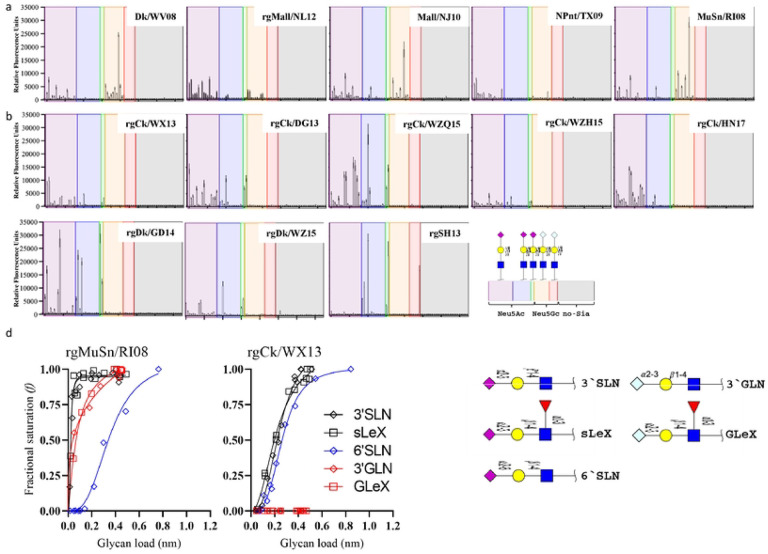
Figure 1.
Figure 1.. Receptor binding profile of H7 influenza A viruses.
(a) N-glycan microarray binding profiles of five H7 viruses isolated from wild waterbirds in Eurasia and North America. (b) N-glycan microarray binding profiles of eight AH/13-lineage H7N9 viruses collected during the first five waves of poultry outbreaks from 2013 to 2017 in China. (c) Quantitative analyses of virus glycan binding avidity using biolayer interferometry for two representative H7 viruses, rgCk/WX13 and rgMuSn/RI08 (Table 1). We categorized 75 glycans on the microarray based on the linkage and terminal glycan sequence into α2,3-linked Neu5Ac, α2,3-linked Neu5Gc, α2,6-linked Neu5Ac, α2,6-linked Neu5Gc, and non-sialic acid glycans. The glycan sequences are detailed in SI Table S5. In the plot showing microarray data, the mean relative fluorescent units ± the standard deviations (vertical bars) are shown on the y-axis, and the x-axis represents the glycan number corresponding to the array. Biolayer interferometry analyses were performed using an Octet RED instrument (Pall FortéBio, Fremont, CA, USA) (see Materials and Methods), and binding curves were fitted using the saturation binding method in GraphPad Prism 8 (https://www.graphpad.com/scientific-software/prism/). We quantified and compared the 50% relative sugar loading concentration (RSL0.5) at half the fractional saturation (f = 0.5) of the virus against glycan analogs to determine the binding avidity. A higher RSL0.5 indicates a lower binding avidity.
Figure 2.
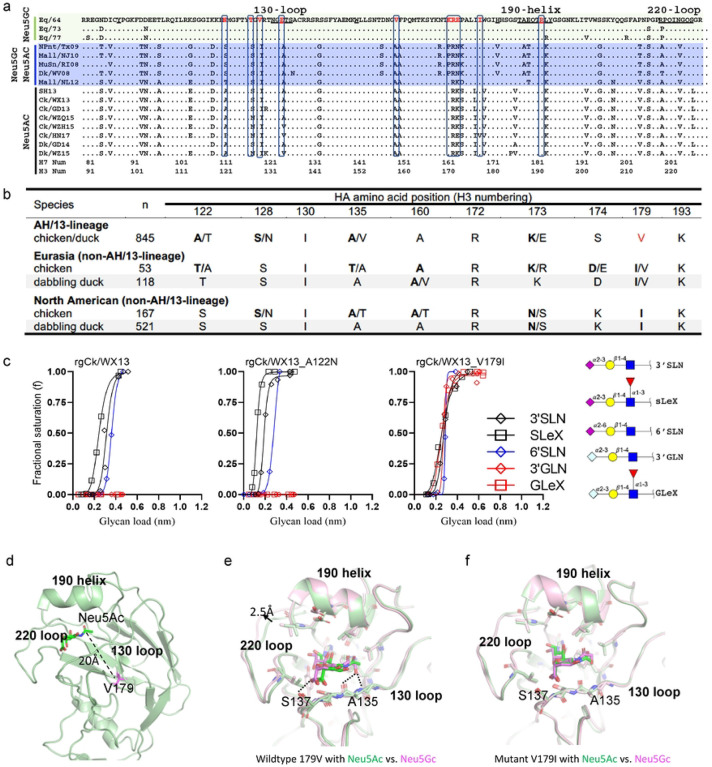
Figure 2.. Multiple individual amino acid substitutions facilitate acquisition of virus binding avidity to Neu5Gc for H7 IAVs.
(a) Sequence alignment of the receptor binding site (RBS) of H7 IAVs, including three groups of H7 viruses with distinct binding patterns to glycans terminated with Neu5Ac and Neu5Gc: equine H7N7 viruses bound exclusively to Neu5Gc, wild waterbird viruses bound to both Neu5Ac and Neu5Gc, and AH/13-lineage H7N9 viruses bound exclusively to Neu5Ac. (b) Amino acid diversity at the residues close to or within the hemagglutinin RBS of AH/13-lineage H7N9 viruses isolated from domestic poultry in China, as well as H7 viruses from dabbling ducks in Eurasian and North American (see additional details in SI Table 2). (c) Quantitative analyses of virus glycan binding avidity using biolayer interferometry for Ck/WX13, Ck/WX13-A121N, and Ck/WX13-V179I. Please refer to the legend of Figure 1 and Online Methods for the details of Biolayer interferometry analyses. (d) The crystal structure of the HA protein from A/Anhui/1/2013 (H7N9), which is identical to that of Ck/WX13. (e) Structural model of wild-type H7 in complex with Neu5Ac (green) vs. Neu5Gc (magenta). HA residues less than 3 Å away from the modeled receptor are shown in sticks. (f) Structural model of the V179I H7 mutant in complex with Neu5Ac (green) vs. Neu5Gc (magenta).
Figure 3.
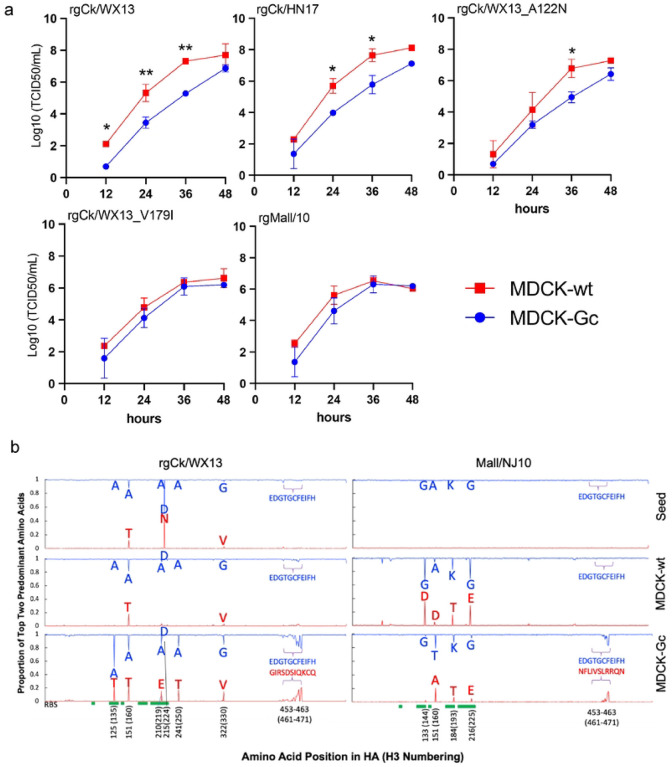
Figure 3.. Neu5Gc affects virus replication of AH/13-lineage H7N9 viruses and drives adaptive mutations in the HA protein.
a) Growth kinetics of H7 influenza A viruses and mutants in MDCK-wt and MDCK-Gc cells. All viruses had HA genes from H7 viruses and the other seven from PR8, and three mutants were generated using the HA gene of Ck/WX13 as a template. Supernatants were collected at 12-, 24-, 48-, and 72-hours post-infection (hpi) and titrated by TCID50 in MDCK CCL-34 cells. Two-way repeated measures ANOVA were used to compare time-course growth data of H7 viruses among different cells. Statistical comparisons were shown as follows: not significantly different as n.s. (P > 0.05); P ≤ 0.05 as *; P < 0.01 as **; P < 0.001 as ***; and P < 0.0001 as ****. (b) HA amino acid polymorphisms detected in the seed viruses and the viruses from the 5th passage in MDCK-wt and MDCK-Gc cells. The viruses rgCk/WX13 and rgMall/NJ10, which have an HA gene from rgCk/WX13 and rgMall/NJ10, respectively, and other seven genes from PR8 were passaged five times in MDCK-wt and MDCK-Gc cells. The two most abundant nonsynonymous mutations in the HA protein were plotted to visualize adaptive amino acid substitutions caused by cell passages. The location of the RBS in the HA protein was marked green.
Figure 4.
Figure 4.
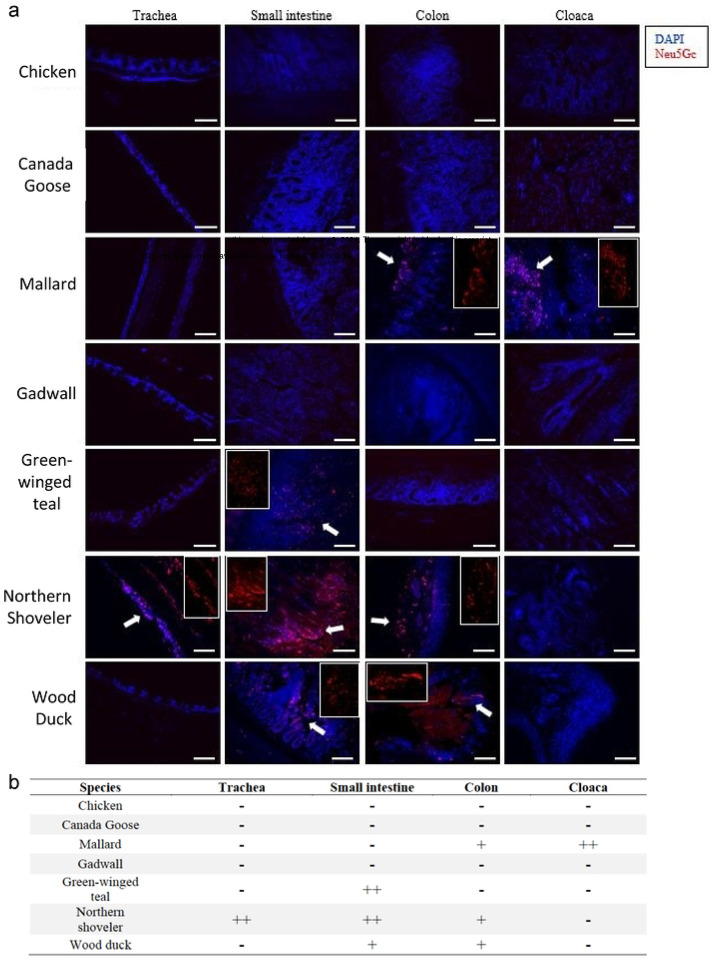
Distribution Neu5Gc glycan in the tissues of chicken, wild dabbling ducks, and Canada goose (Branta canadensis). Trachea, small intestine (duodenum/jejunum), colon and cloaca of chicken (Gallus gallus), Canada goose, mallard (Anas platyrhynchos), gadwall (Mareca strepera), green-winged teal (Anas carolinensis), northern shoveler (Spatula clypeata), and wood duck (Aix sponsa). Glycan terminated with Neu5Gc (red) was detected by immunofluorescence assay with anti-Neu5Gc polyclonal antibody. Nuclei were stained with DAPI (blue). The white arrows indicated positive staining of Neu5Gc, the areas of which have been enlarged at the side of each image. The scale bar at the bottom of each image was 100 μm. b) The abundance of Neu5Gc expression. We categorized the glycan receptor abundance: none or limited staining (−) without stained cells, moderate and sporadic staining (+) with <30% stained cells, and strong staining (++) with ≥ 30% of the stained cells.
Figure 5.
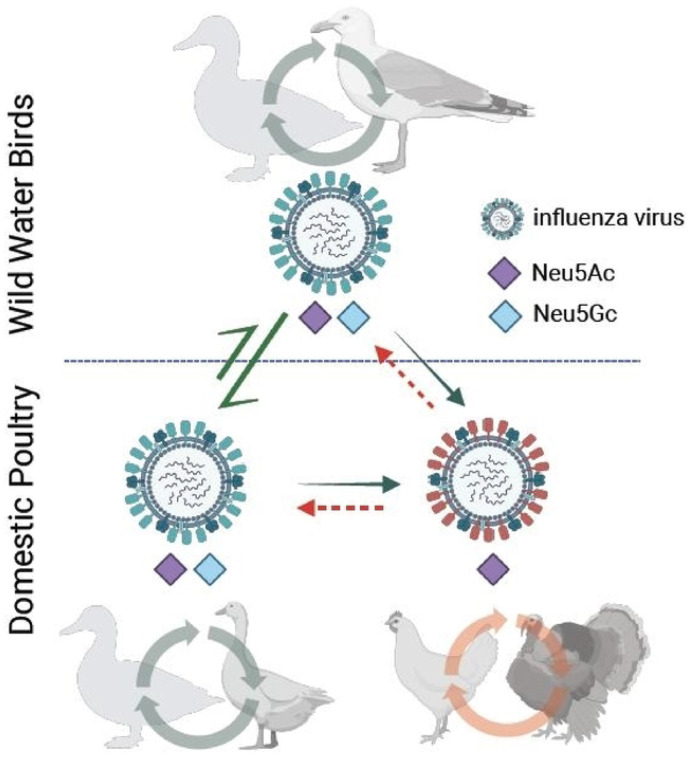
Figure 5.. A transmission model illustrating the mechanisms of H7 IAV transmission and evolution between wild waterbirds and domestic poultry.
An H7 IAV capable of binding to sialic acid receptors containing either Neu5Gc or Neu5Ac can be transmitted among wild waterbirds possessing these receptors, and can also transit between wild and domestic waterbirds expressed with the same receptors. This virus may then spill over into domestic poultry species (or another wild bird species) that expresses only Neu5Gc. Subsequent to this, the virus could acquire adaptive amino acid substitutions in the HA protein, leading it to lose its Neu5Gc binding ability and exclusively bind to Neu5Ac. Consequently, the transmission capability of these adapted viruses in waterbirds decreases.

References

    1. Olsen B, Munster VJ, Wallensten A, Waldenström J, Osterhaus ADME, Fouchier RAM. Global Patterns of Influenza A Virus in Wild Birds. Science. 2006;312(5772):384. - PubMed
    1. Long JS, Mistry B, Haslam SM, Barclay WS. Host and viral determinants of influenza A virus species specificity. Nature reviews Microbiology. 2019;17(2):67–81. - PubMed
    1. Jiang W, Hou G, Li J, Peng C, Wang S, Liu S, et al. Prevalence of H7N9 subtype avian influenza viruses in poultry in China, 2013–2018. Transboundary and Emerging Diseases. 2019;66(4):1758–61. - PubMed
    1. Xiang N, Li X, Ren R, Wang D, Zhou S, Greene CM, et al. Assessing Change in Avian Influenza A(H7N9) Virus Infections During the Fourth Epidemic - China, September 2015-August 2016. MMWR Morb Mortal Wkly Rep. 2016;65(49):1390–4. - PubMed
    1. Chen Y, Liang W, Yang S, Wu N, Gao H, Sheng J, et al. Human infections with the emerging avian influenza A H7N9 virus from wet market poultry: clinical analysis and characterisation of viral genome. Lancet. 2013;381(9881):1916–25. - PMC - PubMed

Publication types