


Echinobase: a resource to support the echinoderm research community
- PMID: 38262680
- PMCID: PMC11075573
- DOI: 10.1093/genetics/iyae002
Echinobase: a resource to support the echinoderm research community
Abstract
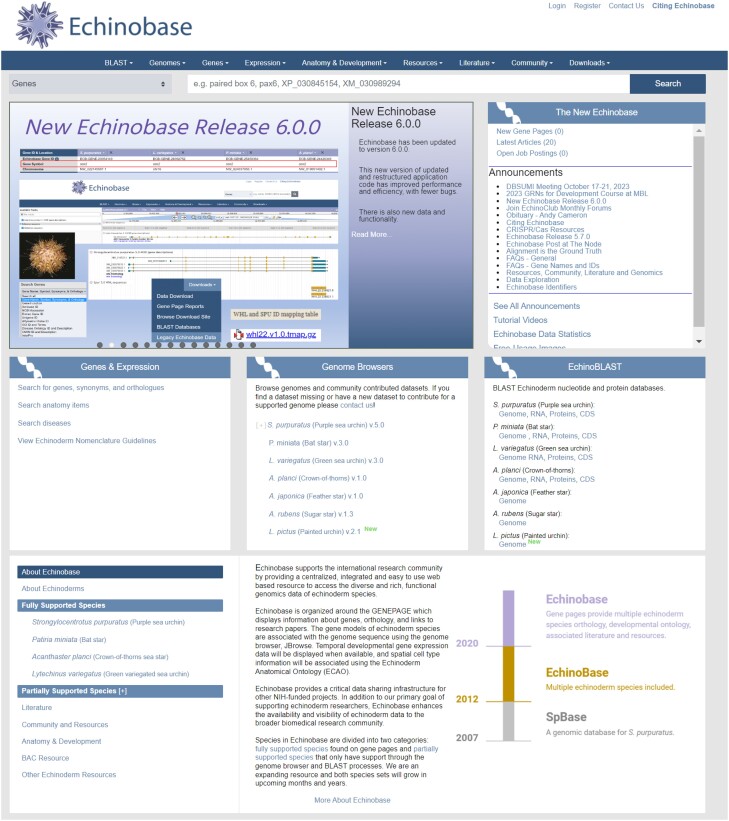
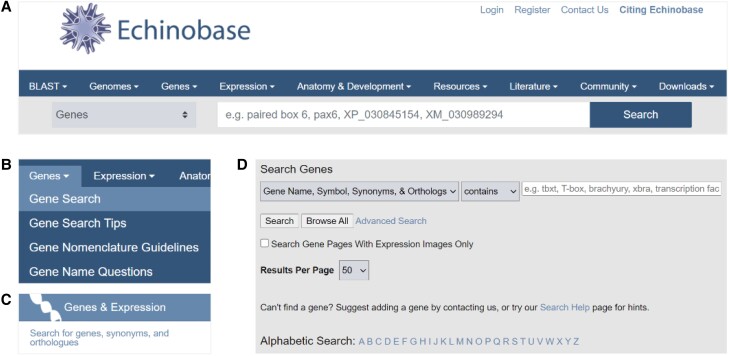
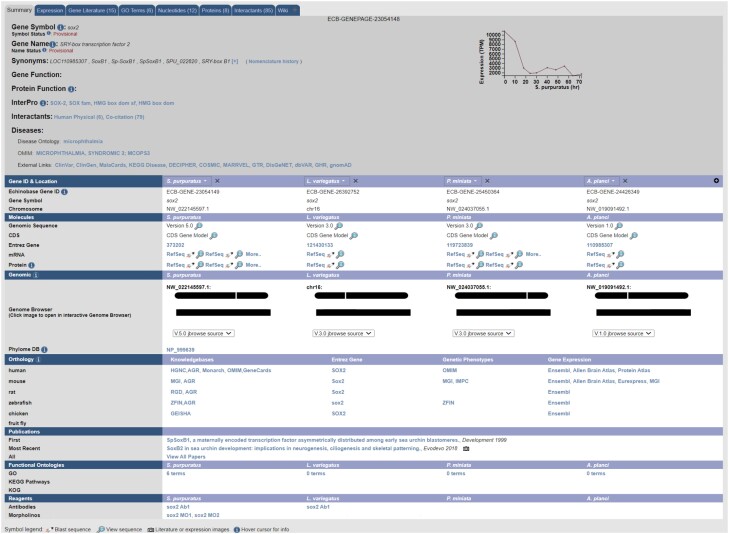
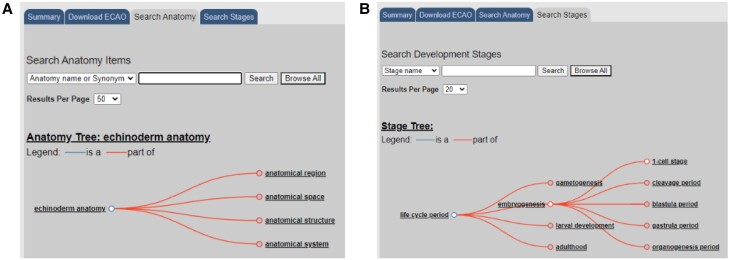
Echinobase (www.echinobase.org) is a model organism knowledgebase serving as a resource for the community that studies echinoderms, a phylum of marine invertebrates that includes sea urchins and sea stars. Echinoderms have been important experimental models for over 100 years and continue to make important contributions to environmental, evolutionary, and developmental studies, including research on developmental gene regulatory networks. As a centralized resource, Echinobase hosts genomes and collects functional genomic data, reagents, literature, and other information for the community. This third-generation site is based on the Xenbase knowledgebase design and utilizes gene-centric pages to minimize the time and effort required to access genomic information. Summary gene pages display gene symbols and names, functional data, links to the JBrowse genome browser, and orthology to other organisms and reagents, and tabs from the Summary gene page contain more detailed information concerning mRNAs, proteins, diseases, and protein-protein interactions. The gene pages also display 1:1 orthologs between the fully supported species Strongylocentrotus purpuratus (purple sea urchin), Lytechinus variegatus (green sea urchin), Patiria miniata (bat star), and Acanthaster planci (crown-of-thorns sea star). JBrowse tracks are available for visualization of functional genomic data from both fully supported species and the partially supported species Anneissia japonica (feather star), Asterias rubens (sugar star), and L. pictus (painted sea urchin). Echinobase serves a vital role by providing researchers with annotated genomes including orthology, functional genomic data aligned to the genomes, and curated reagents and data. The Echinoderm Anatomical Ontology provides a framework for standardizing developmental data across the phylum, and knowledgebase content is formatted to be findable, accessible, interoperable, and reusable by the research community.
Keywords: biocuration; database; echinoderm; genomics; knowledgebase; model organism; ontology.
© The Author(s) 2024. Published by Oxford University Press on behalf of The Genetics Society of America.
Conflict of interest statement
Conflicts of interest: The author(s) declare no conflicts of interest.
Figures
References
-
- Arshinoff BI, Cary GA, Karimi K, Foley S, Agalakov S, Delgado F, Lotay VS, Ku CJ, Pells TJ, Beatman TR, et al. 2022. Echinobase: leveraging an extant model organism database to build a knowledgebase supporting research on the genomics and biology of echinoderms. Nucleic Acids Res. 50(D1):D970–D979. doi: 10.1093/nar/gkab1005. - DOI - PMC - PubMed
Publication types
MeSH terms
Grants and funding
LinkOut - more resources
Full Text Sources
Research Materials
Miscellaneous
