


A brief measure of non-drug reinforcement: Association with treatment outcomes during initial substance use recovery
- PMID: 38266572
- PMCID: PMC10922801
- DOI: 10.1016/j.drugalcdep.2024.111092
A brief measure of non-drug reinforcement: Association with treatment outcomes during initial substance use recovery
Abstract
Background: Translational research demonstrates that drug use is inversely associated with availability and engagement with meaningful non-drug reinforcers. Evaluation of non-drug reinforcement in treatment-receiving clinical populations is limited, likely owing to the time intensive nature of existing measures. This study explores the association of non-drug reinforcers with treatment outcomes using a novel, brief measure of past month non-drug reinforcement quantifying three elements: relative frequency, access, and enjoyability.
Methods: Respondents enrolled in substance use treatment (residential, intensive outpatient, and medically managed withdrawal) in clinics across the United States (N = 5481) completed standardized assessments of non-drug reinforcement and treatment outcomes (i.e., return to use and life satisfaction) one-month after treatment discharge. Non-drug reinforcement measures (availability, engagement, enjoyability) were used as predictors of return to use and life satisfaction using generalized linear models.
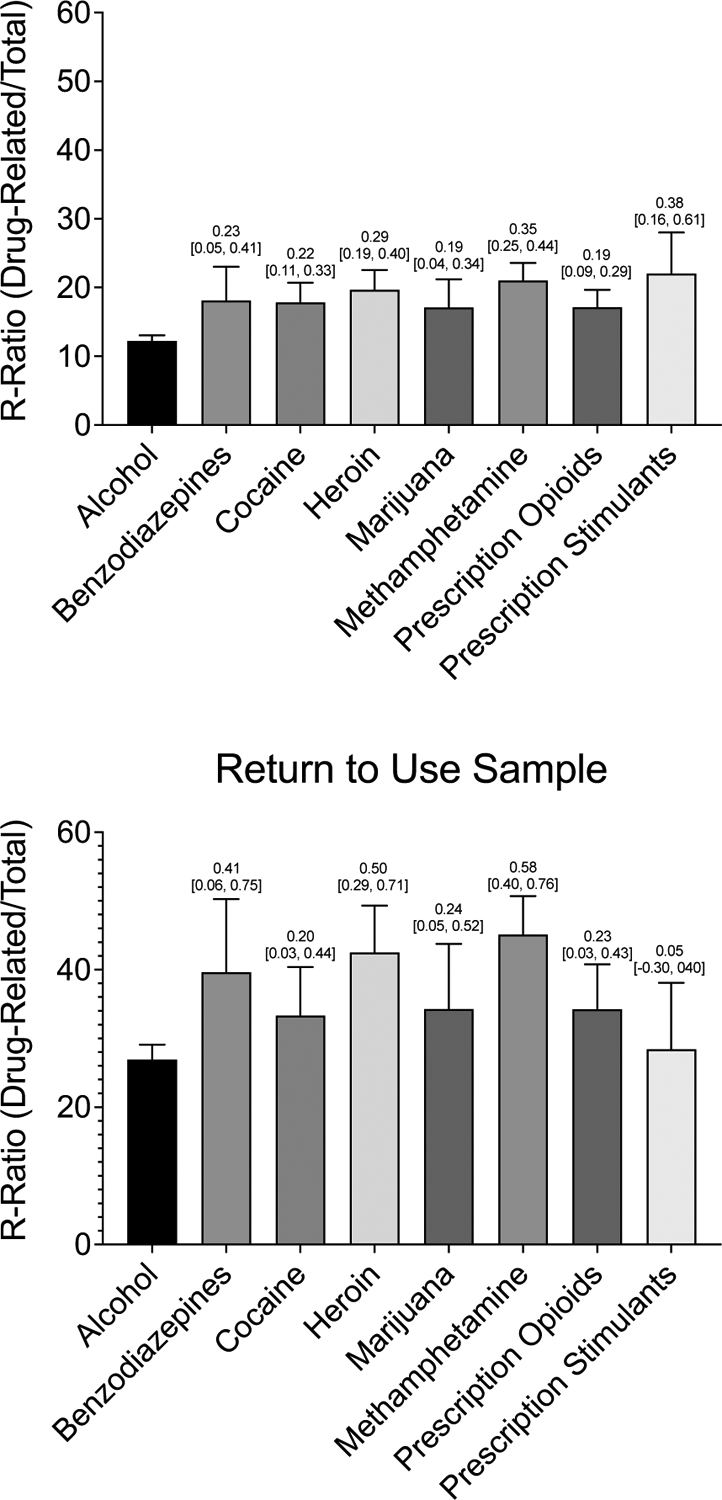
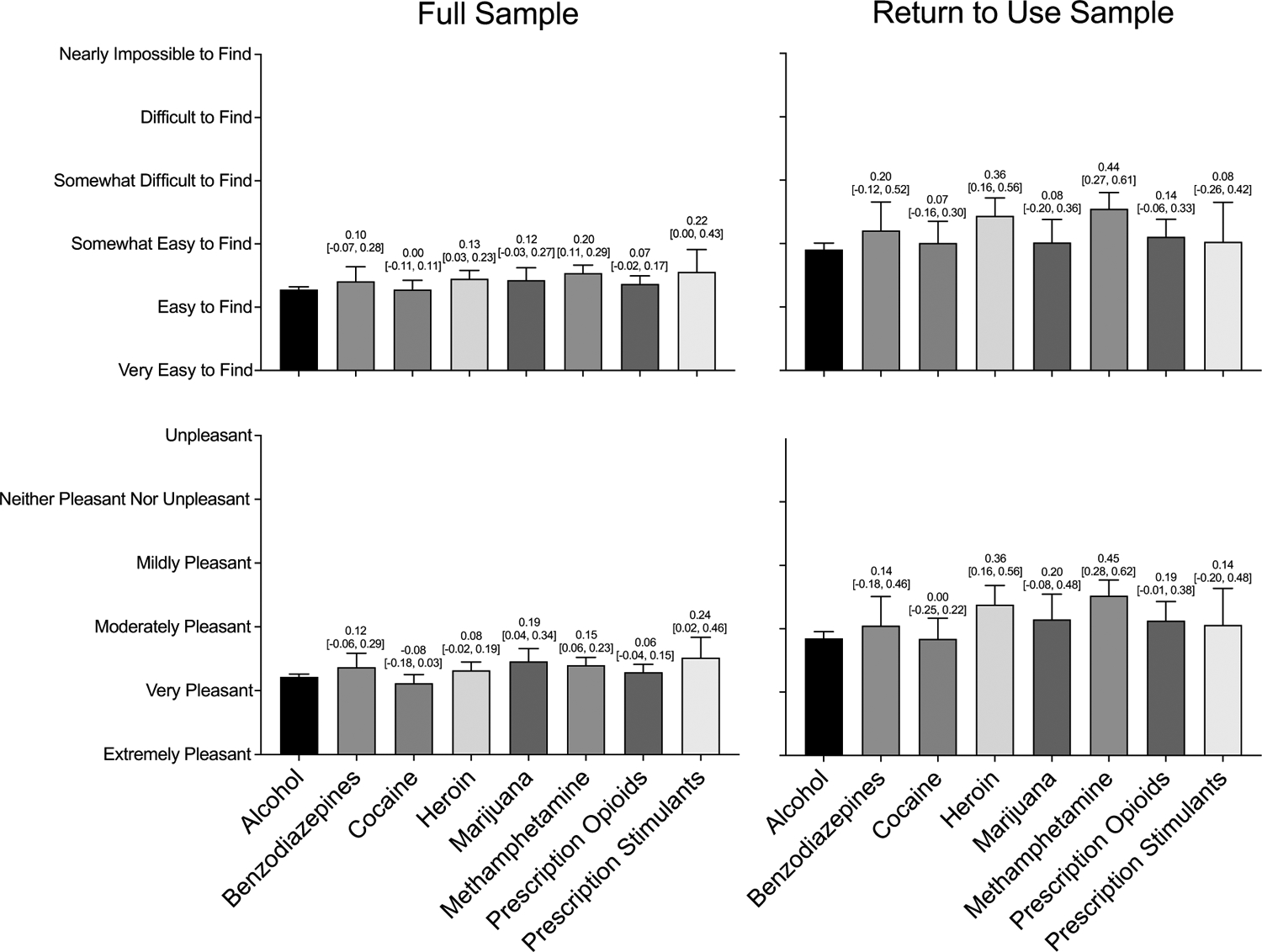
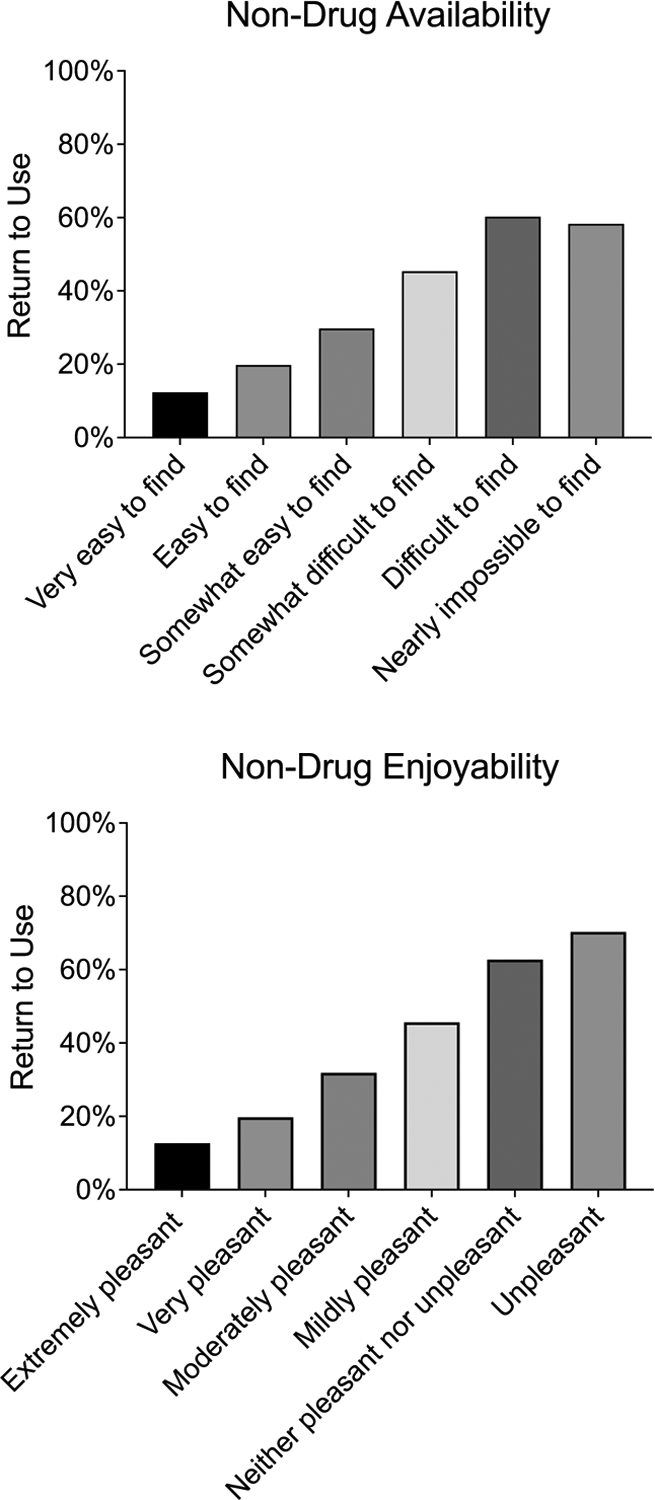
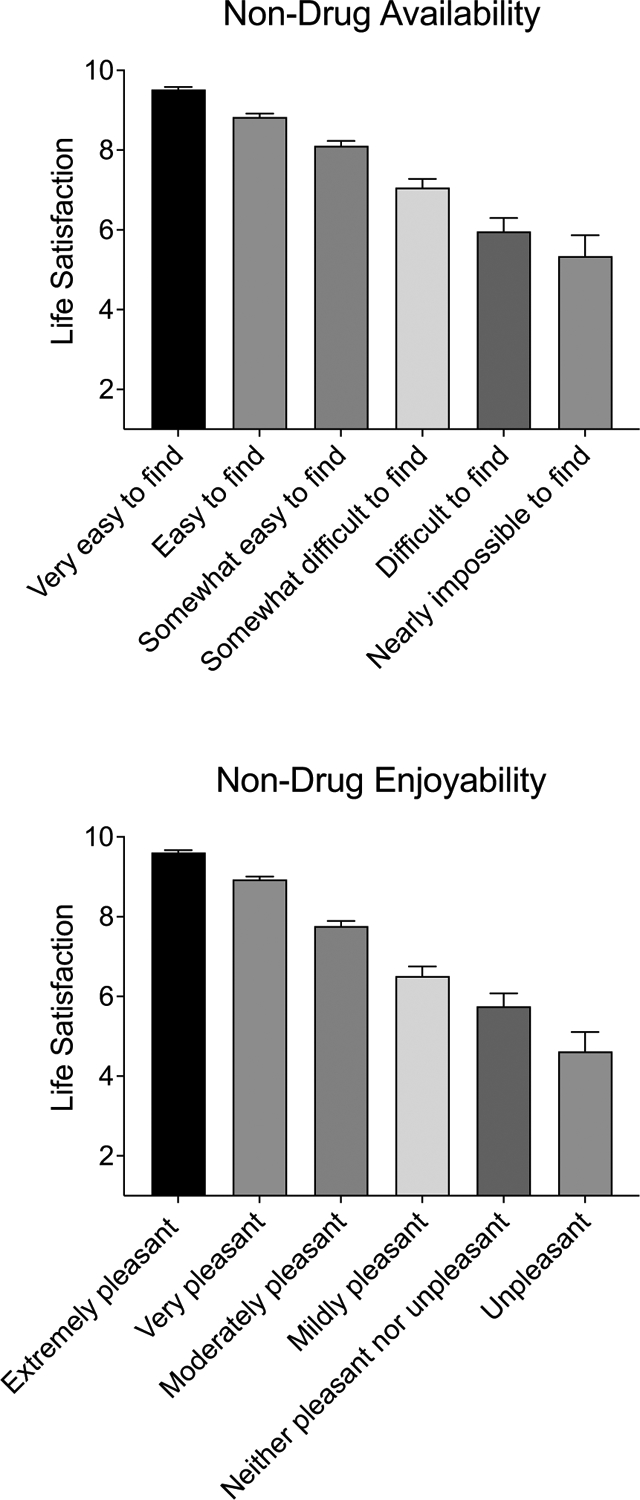
Results: Non-drug reinforcement indices were associated with return to use and life satisfaction in unadjusted models (e.g., 12.4 % versus 58.3 % return to use for those with the highest and lowest availability, respectively). Consistent results were observed in models adjusted for sociodemographic variables and risk factors (i.e., sleep disturbance, anhedonia, stress). Comparisons by drug class generally showed lower non-drug reinforcement among patients reporting heroin or methamphetamine as their primary drug.
Conclusions: Results highlight the importance of non-drug reinforcement during the first month following treatment. Rapid measurement of non-drug reinforcement in stepped care settings may illuminate critical deficits in early stages of behavior change, identify those at greatest risk for return to use, and provide targets for treatment to improve recovery trajectories.
Keywords: Addiction; Behavioral Economics; Partial Hospitalization; Stepped Care; Substance Use.
Copyright © 2024 Elsevier B.V. All rights reserved.
Conflict of interest statement
Declaration of Competing Interest The authors have no conflicts of interest to disclose.
Figures
References
-
- Ahmed SH, 2018. Individual decision-making in the causal pathway to addiction: contributions and limitations of rodent models. Pharmacology Biochemistry and Behavior 164, 22–31. - PubMed
-
- Andersson HW, Wenaas M, Nordfjærn T, 2019. Relapse after inpatient substance use treatment: A prospective cohort study among users of illicit substances. Addictive Behaviors 90, 222–228. - PubMed
-
- Benjamini Y, & Hochberg Y, 1995. Controlling the false discovery rate: a practical and powerful approach to multiple testing. Journal of the Royal Statistical Society: Series B (Methodological), 57(1), 289–300.
MeSH terms
Substances
Grants and funding
LinkOut - more resources
Full Text Sources
Medical
Miscellaneous
