


A paradoxical switch: the implications of excitatory GABAergic signaling in neurological disorders
- PMID: 38268565
- PMCID: PMC10805837
- DOI: 10.3389/fpsyt.2023.1296527
A paradoxical switch: the implications of excitatory GABAergic signaling in neurological disorders
Abstract
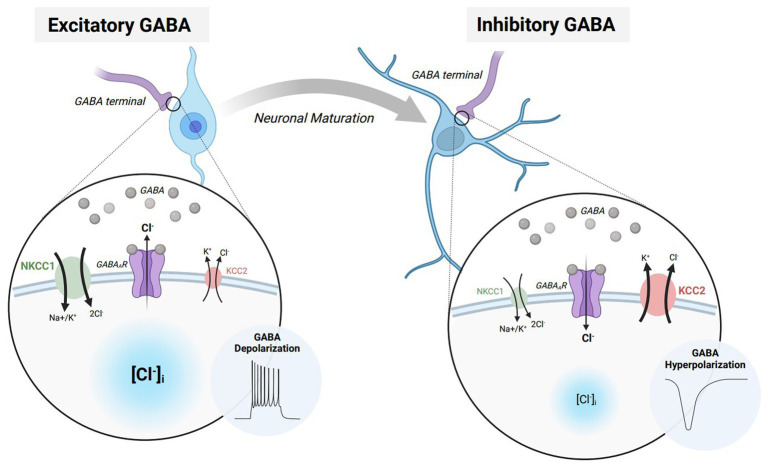
Gamma-aminobutyric acid (GABA) is the primary inhibitory neurotransmitter in the central nervous system. In the mature brain, inhibitory GABAergic signaling is critical in maintaining neuronal homeostasis and vital human behaviors such as cognition, emotion, and motivation. While classically known to inhibit neuronal function under physiological conditions, previous research indicates a paradoxical switch from inhibitory to excitatory GABAergic signaling that is implicated in several neurological disorders. Various mechanisms have been proposed to contribute to the excitatory switch such as chloride ion dyshomeostasis, alterations in inhibitory receptor expression, and modifications in GABAergic synaptic plasticity. Of note, the hypothesized mechanisms underlying excitatory GABAergic signaling are highlighted in a number of neurodevelopmental, substance use, stress, and neurodegenerative disorders. Herein, we present an updated review discussing the presence of excitatory GABAergic signaling in various neurological disorders, and their potential contributions towards disease pathology.
Keywords: GABA; GABAARs; depolarizing; diseases; excitatory; neurological.
Copyright © 2024 McArdle, Arnone, Heaney and Raab-Graham.
Conflict of interest statement
The authors declare that the research was conducted in the absence of any commercial or financial relationships that could be construed as a potential conflict of interest. The author(s) declared that they were an editorial board member of Frontiers, at the time of submission. This had no impact on the peer review process and the final decision.
Figures



References
Publication types
Grants and funding
LinkOut - more resources
Full Text Sources
