


An improved conflict avoidance assay reveals modality-specific differences in pain hypersensitivity across sexes
- PMID: 38277178
- PMCID: PMC11090034
- DOI: 10.1097/j.pain.0000000000003132
An improved conflict avoidance assay reveals modality-specific differences in pain hypersensitivity across sexes
Abstract
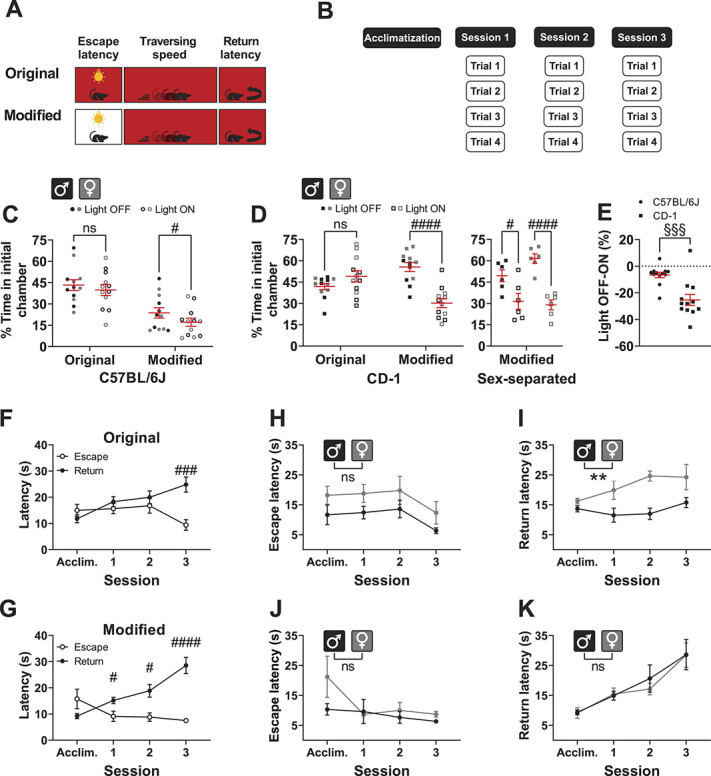
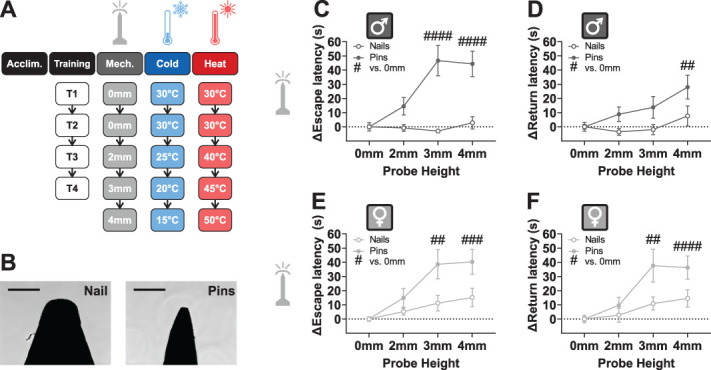
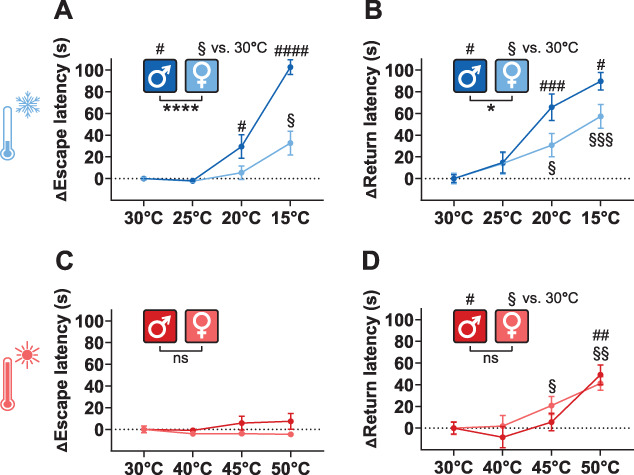
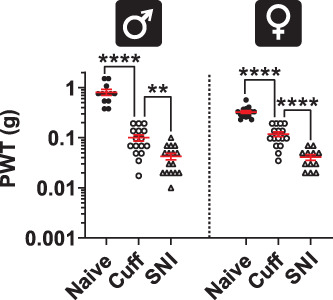
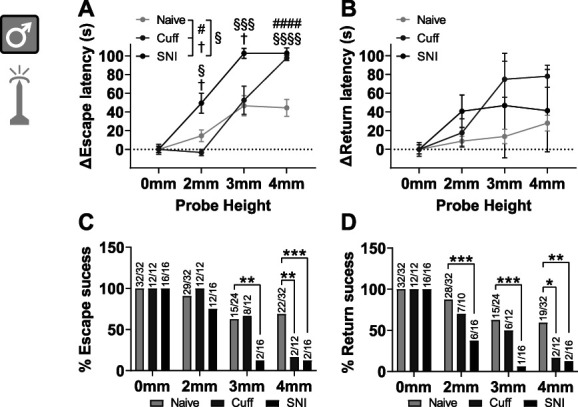
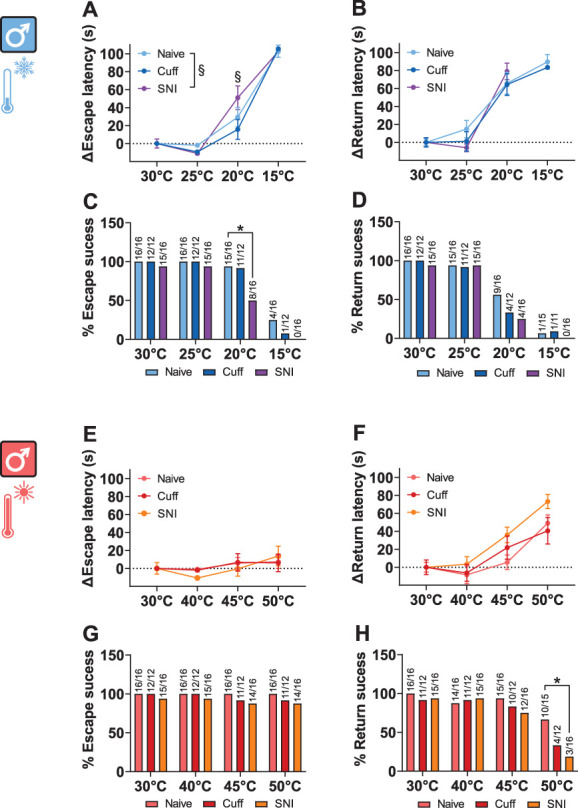
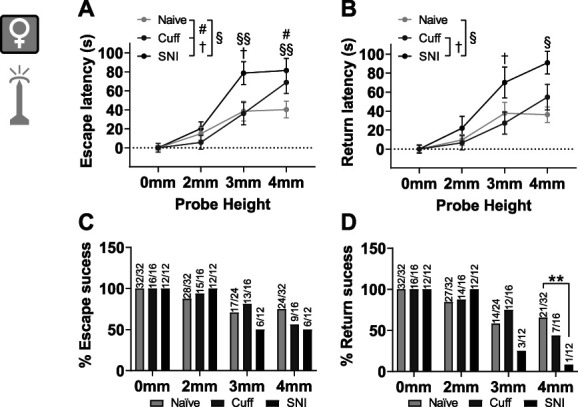
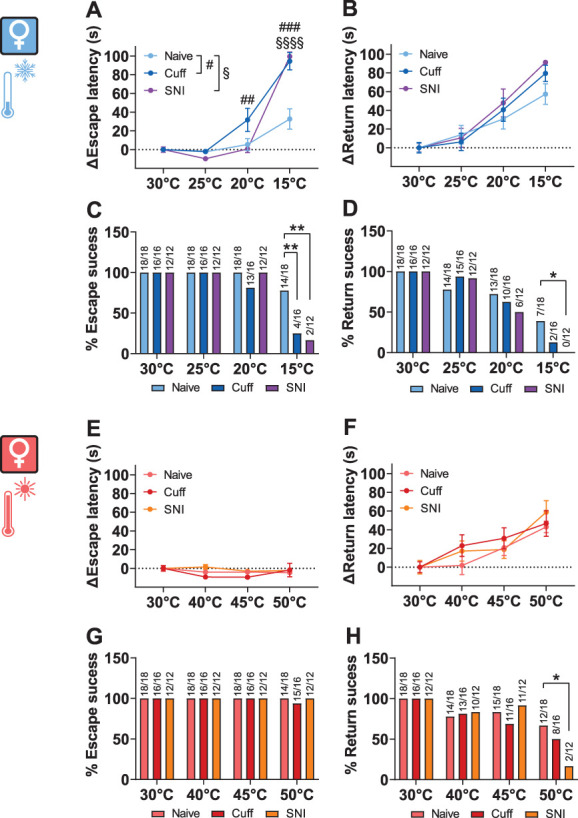
Abnormal encoding of somatosensory modalities (ie, mechanical, cold, and heat) are a critical part of pathological pain states. Detailed phenotyping of patients' responses to these modalities have raised hopes that analgesic treatments could one day be tailored to a patient's phenotype. Such precise treatment would require a profound understanding of the underlying mechanisms of specific pain phenotypes at molecular, cellular, and circuitry levels. Although preclinical pain models have helped in that regard, the lack of a unified assay quantifying detailed mechanical, cold, and heat pain responses on the same scale precludes comparing how analgesic compounds act on different sensory phenotypes. The conflict avoidance assay is promising in that regard, but testing conditions require validation for its use with multiple modalities. In this study, we improve upon the conflict avoidance assay to provide a validated and detailed assessment of all 3 modalities within the same animal, in mice. We first optimized testing conditions to minimize the necessary amount of training and to reduce sex differences in performances. We then tested what range of stimuli produce dynamic stimulus-response relationships for different outcome measures in naive mice. We finally used this assay to show that nerve injury produces modality-specific sex differences in pain behavior. Our improved assay opens new avenues to study the basis of modality-specific abnormalities in pain behavior.
Keywords: Cold; Conflict avoidance; Cuff; Female; Heat; Mechanical; Modality; Mouse; Neuropathic pain; Operant pain behavior; Preclinical; Preclinical pain models; Sex difference; Thermal; Translation; c57bl/6.
Copyright © 2024 The Author(s). Published by Wolters Kluwer Health, Inc. on behalf of the International Association for the Study of Pain.
Conflict of interest statement
The authors have no conflicts of interest to declare.
Figures
References
-
- Andersen HH, Poulsen JN, Uchida Y, Nikbakht A, Arendt-Nielsen L, Gazerani P. Cold and L-menthol-induced sensitization in healthy volunteers—a cold hypersensitivity analogue to the heat/capsaicin model. PAIN 2015;156:880–9. - PubMed
-
- Baron R, Dickenson AH, Calvo M, Dib-Hajj SD, Bennett DL. Maximizing treatment efficacy through patient stratification in neuropathic pain trials. Nat Rev Neurol 2023;19:53–64. - PubMed
-
- Baron R, Förster M, Binder A. Subgrouping of patients with neuropathic pain according to pain-related sensory abnormalities: a first step to a stratified treatment approach. Lancet Neurol 2012;11:999–1005. - PubMed
-
- Baron R, Maier C, Attal N, Binder A, Bouhassira D, Cruccu G, Finnerup NB, Haanpää M, Hansson P, Hüllemann P, Jensen TS, Freynhagen R, Kennedy JD, Magerl W, Mainka T, Reimer M, Rice ASC, Segerdahl M, Serra J, Sindrup S, Sommer C, Tölle T, Vollert J, Treede R-D; German Neuropathic Pain Research Network DFNS, and the EUROPAIN, and NEUROPAIN consortia. Peripheral neuropathic pain: a mechanism-related organizing principle based on sensory profiles. PAIN 2017;158:261–72. - PMC - PubMed
-
- Benbouzid M, Pallage V, Rajalu M, Waltisperger E, Doridot S, Poisbeau P, Freund-Mercier MJ, Barrot M. Sciatic nerve cuffing in mice: a model of sustained neuropathic pain. Eur J Pain 2008;12:591–9. - PubMed
MeSH terms
Grants and funding
LinkOut - more resources
Full Text Sources
