Gastrointestinal parasite infections in Nepalese Gurkha recruits arriving in the United Kingdom from 2012-2020
- PMID: 38277403
- PMCID: PMC10849272
- DOI: 10.1371/journal.pntd.0011931
Gastrointestinal parasite infections in Nepalese Gurkha recruits arriving in the United Kingdom from 2012-2020
Abstract
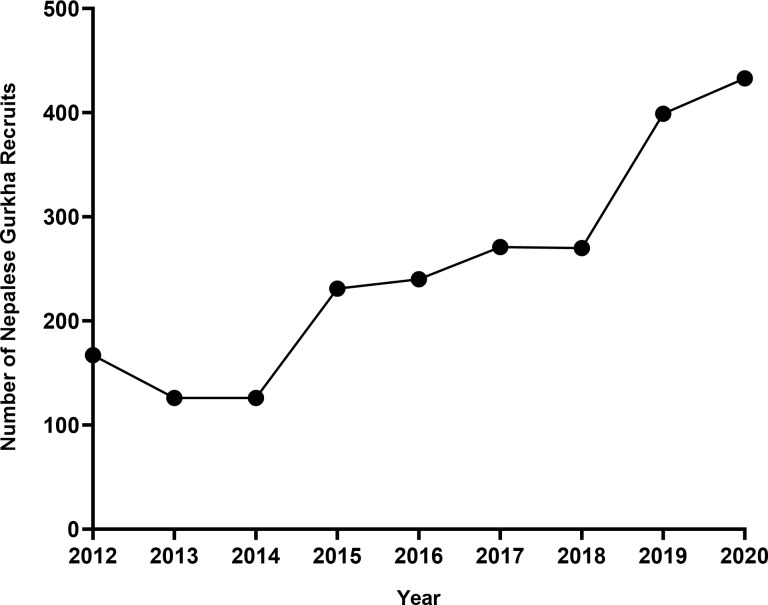
Background: Gastrointestinal parasite (GIP) infections are a major cause of global morbidity, infecting hundreds of millions of people each year and potentially leading to lifelong infection and serious complications. Few data exist on screening for GIP infections in migrants entering the UK or on the current performance of different traditional diagnostic approaches. This study aimed to describe the prevalence of GIP infections in Nepalese Gurkha recruits screened on arrival in the UK.
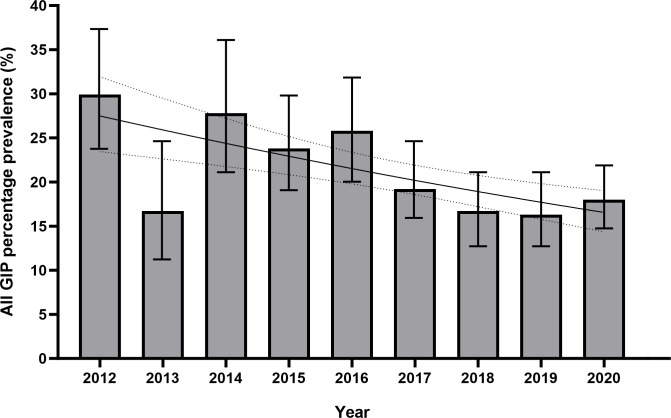
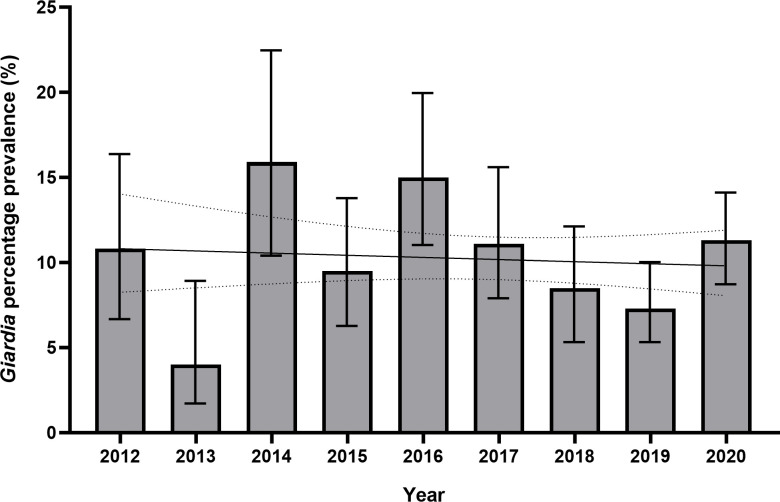
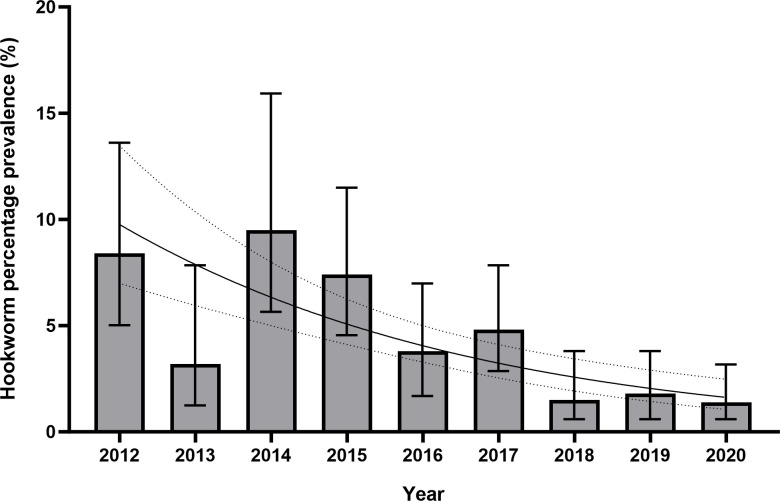
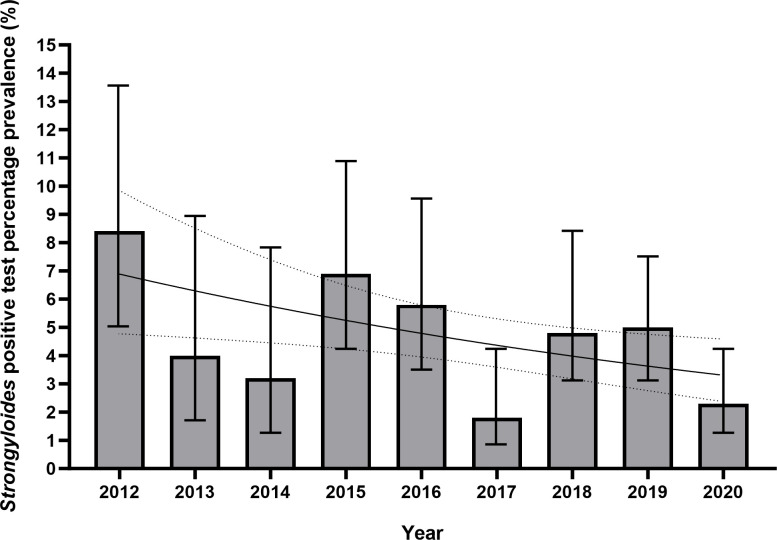
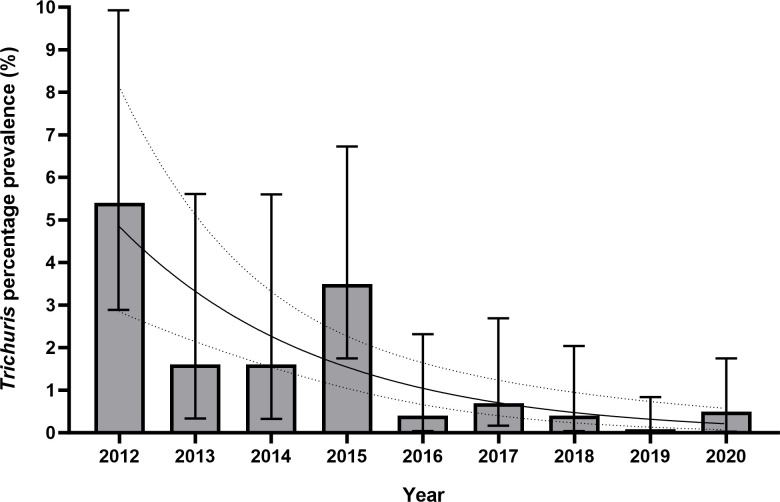
Methodology/principal findings: We present a retrospective analysis of data from screening male adults (18-21 years) who arrived in the UK from Nepal between 2012 and 2020. Three separate faecal samples were obtained from participants at weekly intervals and processed for formalin-ethyl acetate (FEA) concentration/light microscopy and charcoal culture. Serum samples were analysed for IgG antibodies to Strongyloides stercoralis by ELISA. Results were available from 2,263 participants, of whom 463 (20.5%, 95% CI 18.8%-22.2%) had a positive diagnostic test for at least one GIP infection. A total of 525 potential infections were identified. Giardia duodenalis was most common (231/2263, 10.2%), followed by S. stercoralis (102/2263, 4.5%), and hookworm species (86/2263, 3.8%). Analysis (microscopy and culture) of the initial stool sample diagnosed only 244/427 (57.1%) faecally identified pathogens, including 41/86 (47.7%) hookworm infections. The proportion of participants infected with any GIP showed a downward trend over the study period. Log-binomial regression showed risk of infection decreasing by 6.1% year-on-year (95% CI 3.2% - 9.0%). This was driven predominantly by a fall in hookworm, S. stercoralis and Trichuris trichiura prevalence.
Conclusions/significance: The level of potentially pathogenic GIP infection in young Nepalese men migrating to the UK is high (20.5%) and requires a combined diagnostic approach including serology and analysis of multiple stool samples incorporating specialised parasitological methods. Advances in molecular approaches may optimise and simplify the intensive screening strategy required.
Copyright: © 2024 Nevin et al. This is an open access article distributed under the terms of the Creative Commons Attribution License, which permits unrestricted use, distribution, and reproduction in any medium, provided the original author and source are credited.
Conflict of interest statement
The authors have declared that no competing interests exist.
Figures
References
-
- Office for Health Improvement and Disparities, United Kingdom Government. UK Migrant Health Guide [Internet]. 2021. [Cited 18 Dec 23]. Available from: https://www.gov.uk/government/collections/migrant-health-guide
-
- Montresor A, Mwinzi P, Mupfasoni D, Garba A. Reduction in DALYs lost due to soil-transmitted helminthiases and schistosomiasis from 2000 to 2019 is parallel to the increase in coverage of the global control programmes. PLoS Negl Trop Dis. 2022;16(7):e0010575. doi: 10.1371/journal.pntd.0010575 - DOI - PMC - PubMed
MeSH terms
LinkOut - more resources
Full Text Sources
Medical