Review
. 2024 Mar;21(3):224-247.
doi: 10.1038/s41571-023-00852-0. Epub 2024 Jan 26.

BRAF - a tumour-agnostic drug target with lineage-specific dependencies

Affiliations
Review

BRAF - a tumour-agnostic drug target with lineage-specific dependencies

Aphrothiti J Hanrahan et al. Nat Rev Clin Oncol. 2024 Mar.

Abstract

In June 2022, the FDA granted Accelerated Approval to the BRAF inhibitor dabrafenib in combination with the MEK inhibitor trametinib for the treatment of adult and paediatric patients (≥6 years of age) with unresectable or metastatic BRAFV600E-mutant solid tumours, except for BRAFV600E-mutant colorectal cancers. The histology-agnostic approval of dabrafenib plus trametinib marks the culmination of two decades of research into the landscape of BRAF mutations in human cancers, the biochemical mechanisms underlying BRAF-mediated tumorigenesis, and the clinical development of selective RAF and MEK inhibitors. Although the majority of patients with BRAFV600E-mutant tumours derive clinical benefit from BRAF inhibitor-based combinations, resistance to treatment develops in most. In this Review, we describe the biochemical basis for oncogenic BRAF-induced activation of MAPK signalling and pan-cancer and lineage-specific mechanisms of intrinsic, adaptive and acquired resistance to BRAF inhibitors. We also discuss novel RAF inhibitors and drug combinations designed to delay the emergence of treatment resistance and/or expand the population of patients with BRAF-mutant cancers who benefit from molecularly targeted therapies.


Conflict of interest statement

Competing Interests Statement

D.B.S. has served as a consultant/advisory board member for Pfizer, Lilly/Loxo Oncology, Vividion Therapeutics, Elsie Biotherapeutics, Function Oncology, Fore Therapeutics, Fog Pharma, and BridgeBio. N.R. is on the scientific advisory board (SAB) and owns equity in Beigene, Zai Labs, MapKure, and Ribon. He has equity in Effector, Kura, and Fortress. N. Rosen is also on the SAB of Astra Zeneca, Chugai, Ikena, Concarlo and a past SAB member of Novartis, Millennium-Takeda, Kura, and Araxes. N. Rosen is a consultant to RevMed, Tarveda, Array-Pfizer, Verustem, Boeringher Ingelheim, and Eli Lilly. He receives research funding from Revmed, Astra Zeneca, Array Pfizer, and Boerhinger Ingelheim. The remaining authors have declared that no conflict of interest exists.

Figures
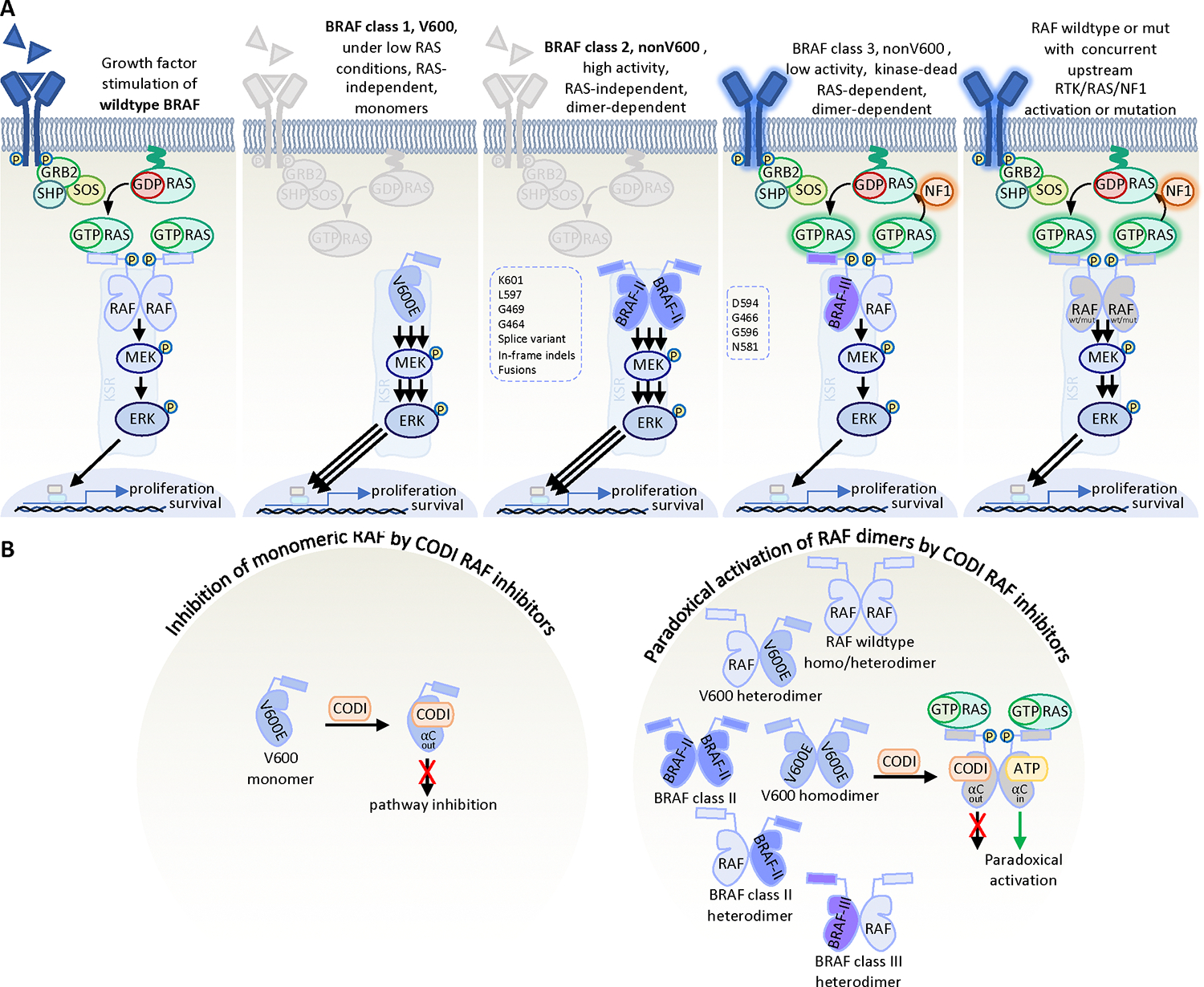
Figure 1.
Figure 1.. Mechanism of activation of wildtype and Class I/II/II BRAF mutants.
A) BRAF mutants are classified based on their dependence on upstream RTK/RAS activation and dimerization for kinase activation. B) Schematic showing BRAF V600E inhibition by αC-helix IN/DFG OUT RAF inhibitors (left) as compared to paradoxical activation of RAF dimers (right).
Figure 2:
Figure 2:. Frequency of BRAF mutations in common cancer subtype.
A) Lollipop plot illustrating common BRAF variants in selected cancer types. The structural domains are color coded as outlined in the figure. The sizes of the circle denote the percentage of samples with that variant based on the MSK-IMPACT cohort. Variant names are color coded by BRAF mutant classes based on prior publication. Only the most common variants were listed. B) Distribution of BRAF mutant classes in selected detailed cancer types in the MSK-IMPACT cohort.
Figure 3:
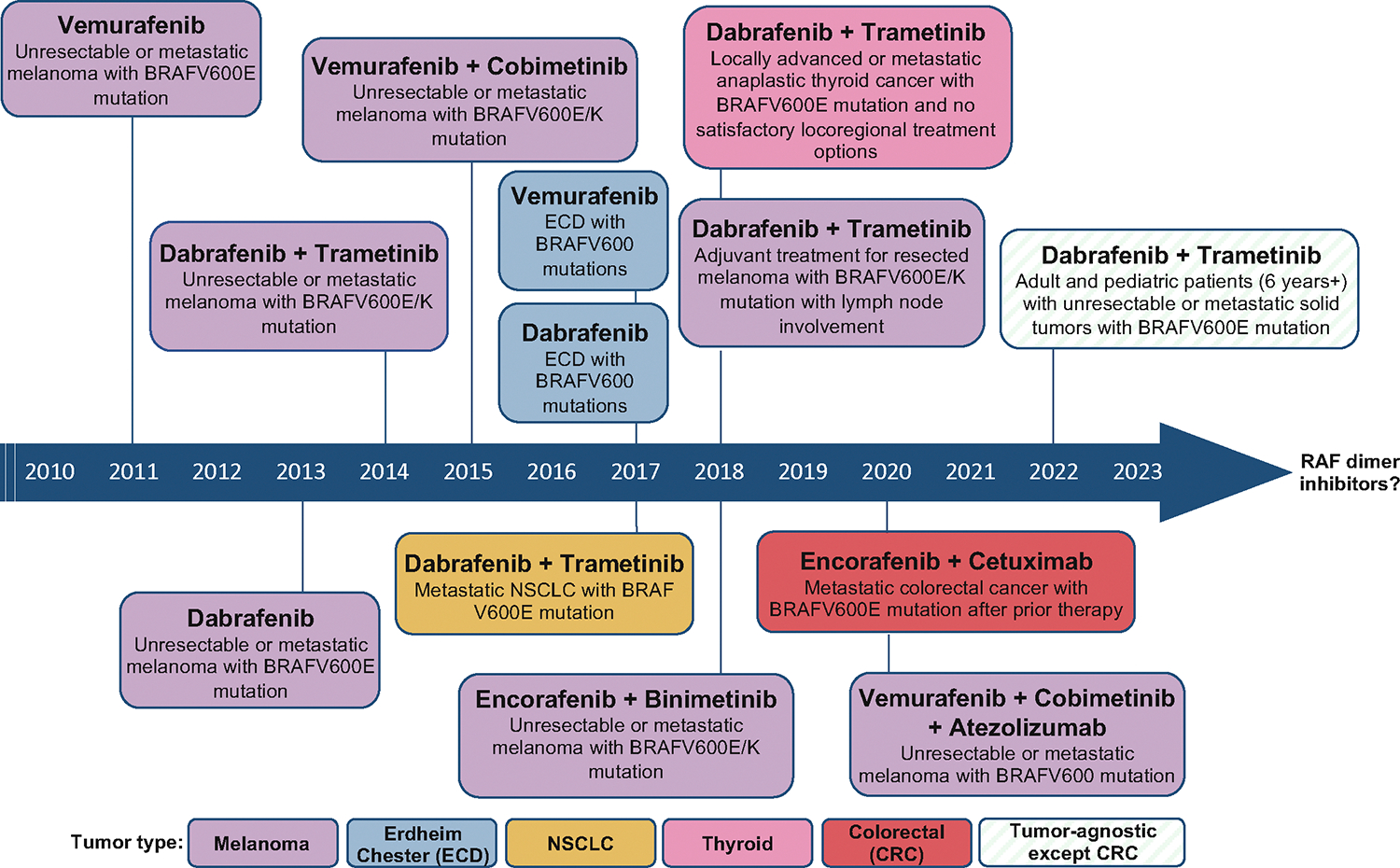
Figure 3:
Timeline of FDA-approvals of RAF inhibitors and RAF inhibitor-based combination therapies for BRAF V600 mutant tumors.
Figure 4:
Figure 4:. Impact of tumor lineage on response and response duration to dabrafenib plus trametinib combination therapy.
Left: Investigator-assessed overall response rate. Right: Investigator-assessed duration of response and progression-free survival. Results represent a compilation of the following clinical trials: NCT02034110 (Thyroid Cancer, Hairy Cell Leukemia, Glioma, Biliary Tract Cancer); NCT01336634 (Non-small cell lung cancer (NSCLC)); NCT01584648 (Melanoma); NCT02124772 (Langerhans Cell Histiocytosis); NCT01072175 (Metastatic Colorectal Cancer)
Figure 5:
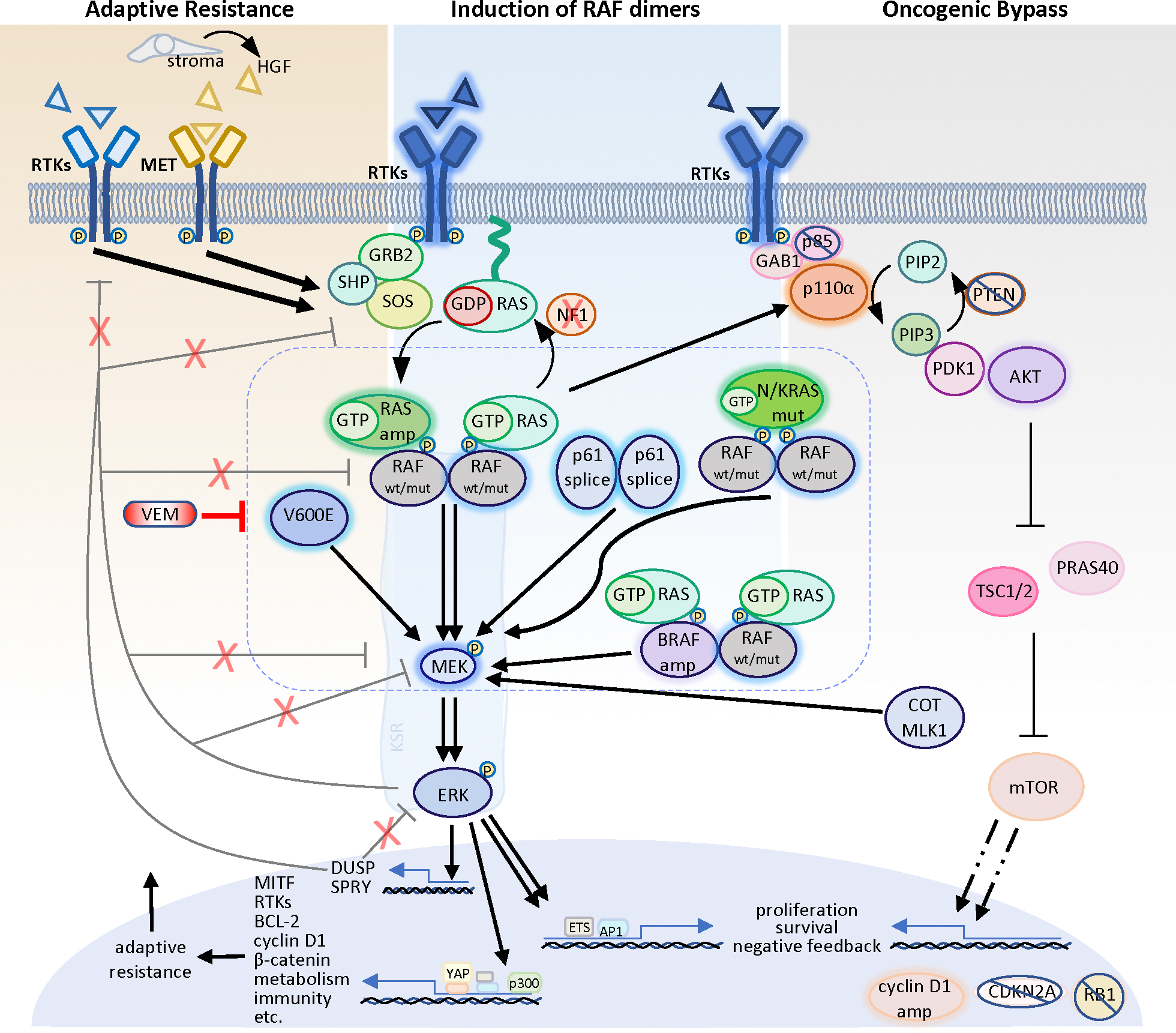
Figure 5:. Mechanisms of RAF inhibitor resistance.
Left (Adaptive resistance): Following RAF inhibitor treatment (depicted as vemurafenib, VEM, and representing all BRAF monomer inhibitors dabrafenib and encorafenib) of BRAF V600E mutant cells, inhibition of ERK results in a rapid decline in the expression of negative feedback regulation (see red X’s marking the loss of negative feedback signaling) which in a cell context dependent manner can result in activation of receptor tyrosine kinase (RTKs) and RAS. RAS activation induces RAF dimer formation which results in a rebound in ERK activation which can attenuate the anti-tumor activity of RAF inhibitors. The specific RTKs involved vary as a function of tumor lineage, with interpatient variable also significant among individual patients within specific tumor subtypes. Middle (Induction of RAF dimers): Various pre-existing and acquired mechanisms of drug resistance converge on induction of RAF dimers, including BRAF amplification, expression of BRAF splice variants lacking the RAS binding domain, RAS mutation and amplification, NF1 loss, among others. Right (Oncogenic Bypass): Activation of parallel or downstream signaling pathways or effectors that reduce dependency on BRAF, such as mutations in the PI3K/AKT pathway, loss of PTEN expression (represented by overlaying blue circle with a slash), overexpression of COT and MLK1, cyclin D1 amplification, and loss-of-function alterations in CDKN2A and RB1 can also induce RAF inhibitor resistance.
Figure 6:
Figure 6:. Therapeutic strategies to overcome genetic and epigenetic mediated resistance to RAF inhibitors.
A simplified signaling schematic colored to match novel pre-clinical or clinical compounds designed to inhibit the MAPK pathway, PI3K/AKT pathway, and other mechanisms of tumor survival in BRAF-mutant cells. Drugs on the left target vertical or parallel pathways. Drugs and their protein targets are colored the same. FDA-approved and investigational RAF inhibitors are depicted on the right, with the colored dots indicating selectivity for RAF monomers, dimers, or both; structural configuration of drug binding; and the extent to which each drug induces RAF priming and RAF/MEK interaction.
Figure 7:
Figure 7:. Status of RAF inhibitor clinical trials.
RAF inhibitors and combinations of FDA-approved and investigational agents in clinical trials are organized per cancer type. Colored circles indicate FDA-approval or phase of clinical trial. Colored lettering provides additional information about each drug, as indicated in the legend. Abbreviations: Vemurafenib, VEM; Dabrafenib, DAB; Belvarafenib, BELVA; Encorafenib, ENCOR; Trametinib, TRAM; Cobimetinib, COBI; Binimetinib, BINI; Cetuximab, CETUX; Palbociclib; PALBO; Pembrolizumab, Pembro.

References

    1. Davies H et al. Mutations of the BRAF gene in human cancer. Nature 417, 949–954, doi: 10.1038/nature00766 (2002). - DOI - PubMed
    1. Poulikakos PI, Sullivan RJ & Yaeger R Molecular Pathways and Mechanisms of BRAF in Cancer Therapy. Clin Cancer Res 28, 4618–4628, doi: 10.1158/1078-0432.CCR-21-2138 (2022). - DOI - PMC - PubMed
    1. Kopetz S et al. Phase II Pilot Study of Vemurafenib in Patients With Metastatic BRAF-Mutated Colorectal Cancer. J Clin Oncol 33, 4032–4038, doi: 10.1200/JCO.2015.63.2497 (2015). - DOI - PMC - PubMed
    1. Yaeger R et al. Mechanisms of Acquired Resistance to BRAF V600E Inhibition in Colon Cancers Converge on RAF Dimerization and Are Sensitive to Its Inhibition. Cancer Res 77, 6513–6523, doi: 10.1158/0008-5472.CAN-17-0768 (2017). - DOI - PMC - PubMed
    1. Chakravarty D & Solit DB Clinical cancer genomic profiling. Nature reviews. Genetics 22, 483–501, doi: 10.1038/s41576-021-00338-8 (2021). - DOI - PubMed

MeSH terms