


Medical management of painful achalasia: a patient-driven systematic review
- PMID: 38282166
- PMCID: PMC11060105
- DOI: 10.1093/dote/doae005
Medical management of painful achalasia: a patient-driven systematic review
Abstract
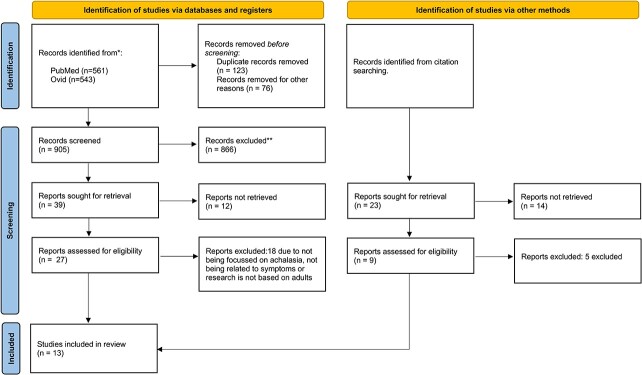
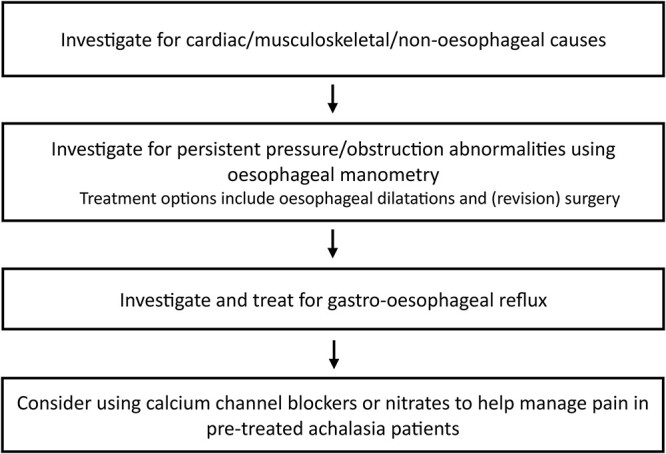
Achalasia is a rare esophageal disorder characterized by abnormal esophageal motility and swallowing difficulties. Pain and/or spasms often persist or recur despite effective relief of the obstruction. A survey by UK charity 'Achalasia Action' highlighted treatments for achalasia pain/spasms as a key research priority. In this patient-requested systematic review, we assessed the existing literature on pharmacological therapies for painful achalasia. A systematic review of the literature using Medline, Embase and Cochrane databases was performed to identify studies evaluating pharmacological therapies for achalasia. Methodological quality of included randomized controlled trials was assessed using the Cochrane Risk of Bias tool. In total, 70% (40/57) of survey respondents reported experiencing pain/spasms. A range of management strategies were reported. Thirteen studies were included in the review. Seven were randomized controlled trials. Most studies were >30 years old, had limited follow-up, and focussed on esophageal manometry as the key endpoint. Generally, studies found improvements in lower esophageal pressures with medications. Only one study evaluated pain/spasm specifically, precluding meta-analysis. Overall risk of bias was high. The achalasia patient survey identified that pain/spasms are common and difficult to treat. This patient-requested review identified a gap in the literature regarding pharmacological treatments for these symptoms. We provide an algorithm for investigating achalasia-related pain/spasms. Calcium channel blockers or nitrates may be helpful when esophageal obstruction and reflux have been excluded. We advocate for registry-based clinical trials to expand the evidence base for these patients.
Keywords: Achalasia; medication; pain; spasm.
© The Author(s) 2024. Published by Oxford University Press on behalf of International Society for Diseases of the Esophagus.
Figures
References
-
- Khan A, Yadlapati R, Gonlachanvit S et al. Chicago classification update (version 4.0): technical review on diagnostic criteria for achalasia. Neurogastroenterol Motil Off J Eur Gastrointest Motil Soc 2021; 33(7): e14182. - PubMed
-
- Boeckxstaens G E, Annese V, des VarannesS B et al. Pneumatic dilation versus laparoscopic Heller’s myotomy for idiopathic achalasia. N Engl J Med 2011; 364(19): 1807–16. - PubMed
-
- Achalasia Action . Internet. Achalasia Action Charity Homepage. Achalasia Action, London. Available from: https://www.achalasia-action.org/. cited 2023 Jun 6.
Publication types
MeSH terms
LinkOut - more resources
Full Text Sources
Miscellaneous
