


Molecular autopsy for sudden death in Japan
- PMID: 38283375
- PMCID: PMC10811381
- DOI: 10.1293/tox.2023-0080
Molecular autopsy for sudden death in Japan
Abstract
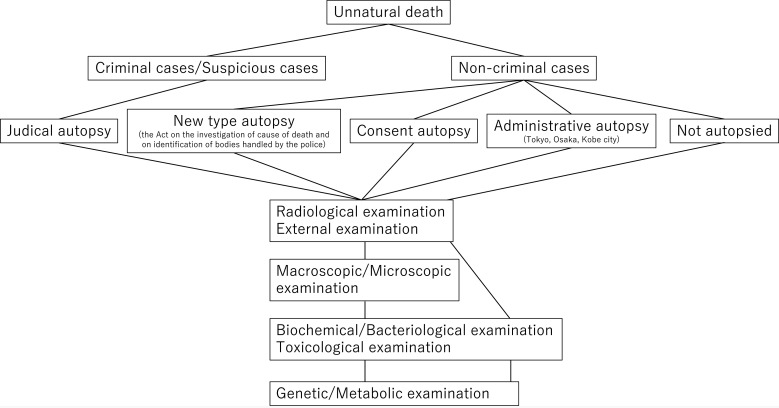
Japan has various death investigation systems; however, external examinations, postmortem computed tomography, macroscopic examinations, and microscopic examinations are performed regardless of the system used. These examinations can reveal morphological abnormalities, whereas the cause of death in cases with non-morphological abnormalities can be detected through additional examinations. Molecular autopsy and postmortem genetic analyses are important additional examinations. They are capable of detecting inherited arrhythmias or inherited metabolic diseases, which are representative non-morphological disorders that cause sudden death, especially in infants and young people. In this review, we introduce molecular autopsy reports from Japan and describe our experience with representative cases. The relationships between drug-related deaths and genetic variants are also reviewed. Based on the presented information, molecular autopsy is expected to be used as routine examinations in death investigations because they can provide information to save new lives.
Keywords: forensic autopsy; metabolic autopsy; molecular autopsy; postmortem genetic analysis; sudden death.
©2024 The Japanese Society of Toxicologic Pathology.
Conflict of interest statement
The authors have no conflicts of interest to declare.
Figures
References
-
- Ishihara K, and Iwase H. Reform of the death investigation system in Japan. Med Sci Law. 60: 216–222. 2020. - PubMed
-
- Fujimiya T. Legal medicine and the death inquiry system in Japan: a comparative study. Leg Med (Tokyo). 11(Suppl 1): S6–S8. 2009. - PubMed
-
- Act on investigation of cause of death and on identification of bodies handled by the police. https://elaws.e-gov.go.jp/document?lawid=424AC1000000034_20220617_504AC0....
-
- Iino M, and O’Donnell C. Postmortem computed tomography findings of upper airway obstruction by food. J Forensic Sci. 55: 1251–1258. 2010. - PubMed
