


The Effects of ABT-199 and Dihydroartemisinin Combination on Cell Growth and Apoptosis in Human U937 and KG-1 Cancer Cells
- PMID: 38285802
- PMCID: PMC10911724
- DOI: 10.31557/APJCP.2024.25.1.343
The Effects of ABT-199 and Dihydroartemisinin Combination on Cell Growth and Apoptosis in Human U937 and KG-1 Cancer Cells
Abstract
Introduction: Change in the balance of Bcl-2 family proteins is one of the main reasons for resistance of tumor cells to ABT-199. In this study, the effect of dihydroartemisinin on cell growth, apoptosis and sensitivity of the AML cells to ABT-199 was investigated.
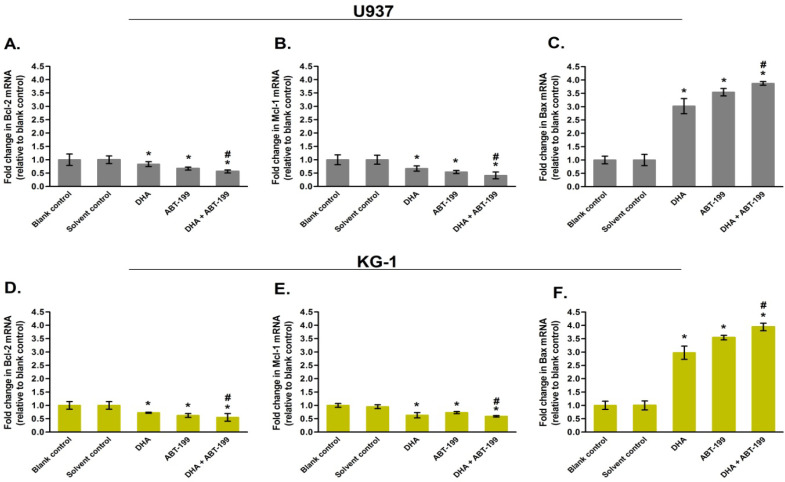
Methods: Cell proliferation and survival were assessed by trypan blue staining and MTT assay, respectively. Cell apoptosis was measured by Hoechst 33342 staining and caspase-3 activity assay. The expression levels of Bcl-2, Mcl-1 and Bax mRNA were tested by qRT-PCR.
Results: Our data showed that combination therapy significantly reduced the IC50 value and synergistically decreased the AML cell survival and growth compared with dihydroartemisinin or ABT-199 alone. Treatment with each of ABT-199 or dihydroartemisinin alone clearly enhanced the Bax mRNA expression and inhibited the expression of Mcl-1 and Bcl-2 mRNA. Inhibition of Mcl-1 mRNA by dihydroartemisinin was associated with enhancement of apoptosis induced by ABT-199 in AML cells.
Conclusion: In conclusion, dihydroartemisinin not only triggers the intrinsic pathway of apoptosis, but also can increase the sensitivity of the AML cells to ABT-199 via suppression of Mcl-1 expression.
Keywords: ABT-199; AML; Apoptosis; Bcl-2; dihydroartemisinin.
Conflict of interest statement
The authors have no conflict of interest to declare
Figures



References
-
- Lauria F, Raspadori D, Rondelli D, Ventura MA, Fiacchini M, Visani G, et al. High bcl-2 expression in acute myeloid leukemia cells correlates with cd34 positivity and complete remission rate. Leukemia. 1997;11(12):2075–8. - PubMed
MeSH terms
Substances
LinkOut - more resources
Full Text Sources
Medical
Research Materials
