


Motivated with joy or anxiety: Does approach-avoidance goal framing elicit differential reward-network activation in the brain?
- PMID: 38291308
- PMCID: PMC11078806
- DOI: 10.3758/s13415-024-01154-3
Motivated with joy or anxiety: Does approach-avoidance goal framing elicit differential reward-network activation in the brain?
Abstract
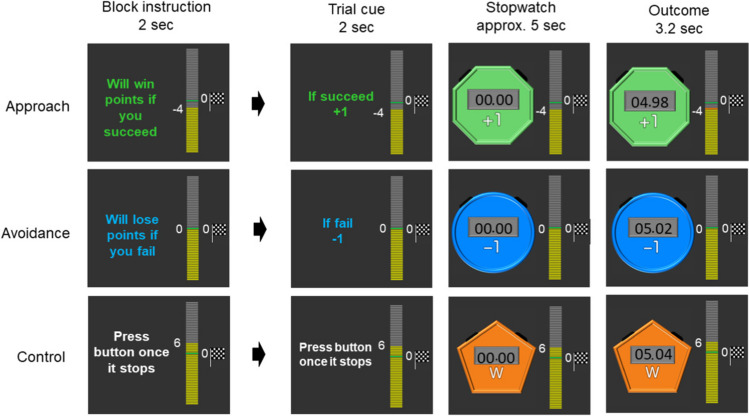
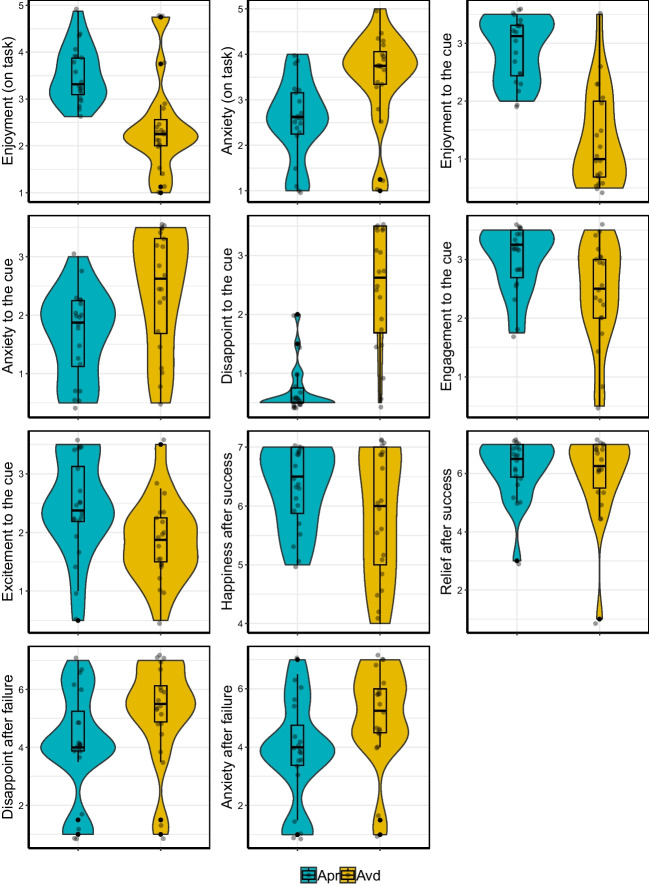
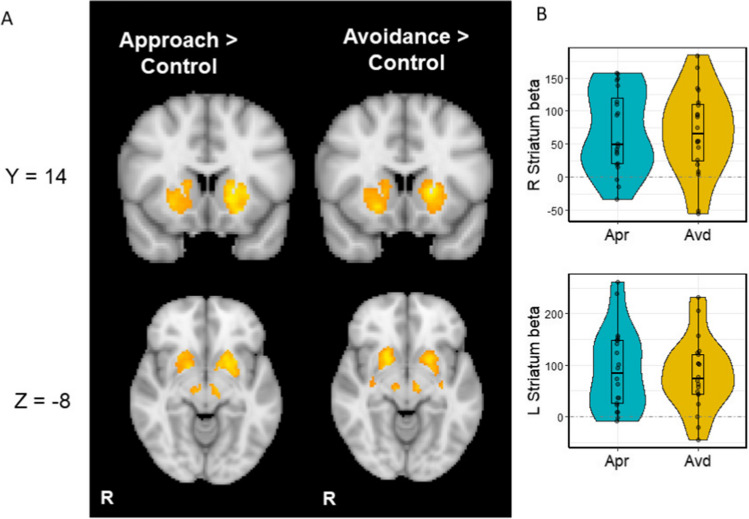
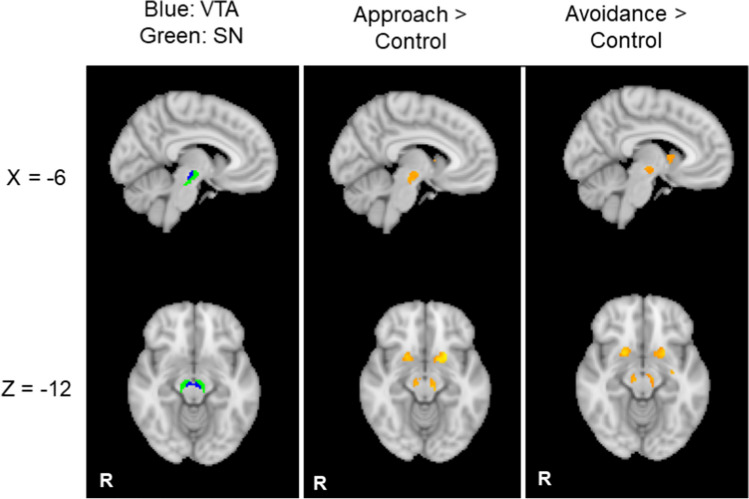
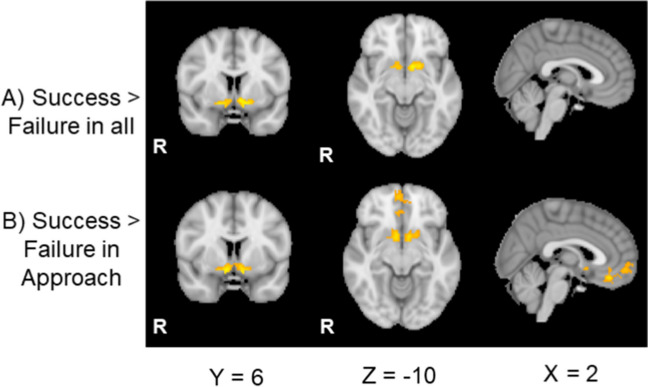
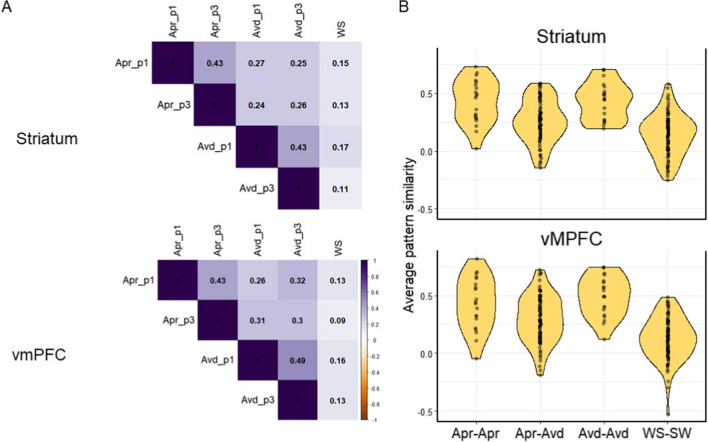
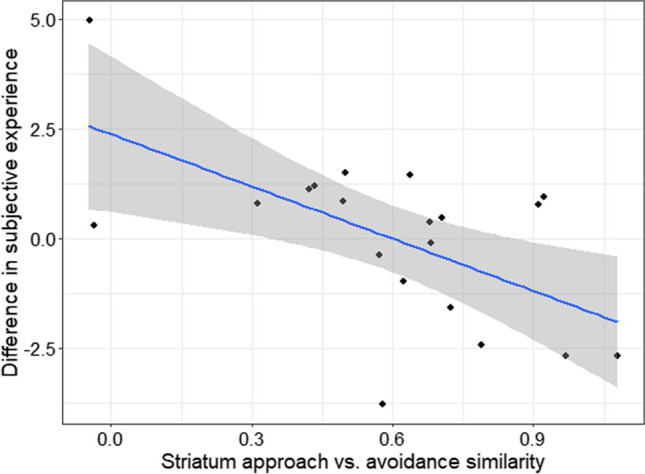
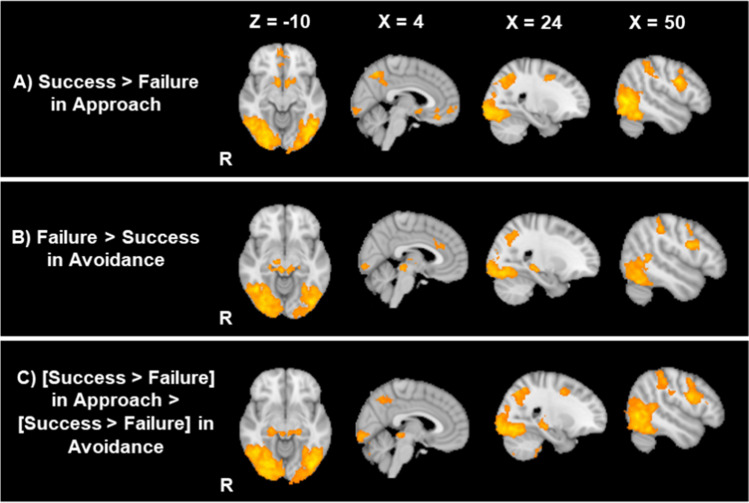
Psychological research on human motivation repeatedly observed that approach goals (i.e., goals to attain success) increase task enjoyment and intrinsic motivation more strongly than avoidance goals (i.e., goals to avoid failure). The present study sought to address how the reward network in the brain-including the striatum and ventromedial prefrontal cortex-is involved when individuals engage in the same task with a focus on approach or avoidance goals. Participants reported stronger positive emotions when they focused on approach goals, but stronger anxiety and disappointment when they focused on avoidance goals. The fMRI analyses revealed that the reward network in the brain showed similar levels of activity to cues predictive of approach and avoidance goals. In contrast, the two goal states were associated with different patterns of activity in the visual cortex, hippocampus, and cerebellum during success and failure outcomes. Representation similarity analysis further revealed shared and different representations within the striatum and vmPFC between the approach and avoidance goal states, suggesting both the similarity and uniqueness of the mechanisms behind the two goal states. In addition, the distinct patterns of activation in the striatum were associated with distinct subjective experiences participants reported between the approach and the avoidance conditions. These results suggest the importance of examining the pattern of striatal activity in understanding the mechanisms behind different motivational states in humans.
Keywords: Achievement goal; Approach/avoidance; Behavioral activation; Behavioral inhibition; Dopamine; Goal framing; Neuroimaging.
© 2024. The Author(s).
Figures
References
-
- Aberg KC, Doell KC, Schwartz S. Hemispheric asymmetries in striatal reward responses relate to approach–avoidance learning and encoding of positive–negative prediction errors in dopaminergic midbrain regions. The Journal of Neuroscience. 2015;35(43):14491–14500. doi: 10.1523/jneurosci.1859-15.2015. - DOI - PMC - PubMed
Publication types
MeSH terms
LinkOut - more resources
Full Text Sources
Medical
