


Lower Trapezius Transfer for Irreparable Posterosuperior Rotator Cuff Tears
- PMID: 38294674
- PMCID: PMC10917725
- DOI: 10.1007/s12178-024-09885-z
Lower Trapezius Transfer for Irreparable Posterosuperior Rotator Cuff Tears
Erratum in
-
Correction: Lower Trapezius Transfer for Irreparable Posterosuperior Rotator Cuff Tears.Curr Rev Musculoskelet Med. 2024 Oct;17(10):437. doi: 10.1007/s12178-024-09891-1. Curr Rev Musculoskelet Med. 2024. PMID: 38492202 Free PMC article. No abstract available.
Abstract
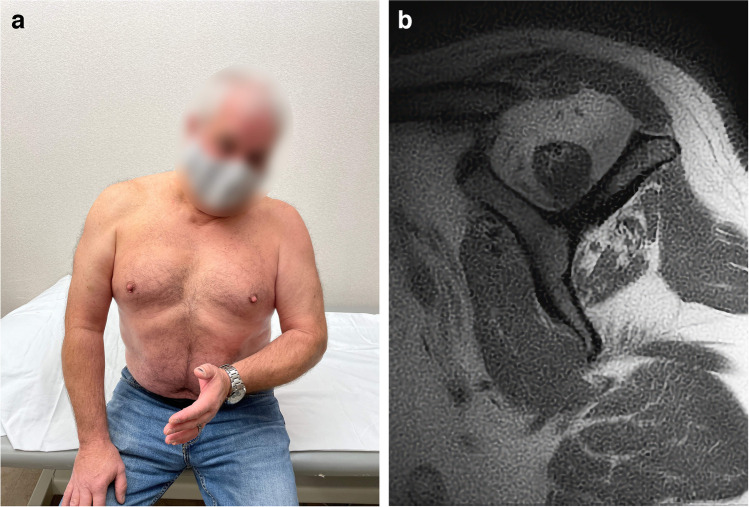
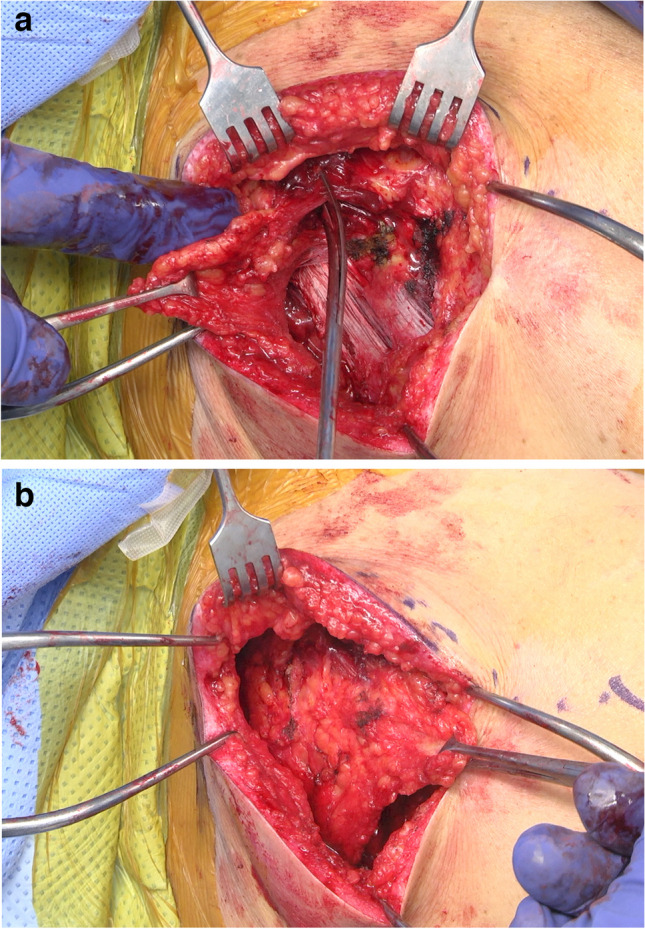
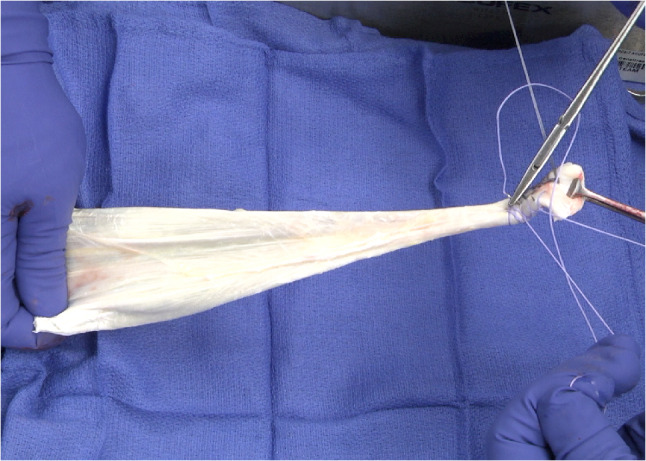
Purpose of review: Functionally irreparable posterosuperior rotator cuff tears (FIRCT) represent a substantial source of morbidity for many patients. Several surgical options can be considered for the salvage of FICRTs. Transfer of the tendon of the lower trapezius to the greater tuberosity, originally described for surgical management of the paralytic shoulder, has emerged as an attractive option, particularly for patients with external rotation lag and those looking for strength restoration. The purpose of this publication is to review the indications, surgical technique, and reported outcomes of this procedure.
Recent findings: Lower trapezius transfer (LTT) to the greater tuberosity in patients with irreparable posterosuperior rotator cuff tears has been reported to be associated with satisfactory outcomes and low reoperation rates. It seems to be particularly effective in improving external rotation motion and strength, even when the teres minor is involved. In patients with a reparable infraspinatus, minimal fatty infiltration, and an intact teres minor, the outcome of LTT may be similar to that of superior capsule reconstruction (SCR), but LTT is more beneficial otherwise. The hospital cost of LTT has been reported to be less than the cost of SCR and equivalent to the cost of reverse arthroplasty. When reverse arthroplasty has been performed after a failed LTT, the outcome and complication rates do not seem to increase. LTT provides satisfactory outcomes for many patients with a posterosuperior FIRCT, particularly when they present preoperatively with an external rotation lag sign, involvement of the teres minor, or a desire to improve strength.
Keywords: Lower trapezius transfer; Rotator cuff tear; Tendon transfer.
© 2024. The Author(s), under exclusive licence to Springer Science+Business Media, LLC, part of Springer Nature.
Conflict of interest statement
Dr. Sanchez-Sotelo receives royalties and consulting fees from Stryker, consulting fees from Acumed, and consulting fees from Exactech. Dr. Sanchez-Sotelo also receives publishing royalties from Elsevier and Oxford University Press. Other potential conflicts of interest include stock options in Orthobullets, PSI, and Precision OS, as well as honorarium from
Figures



References
Publication types
LinkOut - more resources
Full Text Sources
Research Materials
