


The associations of serum vitamin D status and vitamin D supplements use with all-cause dementia, Alzheimer's disease, and vascular dementia: a UK Biobank based prospective cohort study
- PMID: 38296029
- PMCID: PMC11007746
- DOI: 10.1016/j.ajcnut.2024.01.020
The associations of serum vitamin D status and vitamin D supplements use with all-cause dementia, Alzheimer's disease, and vascular dementia: a UK Biobank based prospective cohort study
Abstract
Background: Prior studies on vitamin D and dementia outcomes yielded mixed results and had several important limitations.
Objectives: We aimed to assess the associations of both serum vitamin D status and supplementation with all-cause dementia, Alzheimer's disease (AD), and vascular dementia (VD) incidence.
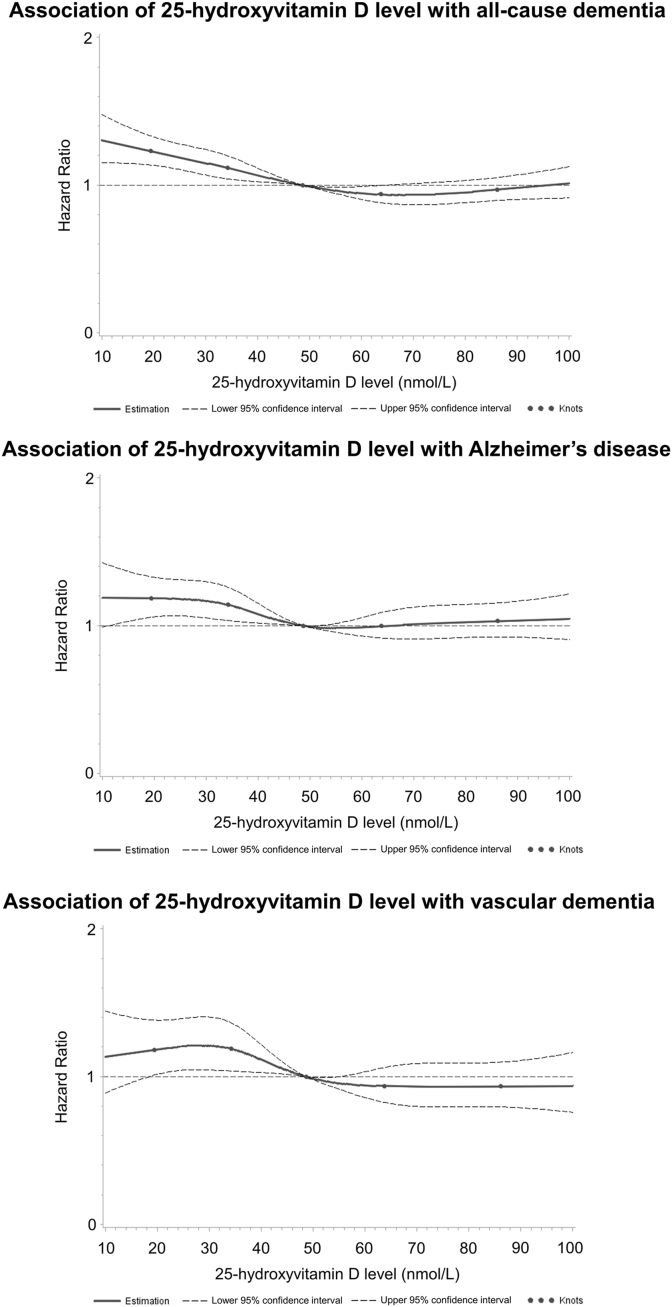
Methods: With a prospective cohort study design, we comprehensively assessed the associations of vitamin D and multivitamin supplementation, as well as vitamin D deficiency {25-hydroxyvitamin D [25(OH)D] <30 nmol/L}, and insufficiency [25(OH)D 30 to <50 nmol/L], with the 14-year incidence of all-cause dementia, AD, and VD in 269,229 participants, aged 55 to 69, from the UK Biobank.
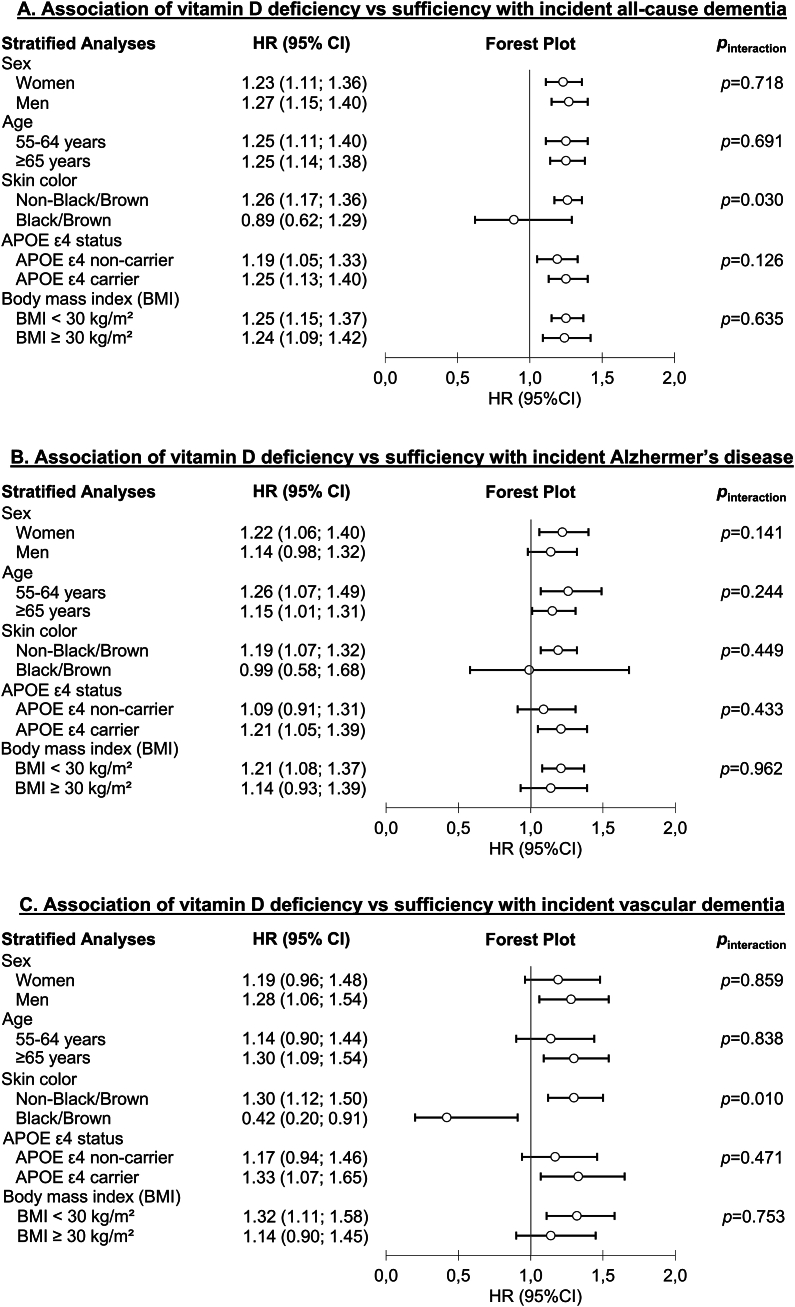
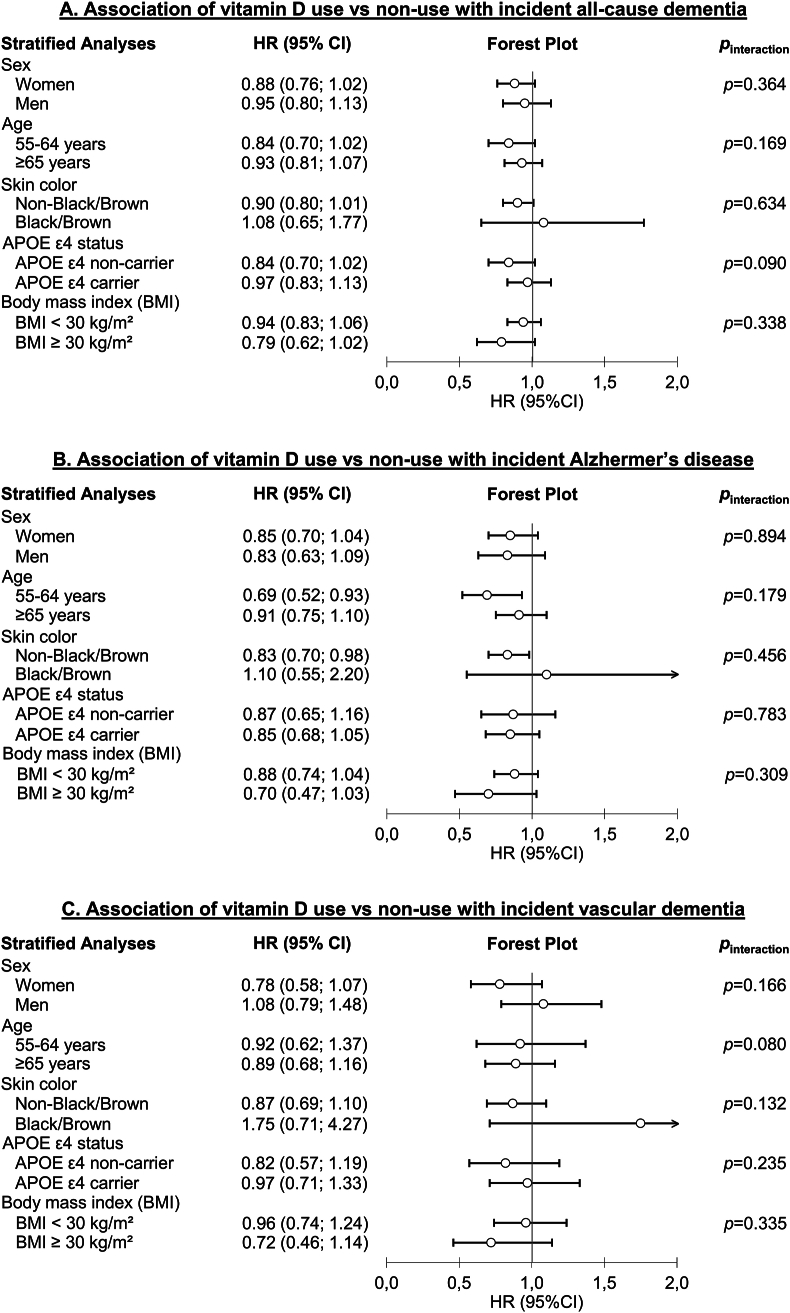
Results: Although 5.0% reported regular vitamin D use and 19.8% reported multivitamin use, the majority of participants exhibited either vitamin D deficiency (18.3%) or insufficiency (34.0%). However, vitamin D deficiency was less prevalent among users of vitamin D (6.9%) or multivitamin preparations (9.5%) than among nonusers (21.5%). Adjusted Cox regression models demonstrated 19% to 25% increased risk of all 3 dementia outcomes for those with vitamin D deficiency [hazard ratio (HR) 95% confidence interval (CI)]: 1.25 (1.16, 1.34) for all-cause dementia; 1.19 (1.07-1.31) for AD; 1.24 (1.08-1.43) for VD] and 10% to 15% increased risk of those with vitamin D insufficiency [HR (95% CI): 1.11 (1.05, 1.18) for all-cause dementia; 1.10 (1.02-1.19) for AD; 1.15 (1.03-1.29) for VD]. Regular users of vitamin D and multivitamins had 17% and 14% lower risk of AD [HR (95% CI): 0.83 (0.71, 0.98)] and VD [HR (95% CI): 0.86 (0.75, 0.98)] incidence, respectively.
Conclusions: Although our findings indicate the potential benefits of vitamin D supplementation for dementia prevention, randomized controlled trials are essential for definitive evidence.
Keywords: Alzheimer’s disease; cohort study; dementia; vascular dementia; vitamin D.
Copyright © 2024 The Author(s). Published by Elsevier Inc. All rights reserved.
Figures
References
-
- World Health Organization . World Health Organization; Geneva, Switzerland: 2023. fact sheets of dementia.https://www.who.int/news-room/fact-sheets/detail/dementia [Internet] [cited 2023 April 9]. Available from:
Publication types
MeSH terms
Substances
LinkOut - more resources
Full Text Sources
Medical
