


New insights into the genetics of mandibular retrognathism: novel candidate genes
- PMID: 38296908
- PMCID: PMC12373674
- DOI: 10.1007/s00056-023-00512-z
New insights into the genetics of mandibular retrognathism: novel candidate genes
Abstract
Purpose: Mandibular retrognathism (MR) is a common skeletal malocclusion in humans with a strong genetic component. Single nucleotide polymorphisms (SNPs) in genes encoding epidermal growth factor (EGF) and EGF receptor (EGFR) could be involved in the etiology of mandibular retrognathism. Therefore, in this study, we investigated whether SNPs in the genes encoding for EGF and EGFR are associated with MR in German teenagers.
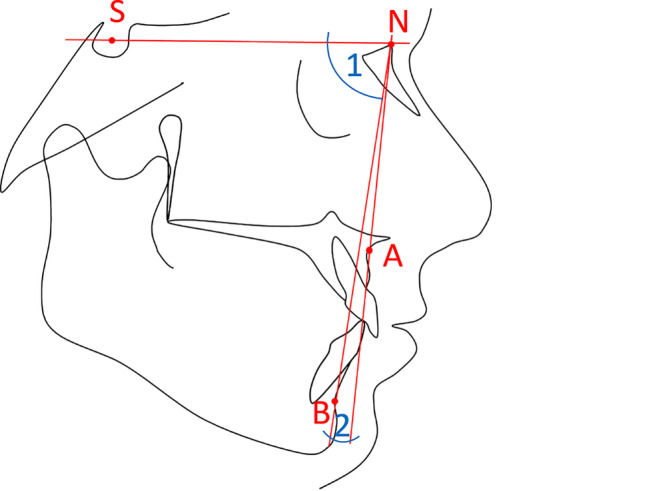
Methods: This nested case-control study evaluated German orthodontic patients, aged 10-18 years. DNA, which was isolated from buccal epithelial cells using two cytobrushes, was used for genotyping analysis and digital pretreatment lateral cephalograms were examined to calculate SNB and ANB. Patients with a retrognathic mandible (SNB < 78°) were included as cases, while patients with an orthognathic mandible (SNB = 78-82°) were included as controls. Four SNPs in the genes encoding for EGF and EGFR were chosen and genotyped using real-time PCR. Allele, genotype, and haplotype frequency were compared across groups (α = 5%).
Results: Finally, 119 patients were included in this study (45 orthognathic mandible, 74 retrognathic mandible). The minor allele G in rs4444903 (EGF) was statistically more frequent in individuals with an orthognathic mandible (p = 0.008). The haplotype formed by the mutant alleles for rs4444903|rs2237051 (EGF; G|A) was statistically more frequent in the orthognathic mandible group (p = 0.007). The SNPs rs4444903 and rs2237051 in EGF, and rs2227983 in EGFR were statistically associated with a decreasing risk of developing a retrognathic mandible according to univariate and multivariate statistical analysis (p < 0.05).
Conclusion: SNPs in EGF (rs4444903 and rs2237051) and EGFR (rs2227983) were associated with MR in our German sample and could be genetic biomarkers for early and individualized diagnostic identification of retrognathic mandibular development by means of genetic screening tests.
Zusammenfassung: HINTERGRUND: Die mandibuläre Retrognathie (MR) ist eine beim Menschen häufig auftretende Dysgnathie, welche eine ausgeprägte genetische Komponente aufweist. Einzel-Nukleotid-Polymorphismen (SNPs) in Genen, welche für den epidermalen Wachstumsfaktor (EGF) oder dessen Rezeptor (EFGR) kodieren, könnten ätiologische Faktoren für die MR sein. Das Ziel dieser Studie bestand daher darin, zu untersuchen, ob solche SNPs zur MR in deutschen Jugendlichen eine Assoziation aufweisen.
Methodik: In dieser Fall-Kontroll-Studie wurden kieferorthopädische Patienten im Alter von 10–18 Jahren analysiert. Während zur Analyse der Genotypen DNA aus Speichelproben extrahiert wurde, wurden zur Bestimmung des SNB- und des ANB-Winkels digitale prätherapeutische Fernröntgenseitenbilder (FRS) ausgewertet. Die Patienten, welche einen retrognathen Unterkiefer (SNB < 78°) zeigten, wurden der Fallgruppe zugeschrieben, während solche mit einem orthognathen Unterkiefer (SNB = 78–82°) als Kontrollen eingeschlossen wurden. Vier SNPs für EGF und EGFR wurden ausgewählt und mittels Realtime-PCR genotypisiert. Die Häufigkeit der Allele, der Genotypen und der Haplotypen wurden zwischen den beiden Gruppen verglichen (α-Fehler 5%).
Ergebnisse: 119 Patienten, von denen 45 einen orthognathen und 74 einen retrognathen Unterkiefer aufwiesen, wurden final in die Studie eingeschlossen. Bei Patienten mit einem orthognathen Unterkiefer wurden das Minor-Allel G im SNP rs4444903 (EGF) (p = 0,008) sowie der durch die mutierten Allele für rs4444903|rs2237051 (EGF; G|A) gebildete Haplotyp (p = 0,007) statistisch signifikant häufiger aufgefunden. Gemäß der uni- und multivariaten Analyse waren die SNPs rs4444903 und rs2237051 im EGF-Gen und rs2227983 im EGFR-Gen statistisch signifikant mit einem reduzierten Risiko für einen retrognathen Unterkiefer assoziiert.
Schlussfolgerung: SNPs im EGF- (rs4444903 und rs2237051) und im EGFR-Gen (rs2227983) waren in der untersuchten deutschen Population mit einer MR assoziiert und könnten sich daher als genetische Biomarker eignen, um während einer frühen und individualisierten Diagnostik im Rahmen von genetischen Screeningtests einen retrognathen Unterkiefer zu identifizieren.
Keywords: Biomarkers; Mandible; Orthodontic diagnostics; Single nucleotide polymorphism; Skeletal class II malocclusion.
© 2024. The Author(s).
Conflict of interest statement
Declarations. Conflict of interest: E. Paddenberg-Schubert, E. Küchler, C.L. Bitencourt Reis, A.C. Silva-Sousa and C. Kirschneck declare that they have no competing interests. Ethical standards: All procedures performed in studies involving human participants or on human tissue were in accordance with the ethical standards of the institutional and/or national research committee and with the 1975 Helsinki declaration and its later amendments or comparable ethical standards. Approval was granted by the Ethics Committee of University Regensburg (Date 13 November 2019; no. 19-1549-101). Informed consent was obtained from all individual participants included in the study. Furthermore, an age-appropriate assent document was also used for patients younger than 14 years.
Figures
References
-
- Bell WH (1966) Surgical correction of mandibular retrognathism. Am J Orthod 52: 518–528. 10.1016/0002-9416(66)90105-9 - PubMed
MeSH terms
Substances
LinkOut - more resources
Full Text Sources
Research Materials
Miscellaneous
