


An integrated understanding of the impact of hospital at home: a mixed-methods study to articulate and test a programme theory
- PMID: 38308304
- PMCID: PMC10835828
- DOI: 10.1186/s12913-024-10619-7
An integrated understanding of the impact of hospital at home: a mixed-methods study to articulate and test a programme theory
Abstract
Background: Hospital at Home (HaH) provides intensive, hospital-level care in patients' homes for acute conditions that would normally require hospitalisation, using multidisciplinary teams. As a programme of complex medical-social interventions, a HaH programme theory has not been fully articulated although implicit in the structures, functions, and activities of the existing HaH services. We aimed to unearth the tacit theory from international evidence and test the soundness of it by studying UK HaH services.
Methods: We conducted a literature review (29 articles) adopting a 'realist review' approach (theory articulation) and examined 11 UK-based services by interviewing up to 3 staff members from each service (theory testing). The review and interview data were analysed using Framework Analysis and Purposive Text Analysis.
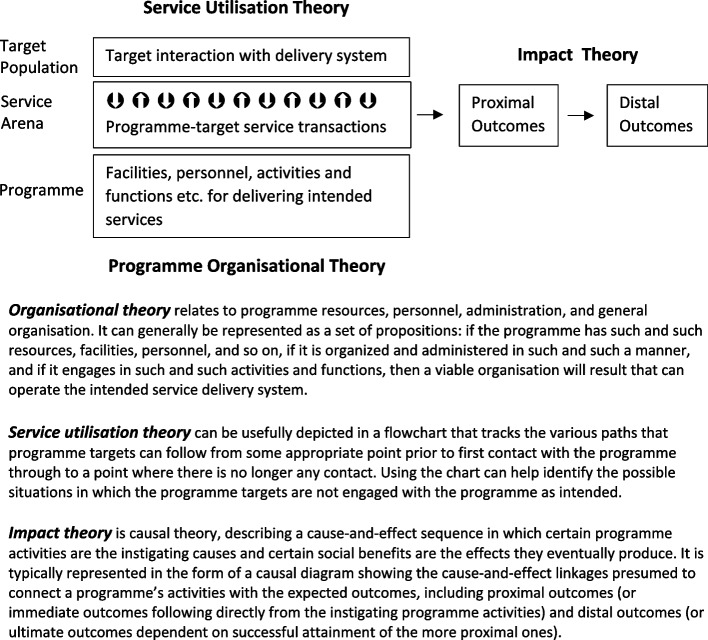
Results: The programme theory has three components- the organisational, utilisation and impact theories. The impact theory consists of key assumptions about the change processes brought about by HaH's activities and functions, as detailed in the organisational and utilisation theories. HaH teams should encompass multiple disciplines to deliver comprehensive assessments and have skill sets for physically delivering hospital-level processes of care in the home. They should aim to treat a broad range of conditions in patients who are clinically complex and felt to be vulnerable to hospital acquired harms. Services should cover 7 days a week, have plans for 24/7 response and deliver relational continuity of care through consistent staffing. As a result, patients' and carers' knowledge, skills, and confidence in disease management and self-care should be strengthened with a sense of safety during HaH treatment, and carers better supported to fulfil their role with minimal added care burden.
Conclusions: There are organisational factors for HaH services and healthcare processes that contribute to better experience of care and outcomes for patients. HaH services should deliver care using hospital level processes through teams that have a focus on holistic and individually tailored care with continuity of therapeutic relationships between professionals and patients and carers resulting in less complexity and fragmentation of care. This analysis informs how HaH services can organise resources and design processes of care to optimise patient satisfaction and outcomes.
Keywords: Acute care; Hospital at home; Mixed methods; Multidisciplinary care; Older people; Organisation; Patient benefit; Person-centred care; Programme impact theory; Programme theory.
© 2024. The Author(s).
Conflict of interest statement
The authors declare no competing interests.
Figures


References
-
- Healthcare Improvement Scotland. Hospital at Home- Guiding principles for service development. Healthcare Improvement Scotland. 2020. https://ihub.scot/media/6928/2020205-hospital-at-home-guiding-principles.... Assessed 08 Aug 2020.
-
- Morano B, Jimenez-Mejia J, Sanon M, Morano C, DeCherrie LV. Acute care in the home setting: Hospital at home. Geriatric practice: a competency based approach to caring for older adults. 2020. pp. 393–401.
Publication types
MeSH terms
Grants and funding
LinkOut - more resources
Full Text Sources
Medical
Research Materials
