


Dermatology in black skin
- PMID: 38310012
- PMCID: PMC11074564
- DOI: 10.1016/j.abd.2023.10.001
Dermatology in black skin
Abstract
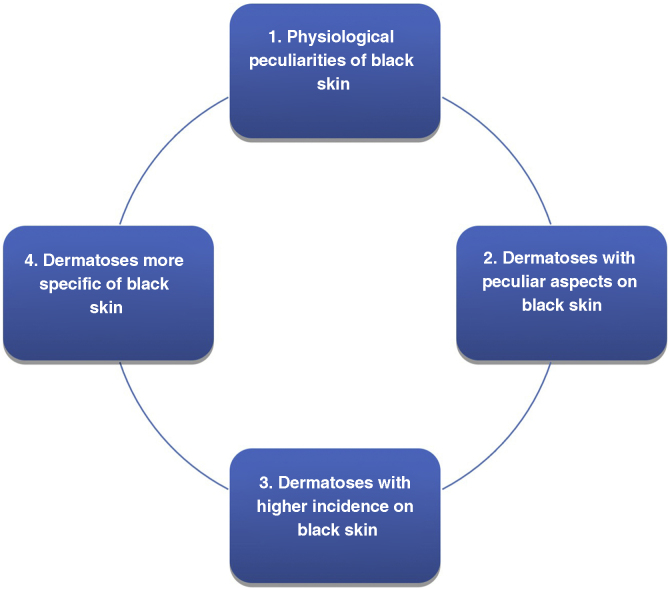
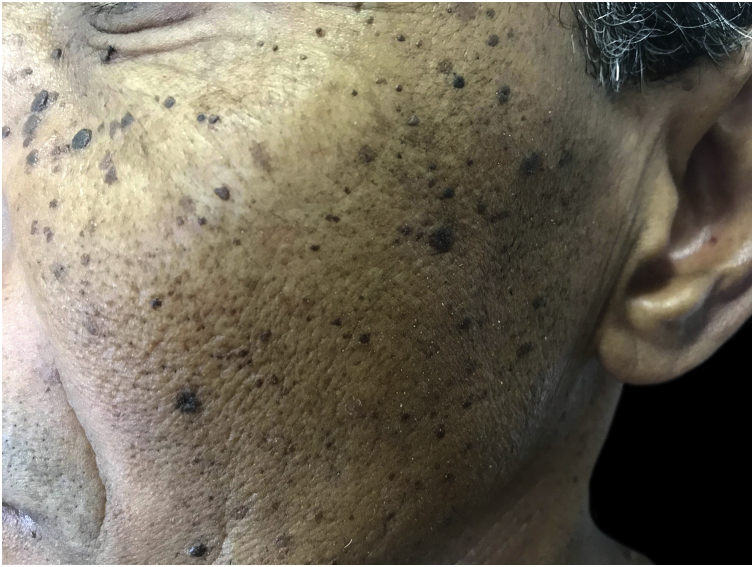
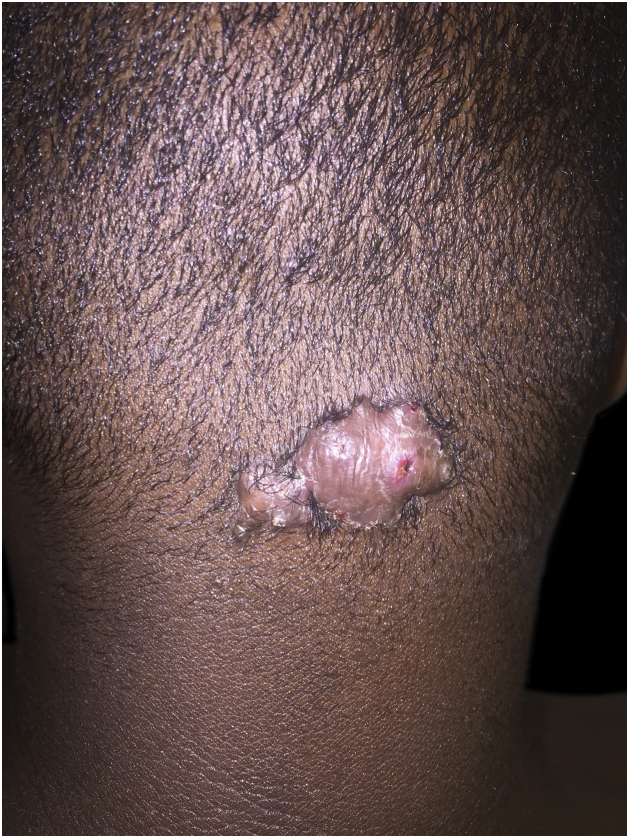
The vast majority of publications in dermatology refer to lightly pigmented skin, with few addressing the peculiarities of black skin. In addition there is no consensus on what it means to be black in different regions of the world. The lack of knowledge on the subject makes it difficult to recognize and manage dermatoses in this type of skin. This article aims to review the literature on intrinsic characteristics, as well as epidemiological and clinical aspects of the cutaneous manifestations of different dermatoses in black skin. It was found that there are sometimes striking differences, in the structural, biological, and functional aspects when comparing lightly pigmented and black skin. There are also physiological changes that need to be recognized to avoid unnecessary interventions. Some dermatoses have a higher incidence in black skin, such as acne, eczema, dyschromia and dermatophytosis. On the other hand, several dermatoses are more specific to black skin, such as pseudofolliculitis barbae, keloid, dermatosis papulosa nigra, ulcers caused by sickle-cell anemia, dactylolysis spontanea, confluent and reticulated papillomatosis of Gougerot and Carteaud, and some diseases of the hair and scalp (including fragile and brittle hair, traction alopecia, folliculitis keloidalis nuchae, folliculitis dissecans and central centrifugal cicatricial alopecia). A spectrum of peculiar aspects of specific dermatoses, including sarcoidosis, lichen planus (with emphasis on the pigmentosus variant), psoriasis, lupus erythematosus, vitiligo, syphilis, pityriasis versicolor, and neoplasms are highlighted. In the latter, characteristics of basal cell carcinoma, squamous cell carcinoma, and melanoma are compared, in addition to highlighting unusual aspects of primary cutaneous T-cell lymphoma, endemic Kaposi sarcoma, and dermatofibrosarcoma protuberans.
Keywords: Dermatopathies; Ethnicity; Pigmentation; Population; Skin.
Copyright © 2024 Sociedade Brasileira de Dermatologia. Published by Elsevier España, S.L.U. All rights reserved.
Figures
References
-
- Alchorne M.M., de Abreu M.A. Dermatologia na pele negra. An Bras Dermatol. 2008;83:7–20.
-
- Alchorne M.M., de Abreu M.A. In: Guia de dermatologia: clínica, cirúrgica e cosmiátrica. Rotta O., editor. Manole; Barueri: 2008. Dermatoses na pele negra; pp. 593–608.
-
- Petruccelli J.L., Saboia A.L. Instituto Brasileiro de Geografia e Estatística – IBGE; Rio de Janeiro: 2013. Características étnico-raciais da população classificações e identidades. Ed. 2.
-
- Instituto Brasileiro de Geografia e Estatística – IBGE. [Homepage] consultado em 17-03-2023. https://educa.ibge.gov.br/jovens/conheca-o-brasil/populacao/18319-cor-ou....
-
- Taylor S.C. Skin of color: biology, structure, function, and implications for dermatologic disease. J Am Acad Dermatol. 2002;46(2 Suppl Understanding):S41–62. - PubMed
Publication types
MeSH terms
LinkOut - more resources
Full Text Sources
Medical
Molecular Biology Databases
