


Role of fecal microbiota transplant in management of hepatic encephalopathy: Current trends and future directions
- PMID: 38313244
- PMCID: PMC10835490
- DOI: 10.4254/wjh.v16.i1.17
Role of fecal microbiota transplant in management of hepatic encephalopathy: Current trends and future directions
Abstract
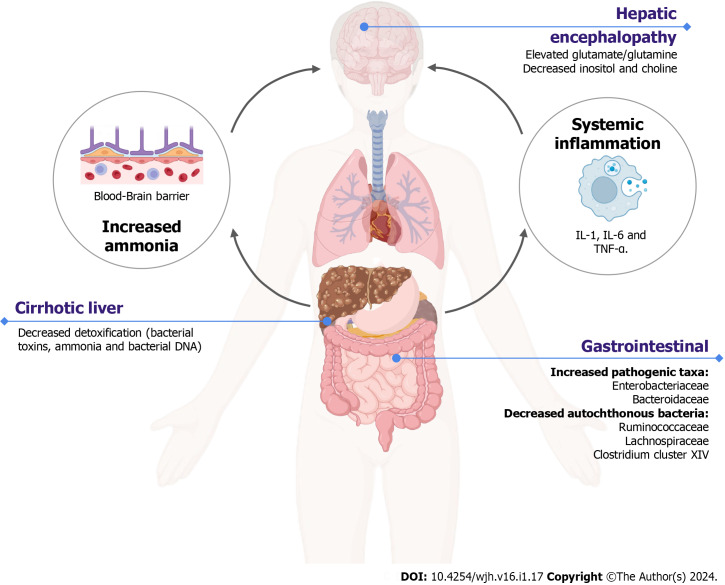
Fecal microbiota transplantation (FMT) offers a potential treatment avenue for hepatic encephalopathy (HE) by leveraging beneficial bacterial displacement to restore a balanced gut microbiome. The prevalence of HE varies with liver disease severity and comorbidities. HE pathogenesis involves ammonia toxicity, gut-brain communication disruption, and inflammation. FMT aims to restore gut microbiota balance, addressing these factors. FMT's efficacy has been explored in various conditions, including HE. Studies suggest that FMT can modulate gut microbiota, reduce ammonia levels, and alleviate inflammation. FMT has shown promise in alcohol-associated, hepatitis B and C-associated, and non-alcoholic fatty liver disease. Benefits include improved liver function, cognitive function, and the slowing of disease progression. However, larger, controlled studies are needed to validate its effectiveness in these contexts. Studies have shown cognitive improvements through FMT, with potential benefits in cirrhotic patients. Notably, trials have demonstrated reduced serious adverse events and cognitive enhancements in FMT arms compared to the standard of care. Although evidence is promising, challenges remain: Limited patient numbers, varied dosages, administration routes, and donor profiles. Further large-scale, controlled trials are essential to establish standardized guidelines and ensure FMT's clinical applications and efficacy. While FMT holds potential for HE management, ongoing research is needed to address these challenges, optimize protocols, and expand its availability as a therapeutic option for diverse hepatic conditions.
Keywords: Chronic liver disease; Cognitive impairment; Fecal microbiota transplant; Hepatic encephalopathy; Liver cirrhosis.
©The Author(s) 2024. Published by Baishideng Publishing Group Inc. All rights reserved.
Conflict of interest statement
Conflict-of-interest statement: Authors declare no conflict of interests for this article.
Figures
References
Publication types
LinkOut - more resources
Full Text Sources
