


Nanotechnology in toothpaste: Fundamentals, trends, and safety
- PMID: 38317872
- PMCID: PMC10838805
- DOI: 10.1016/j.heliyon.2024.e24949
Nanotechnology in toothpaste: Fundamentals, trends, and safety
Abstract
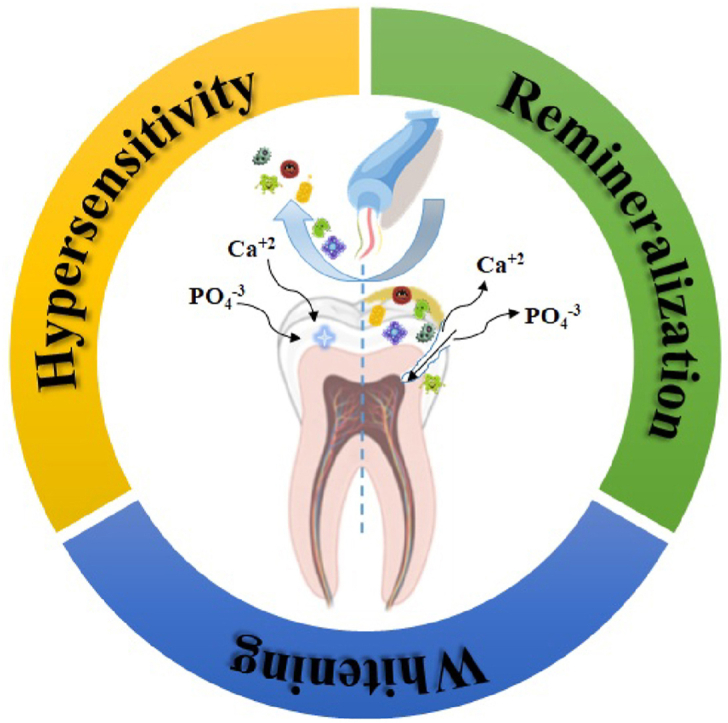
Several studies have revealed that healthcare nanomaterials are widely used in numerous areas of dentistry, including prevention, diagnosis, treatment, and repair. Nanomaterials in dental cosmetics are utilized to enhance the efficacy of toothpaste and other mouthwashes. Nanoparticles are added to toothpastes for a variety of reasons, including dental decay prevention, remineralization, hypersensitivity reduction, brightening, and antibacterial qualities. In this review, the benefits and uses of many common nanomaterials found in toothpaste are outlined. Additionally, the capacity and clinical applications of nanoparticles as anti-bacterial, whitening, hypersensitivity, and remineralizing agents in the treatment of dental problems and periodontitis are discussed.
Keywords: Hydroxyapatite; Hypersensitivity; Nanoparticles; Remineralization; Toothpaste.
© 2024 The Authors.
Conflict of interest statement
The authors declare that they have no known competing financial interests or personal relationships that could have appeared to influence the work reported in this paper.
Figures
References
-
- Pitts N.B., et al. Dental caries. Nat. Rev. Dis. Prim. 2017;3 - PubMed
-
- Sari M., et al. Development of a hydroxyapatite nanoparticle-based gel for enamel remineralization —a physicochemical properties and cell viability assay analysis. Dent. Mater. J. 2022;41(1):68–77. - PubMed
-
- Carvalho T.S., et al. Consensus report of the European Federation of Conservative Dentistry: erosive tooth wear--diagnosis and management. Clin. Oral Invest. 2015;19(7):1557–1561. - PubMed
-
- Buedel S., et al. Impact of dentifrice abrasivity and remineralization time on erosive tooth wear in vitro. Am. J. Dent. 2018;31(1):29–33. - PubMed
Publication types
LinkOut - more resources
Full Text Sources
