Review
. 2024 Jul;42(7):895-909.
doi: 10.1016/j.tibtech.2024.01.003. Epub 2024 Feb 5.

Context-dependent redesign of robust synthetic gene circuits

Affiliations
Review

Context-dependent redesign of robust synthetic gene circuits

Austin Stone et al. Trends Biotechnol. 2024 Jul.

Abstract

Cells provide dynamic platforms for executing exogenous genetic programs in synthetic biology, resulting in highly context-dependent circuit performance. Recent years have seen an increasing interest in understanding the intricacies of circuit-host relationships, their influence on the synthetic bioengineering workflow, and in devising strategies to alleviate undesired effects. We provide an overview of how emerging circuit-host interactions, such as growth feedback and resource competition, impact both deterministic and stochastic circuit behaviors. We also emphasize control strategies for mitigating these unwanted effects. This review summarizes the latest advances and the current state of host-aware and resource-aware design of synthetic gene circuits.

Keywords: circuit–host interactions; control-embedded circuit design; feedback context factors; metabolic burden.


Conflict of interest statement

Declaration of interests The authors declare no competing interests.

Figures

Figure 1.
Figure 1.. Feedback context factors context-dependent redesign of synthetic gene circuits.
(A) the canonical design-build-test-learn (DBTL) cycle in engineering synthetic gene circuits through fine-tuning individual contextual factors. (B-E) the engineering cycle by understanding the emergent dynamics mediated by growth feedback contextual factors (including growth feedback and resource competition), predicting circuit behavior with host- and resource-aware modeling, and redesigning circuits with a control strategy embedded.
Figure 2.
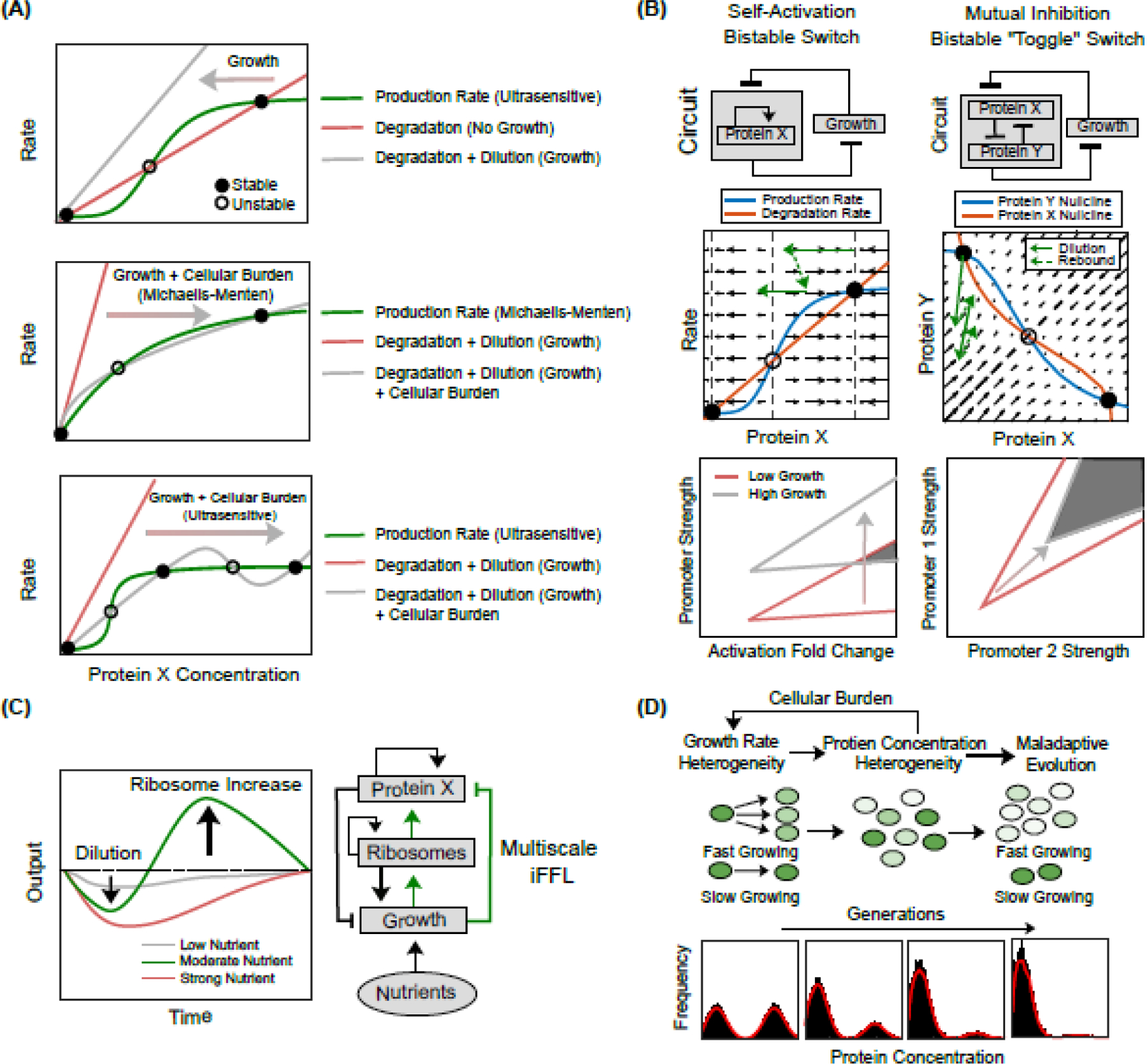
Figure 2.. Emergent phenomena resulting from growth feedback.
(A) (Top) Loss of qualitative state due to growth feedback. A bistable system with a self-activation ultrasensitive promoter loses its high-expression state under fast growth conditions, where the enhanced dilution rate of proteins only intersects with the production rate curve at a low-expression level in the rate-balance plot [23]. (Middle) Emergence of a qualitative state in a self-activation system with a noncooperative promoter due to the cellular burden placed on host cells by output production, which enables a diminished degradation curve to intersect the production curve three times [22]. (Bottom) Emergent tristability in a self-activation system driven by ultrasensitive growth feedback [47]. (B) Loss of circuit memory due to growth feedback depends on the circuit topology. A bistable switch with self-activation topology is sensitive to growth because the dilution direction is perpendicular to the system separatrix, while a toggle switch is robust given that the dilution direction is more parallel to the separatrix [23]. (C) The bistable region across a range of growth rates for the self-activation switch (left) and the toggle switch (right) shows that the toggle switch is more robust than the self-activation switch level in responding to host growth [18]. (D) Emergent damped oscillation in a self-activation circuit induced by nutrient-modulating growth feedback [52]. (E) The heterogeneity in cell-to-cell growth rates and protein concentrations are coupled through growth feedback. Over time, the fast-growing cell population with low circuit gene expression outcompetes the cell population with high gene expression, leading to the degeneration of qualitative states.
Figure 3.
Figure 3.. Emergent phenomena resulting from resource competition.
(A) Simple two-gene system for studying resource competition. The two genes are independent of one another other than the shared RNAP and ribosomes for transcription and translation. (B) Linear Isocost dependence was observed between the expression levels of two competing genes. The RBS activity ratio and the circuit copy number determine the isocost line’s slope and y-intercept respectively [27]. (C) Nonlinear resource competition shapes the dose-response curve non-monotonically rather than monotonically in an activation cascade circuit because the increasing resource consumption from the upstream module limits the expression of the downstream at high inducer levels [29]. (D) “Winner-Take-All” resource competition excludes the coactivation of two self-activation modules in a cascading bistable switches circuit because the activation of one switch precludes the activation of the other one, leading to the solitary module’s activation (bottom), in contrast to the coactivation in the ideal scenario with no resource constraint (top) [30]. (E) Analytic expression of the protein noise level in a two-gene system under a resource-constrained context includes noise from 1) the stochastic birth/death process of its mRNA, 2) the stochastic birth/death process of protein, and 3) the stochastic birth/death process of the other mRNA. The last term is “resource competitive noise”, which completely results from resource competition [56]. (F) The dependences of total noise and its three components on the translational capacity show double-edged effects of resource competition on circuit gene expression noise [56].
Figure 4.
Figure 4.. Redesign synthetic gene circuits to reduce context dependence.
(A) Ribo-T system for fully orthogonal translation by tethering two subunits (the core 16S and 23S rRNAs) of the engineered ribosome [62]. (B) The OSYRIS system allows for the high-efficiency production of synthetic proteins by swapping the roles of the wild type and Ribo-T ribosomes [65]. (C) Ribosomal resource allocator utilizing NFL to control the expression of orthogonal ribosomes (oR) [70]. (D) Combatting cellular burden by upregulating ribosomes and growth rate using a modified SpoT (SpoTH) that is expressed alongside the reporter gene to lower ppGpp level for more ribosomes [71]. (E) Reducing host resource consumption to reallocate resources to the circuit by using the nuclease MazF that only splices host mRNAs to reduce the host’s ribosomal usage. (F) NFL at the transcriptional level to decouple modules accessing shared resource pools [73]. (G) A burden-driven feedback using a burden-driven promoter to express sgRNA which works with dCas9 to shut off protein production and alleviate the burden [75]. (H) NFL mediated via covalent modification cycles where the phosphatase is expressed alongside the circuit to inactivate the transcription factor [38]. (I) Quasi-integral controller created by expressing a transcription factor ECF32 alongside the circuit reporter to produce an antisense sRNA that binds to the GOI mRNA and degrades it [35]. (J) Antithetic integral negative feedback in which output transcription factor leads to an antisense RNA and an RNA-binding protein NES-L7Ae that degrades output mRNA or inhibits its translation [78]. (K) Endoribonuclease (ERN) feedforward loop where the shared resources produce both the circuit output and an ERN that binds to the output mRNA and degrades it [40]. (L-M) Multi-module control topologies utilizing NFL (L) and iFFL (M) [83,84]. Local controllers contain a control loop for each module, global controllers contain one control loop for the entire circuit, and competitive controllers design additional competition between two control loops for dCas9 before inhibiting individual modules.
Figure I:
Figure I:. Single intragenic context factors include
(A) a wide array of cis and trans-acting parts for tuning gene expression levels, including promoters, RBS, terminators, untranslated sequences, transcription factors/binding sites, etc. (B) Unintended structural interactions can arise between adjacent transcriptional regions (ATRs).
Figure I:
Figure I:
Single intergenic context factors include (A) retroactivity, (B) circuit syntax and supercoiling, and (C) supercoiling-mediated feedback.

References

    1. Wurtzel ET et al. (2019) Revolutionizing agriculture with synthetic biology. Nat. Plants 5, 1207–1210 - PubMed
    1. Moe-Behrens GHG et al. (2013) Preparing synthetic biology for the world. Front. Microbiol 4, 5. - PMC - PubMed
    1. Tang T-C et al. (2020) Materials design by synthetic biology. Nat. Rev. Mater 6, 332–350
    1. Nguyen PQ et al. (2023) Harnessing synthetic biology to enhance ocean health. Trends Biotechnol. 41, 860–874 - PubMed
    1. Meng F and Ellis T (2020) The second decade of synthetic biology: 2010–2020. Nat Commun 11, 5174. - PMC - PubMed

Publication types

MeSH terms

LinkOut - more resources