


Heart-brain interaction in cardiogenic dementia: pathophysiology and therapeutic potential
- PMID: 38327496
- PMCID: PMC10847563
- DOI: 10.3389/fcvm.2024.1304864
Heart-brain interaction in cardiogenic dementia: pathophysiology and therapeutic potential
Abstract
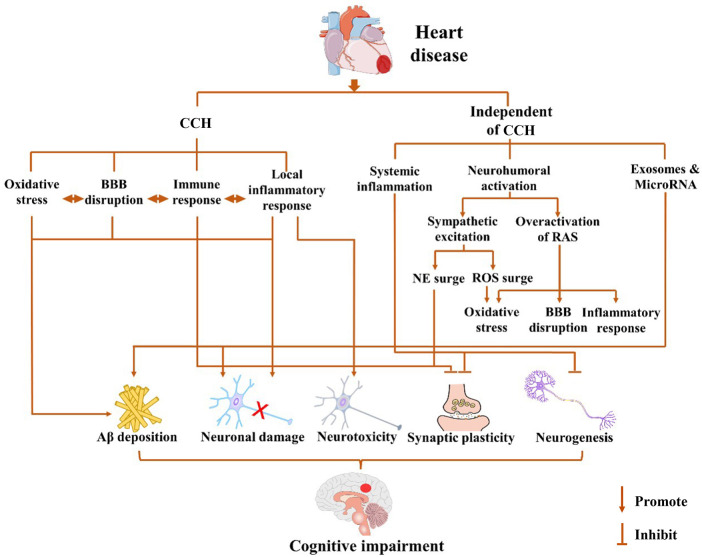
Diagnosis and treatment of patients with cardiovascular and neurologic diseases primarily focus on the heart and brain, respectively. An increasing number of preclinical and clinical studies have confirmed a causal relationship between heart and brain diseases. Cardiogenic dementia is a cognitive impairment caused by heart dysfunction and has received increasing research attention. The prevention and treatment of cardiogenic dementia are essential to improve the quality of life, particularly in the elderly and aging population. This study describes the changes in cognitive function associated with coronary artery disease, myocardial infarction, heart failure, atrial fibrillation and heart valve disease. An updated understanding of the two known pathogenic mechanisms of cardiogenic dementia is presented and discussed. One is a cascade of events caused by cerebral hypoperfusion due to long-term reduction of cardiac output after heart disease, and the other is cognitive impairment regardless of the changes in cerebral blood flow after cardiac injury. Furthermore, potential medications for the prevention and treatment of cardiogenic dementia are reviewed, with particular attention to multicomponent herbal medicines.
Keywords: cardiogenic dementia; cognitive impairment; heart disease; heart–brain axis; heart–brain interaction.
© 2024 Liu, Xiao, Liang, He, Lyu and Zhu.
Conflict of interest statement
The authors declare that the research was conducted in the absence of any commercial or financial relationships that could be construed as a potential conflict of interest.
Figures
Comment in
-
Commentary: Heart-brain interaction in cardiogenic dementia: pathophysiology and therapeutic potential.Front Cardiovasc Med. 2025 Jan 10;11:1479675. doi: 10.3389/fcvm.2024.1479675. eCollection 2024. Front Cardiovasc Med. 2025. PMID: 39866799 Free PMC article. No abstract available.
References
Publication types
LinkOut - more resources
Full Text Sources
