


This is a preprint.
Cerebrovascular pathology mediates associations between hypoxemia during rapid eye movement sleep and medial temporal lobe structure and function in older adults
- PMID: 38328085
- PMCID: PMC10849660
- DOI: 10.1101/2024.01.28.577469
Cerebrovascular pathology mediates associations between hypoxemia during rapid eye movement sleep and medial temporal lobe structure and function in older adults
Abstract
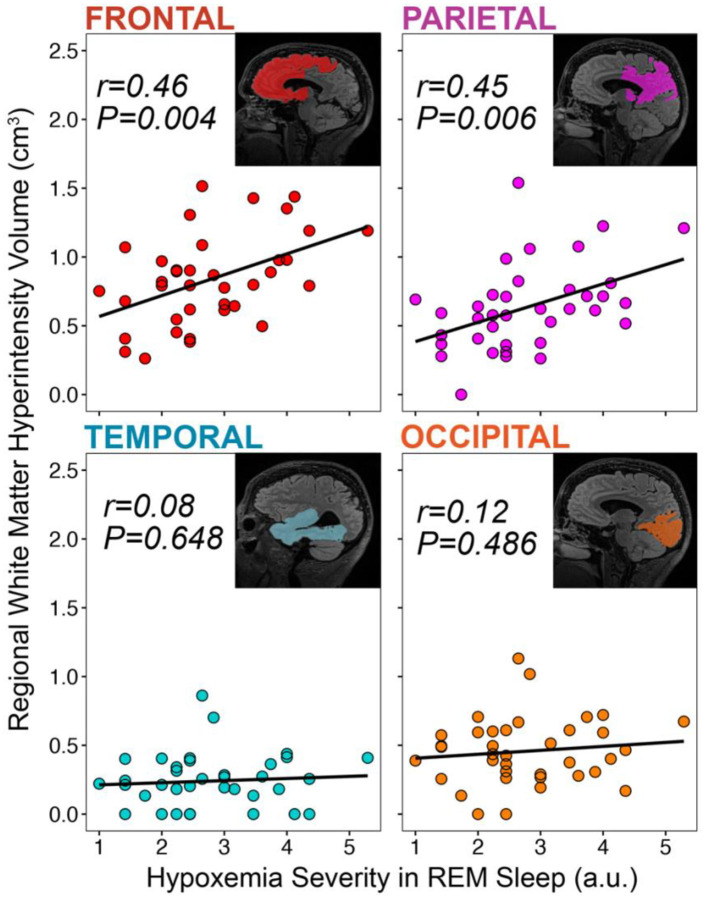
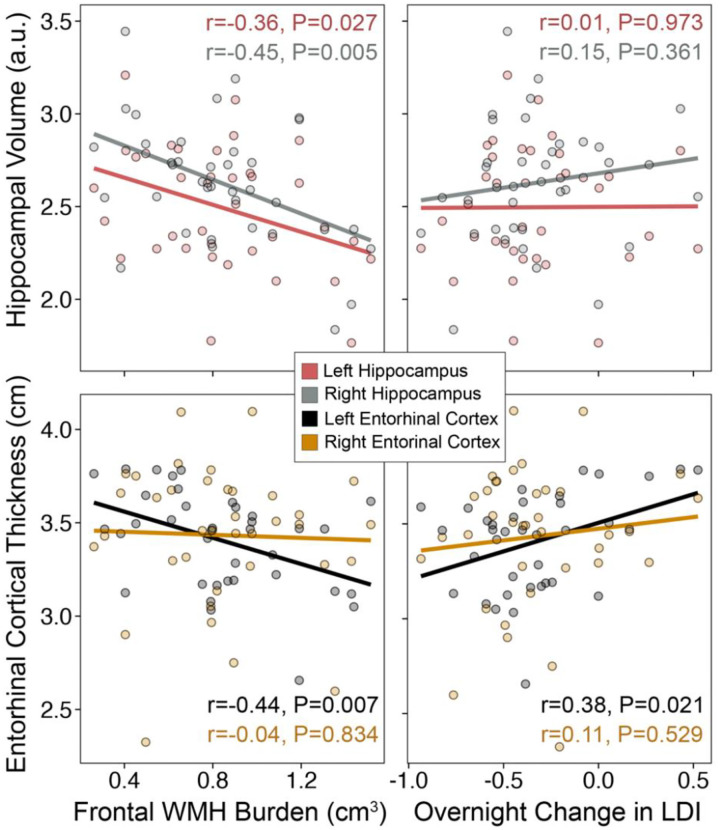
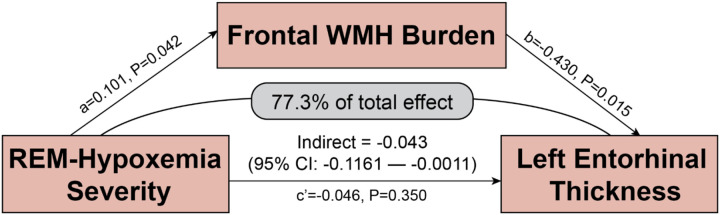
Obstructive sleep apnea (OSA) is common in older adults and is associated with medial temporal lobe (MTL) degeneration and memory decline in aging and Alzheimer's disease (AD). However, the underlying mechanisms linking OSA to MTL degeneration and impaired memory remains unclear. By combining magnetic resonance imaging (MRI) assessments of cerebrovascular pathology and MTL structure with clinical polysomnography and assessment of overnight emotional memory retention in older adults at risk for AD, cerebrovascular pathology in fronto-parietal brain regions was shown to statistically mediate the relationship between OSA-related hypoxemia, particularly during rapid eye movement (REM) sleep, and entorhinal cortical thickness. Reduced entorhinal cortical thickness was, in turn, associated with impaired overnight retention in mnemonic discrimination ability across emotional valences for high similarity lures. These findings identify cerebrovascular pathology as a contributing mechanism linking hypoxemia to MTL degeneration and impaired sleep-dependent memory in older adults.
Figures
References
-
- Slowik J. M., Sankari A. & Collen J. F. Obstructive Sleep Apnea. in StatPearls (StatPearls Publishing, Treasure Island (FL), 2023). - PubMed
Publication types
Grants and funding
LinkOut - more resources
Full Text Sources
