


Morin ameliorates myocardial injury in diabetic rats via modulation of inflammatory pathways
- PMID: 38331877
- PMCID: PMC10854036
- DOI: 10.1186/s42826-024-00190-x
Morin ameliorates myocardial injury in diabetic rats via modulation of inflammatory pathways
Abstract
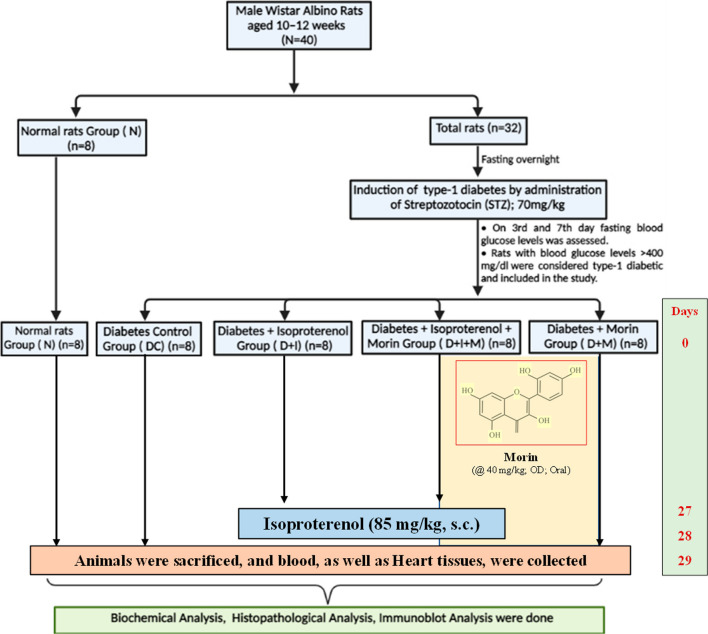
Background: High blood glucose levels in diabetes lead to vascular inflammation which accelerates atherosclerosis. Herein, Morin was orally administered in male Wistar rats, at the dose of 40 mg/kg for 28 days, and on the 27th and 28th day, ISO was administered to designate groups at the dose of 85 mg/kg s.c., to induce myocardial infarction.
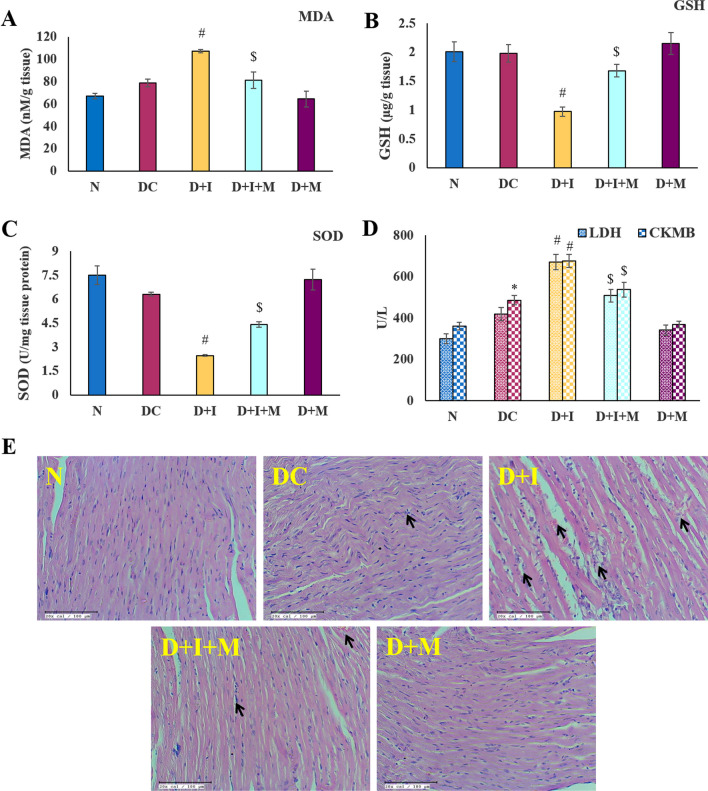
Results: Free radical generation, including ROS, in diabetes following ISO administration, leads to the activation of both intrinsic and extrinsic pathways of apoptosis. Morin significantly (p ≤ 0.05) reduced oxidative stress (GSH, MDA, SOD), cardiac injury markers (CK-MB, LDH), inflammation (TNF, IL-6), and apoptosis (Bax, BCl2, Caspase-3). In addition, it also reduced insulin and blood glucose levels. Akt/eNOS, Nrf2/HO-1, MAPK signaling pathways, and Insulin signal transduction pathways were positively modulated by morin pre-treatment.
Conclusions: Morin attenuated oxidative stress and inflammation and also modified the activity of various molecular pathways to mitigate cardiomyocyte damage during ISO-induced MI in diabetic rats.
Keywords: Diabetes; Isoproterenol; Molecular signaling pathway; Myocardial necrosis.
© 2024. The Author(s).
Conflict of interest statement
The authors declare no conflicts of interest for this publication. The expressed views in this article are of the authors alone.
Figures



References
-
- Saeedi P, Petersohn I, Salpea P, Malanda B, Karuranga S, Unwin N, et al. Global and regional diabetes prevalence estimates for 2019 and projections for 2030 and 2045: results from the International Diabetes Federation Diabetes Atlas. Diabetes Res Clin Pract. 2019;157:107843. doi: 10.1016/j.diabres.2019.107843. - DOI - PubMed
LinkOut - more resources
Full Text Sources
Research Materials
Miscellaneous
