


Oncological outcomes in robot-assisted radical prostatectomy: the value of PSA density as a preoperative predictive factor
- PMID: 38333072
- PMCID: PMC10851720
- DOI: 10.1177/17562872241229250
Oncological outcomes in robot-assisted radical prostatectomy: the value of PSA density as a preoperative predictive factor
Abstract
Background: Pretreatment assessment of patients diagnosed with localized prostate cancer (PCa) is essential for therapeutic decision-making. Currently available staging systems based on prostate-specific antigen (PSA), Gleason score, and clinical stage allow for determining the prognostic characteristics of these patients. Several studies have evaluated the preoperative use of prostate-specific antigen density (PSAD) as a prognostic factor for further risk stratification. To date, the role of PSAD in this setting is still an object of debate.
Objectives: The present analysis aimed to assess the predictive potential of PSAD for adverse oncological outcomes after robot-assisted radical prostatectomy (RARP) and to compare its accuracy to preoperative PSA (pPSA).
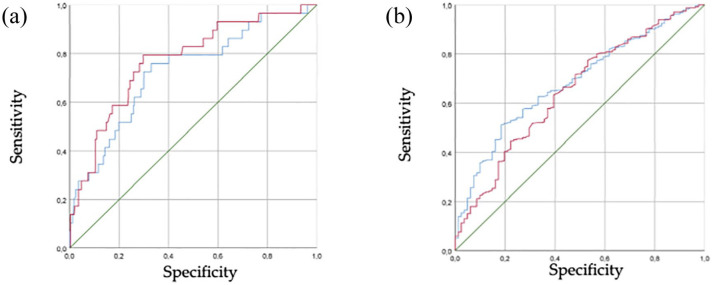
Design and methods: We retrospectively reviewed 427 patients diagnosed with localized PCa who underwent RARP at a single institution between January 2015 and January 2020. Generating receiver operator characteristic (ROC) curves, calculating areas under the curves (AUCs), and using a linear regression model, we analyzed the association of PSAD and pPSA with postoperative positive surgical margins (PSM), Gleason score ⩾ 7, persistent PSA, and biochemical recurrence (BCR), with a median follow-up of 47 months.
Results: PSAD showed a significant association with PSM (p < 0.0001), PSA persistence (p < 0.0001), and Gleason ⩾ 7 (p < 0.0001), without being statistically significant in predicting BCR (p = 0.098). The predictive value of PSAD was comparable to pPSA for outcomes of PSA persistence (AUC 0.727 versus 0.771) and Gleason ⩾ 7 (AUC 0.683 versus 0.649).
Conclusion: PSAD is a predictive factor for postoperative oncological outcomes of PSM, Gleason score ⩾ 7, and persistence of PSA. Despite the need for further studies, PSAD could be useful as a prognostic parameter in conjunction with established staging systems.
Keywords: oncological outcomes; prostate cancer; prostate-specific antigen; prostate-specific antigen density; robot-assisted radical prostatectomy.
Plain language summary
Oncological outcomes in robot-assisted radical prostatectomy: the value of PSA density as a preoperative predictive factor Prostate-specific antigen density (PSAD) has an established role in the diagnostic process of prostate cancer (PCa). However, controversy remains on the assessment of its value as a pretreatment prognostic factor. The aim of our study was to evaluate the predictive ability of PSAD for oncological outcomes in PCa patients treated with robot-assisted radical prostatectomy (RARP) and to compare with the value of preoperative PSA (pPSA). The present analysis showed a significant association of PSAD with positive surgical margins (PSM), Gleason Score >=7 and prostate-specific antigen (PSA) persistence after RARP. Moreover, PSAD demonstrated to perform comparably to pPSA in predicting the outcomes of clinically significant PCa (csPCa) and post-RARP PSA persistence. Therefore, PSAD is considered a preoperative predictive factor potentially useful in conjunction with other previously established prognostic criteria and clinical features.
© The Author(s), 2024.
Conflict of interest statement
The authors declare that there is no conflict of interest.
Figures
References
-
- Culp MB, Soerjomataram I, Efstathiou JA, et al. Recent global patterns in prostate cancer incidence and mortality rates. Eur Urol 2020; 77: 38. - PubMed
-
- International Agency for Research on Cancer (IARC); Data visualization tools for exploring the global cancer burden in 2020, https://gco.iarc.fr/roday/home (2020, accessed 22 January 2023).
-
- Mottet N, Cornford P, van den Bergh RCN, et al. EAU-EANM-ESTRO-ESUR-ISUP-SIOG guidelines on prostate cancer. The 2022 update. Eur Urol 2022. - PubMed
-
- Knipper S, Graefen M. Robot-assisted radical prostatectomy – So successful because it is better or better because it is so successful? Eur Urol 2018; 1: 361–363. - PubMed
-
- Moreno Sierra J, Galante Romo MI, Senovilla Pérez JL, et al. Oncologic outcomes in 408 consecutive patient cohort treated with da Vinci robot-assisted radical prostatectomy. Actas Urol Esp 2020; 44: 179–186. - PubMed
LinkOut - more resources
Full Text Sources
Research Materials
Miscellaneous
