


Physiological functions of glucose transporter-2: From cell physiology to links with diabetes mellitus
- PMID: 38333863
- PMCID: PMC10850595
- DOI: 10.1016/j.heliyon.2024.e25459
Physiological functions of glucose transporter-2: From cell physiology to links with diabetes mellitus
Abstract
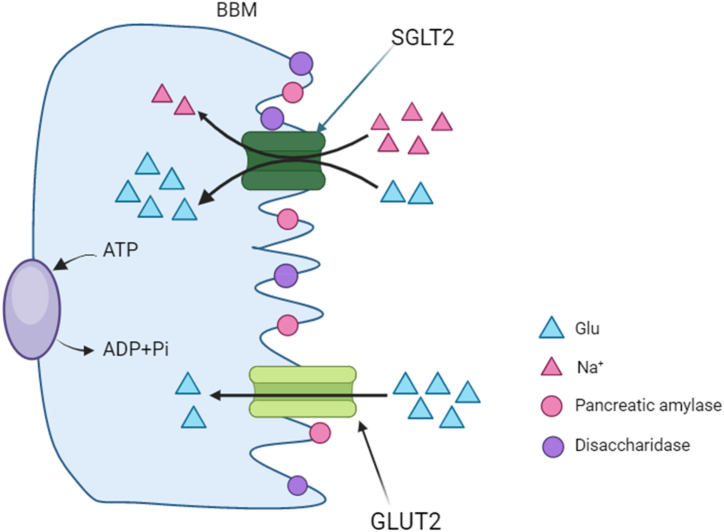
Glucose is a sugar crucial for human health since it participates in many biochemical reactions. It produces adenosine 5'-triphosphate (ATP) and nucleosides through glucose metabolic and pentose phosphate pathways. These processes require many transporter proteins to assist in transferring glucose across cells, and the most notable ones are glucose transporter-2 (GLUT-2) and sodium/glucose cotransporter 1 (SGLT1). Glucose enters small intestinal epithelial cells from the intestinal lumen by crossing the brush boundary membrane via the SGLT1 cotransporter. It exits the cells by traversing the basolateral membrane through the activity of the GLUT-2 transporter, supplying energy throughout the body. Dysregulation of these glucose transporters is involved in the pathogenesis of several metabolic diseases, such as diabetes. Natural loss of GLUT-2 or its downregulation causes abnormal blood glucose concentrations in the body, such as fasting hypoglycemia and glucose tolerance. Therefore, understanding GLUT-2 physiology is necessary for exploring the mechanisms of diabetes and targeted treatment development. This article reviews how the apical GLUT-2 transporter maintains normal physiological functions of the human body and the adaptive changes this transporter produces under pathological conditions such as diabetes.
Keywords: Diabetes; Glucose; Glucose transporter-2; Intestinal function; Signal transduction.
© 2024 The Authors.
Conflict of interest statement
The authors declare the following financial interests/personal relationships which may be considered as potential competing interests:Peilong Ying reports was provided by Xinjiang Institute of Technology. If there are other authors, they declare that they have no known competing financial interests or personal relationships that could have appeared to influence the work reported in this paper.
Figures
References
Publication types
LinkOut - more resources
Full Text Sources
