


The Role of the Glycemic Index and Glycemic Load in the Dietary Approach of Gestational Diabetes Mellitus
- PMID: 38337683
- PMCID: PMC10857473
- DOI: 10.3390/nu16030399
The Role of the Glycemic Index and Glycemic Load in the Dietary Approach of Gestational Diabetes Mellitus
Abstract
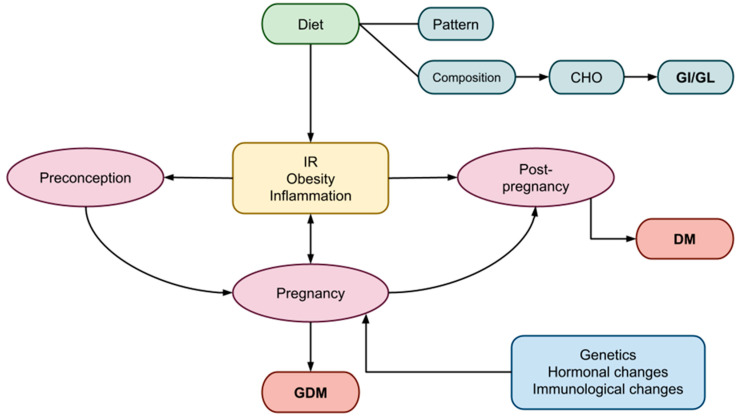
Gestational diabetes mellitus (GDM) is a common metabolic disorder that often develops during pregnancy, characterized by glucose intolerance and insulin resistance (IR). To ensure the well-being of both the mother and the fetus, the body undergoes multiple metabolic and immunological changes that result in peripheral IR and, under certain hereditary or acquired abnormalities, GDM in predisposed women. The adverse short- and long-term effects of GDM impact both the mother and the fetus. Nutrition seems to play an important role to prevent GDM or improve its evolution. An emphasis has been given to the proportion of carbohydrates (CHO) relative to protein and lipids, as well as dietary patterns, in GDM. The effects of CHO on postprandial glucose concentrations are reflected in the glycemic index (GI) and glycemic load (GL). Diets rich in GI and GL may induce or exacerbate IR, whereas diets low in GI and GL appear to enhance insulin sensitivity and improve glycemic control. These positive outcomes may be attributed to direct interactions with insulin and glucose homeostasis or indirect effects through improved body composition and weight management. This comprehensive narrative review aims to explore the significance of nutrition, with a focus on the critical evaluation of GI and GL in the dietary management of women with GDM.
Keywords: carbohydrates; diet; gestational diabetes mellitus; gestational inflammation; gestational insulin resistance; glycemic index; glycemic load; insulin resistance; nutrition; obesity; pregnancy.
Conflict of interest statement
The authors declare no conflicts of interest.
Figures
References
Publication types
MeSH terms
Substances
LinkOut - more resources
Full Text Sources
