


Application of Lavandula angustifolia Mill. Extracts for the Phytosynthesis of Silver Nanoparticles: Characterization and Biomedical Potential
- PMID: 38337867
- PMCID: PMC10857192
- DOI: 10.3390/plants13030333
Application of Lavandula angustifolia Mill. Extracts for the Phytosynthesis of Silver Nanoparticles: Characterization and Biomedical Potential
Abstract
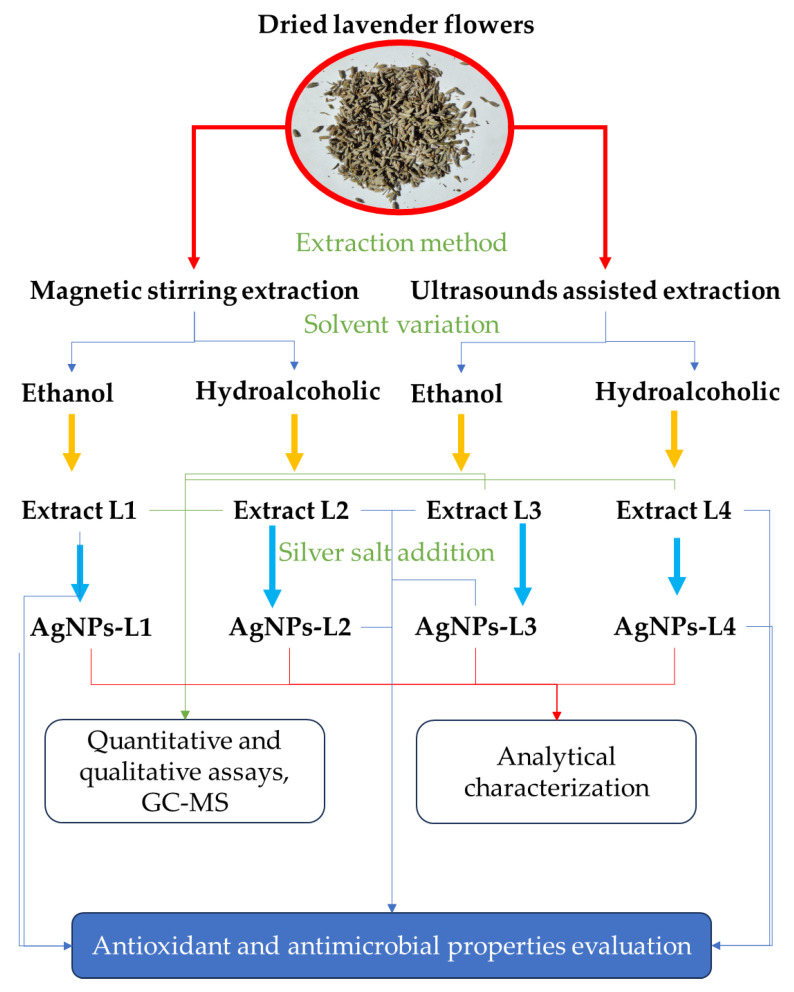
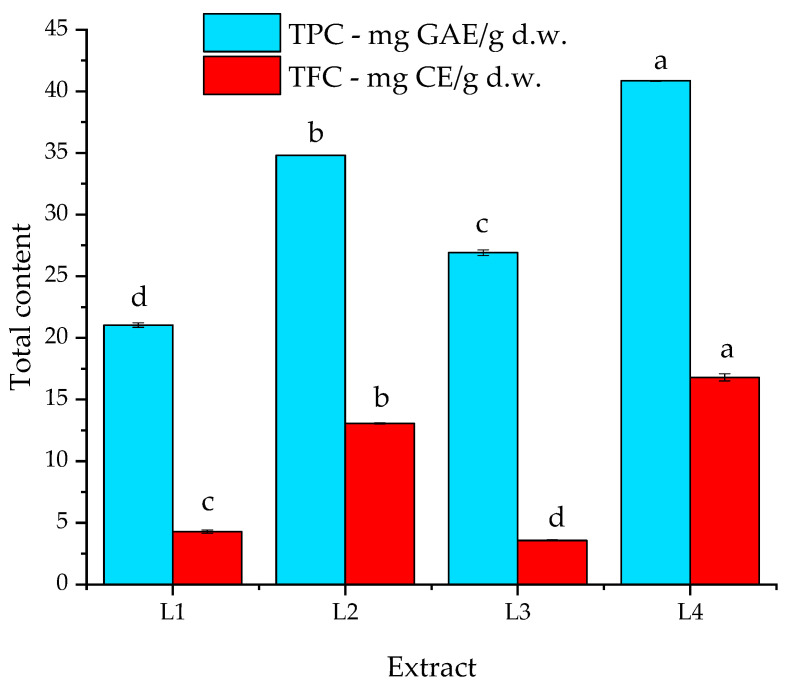
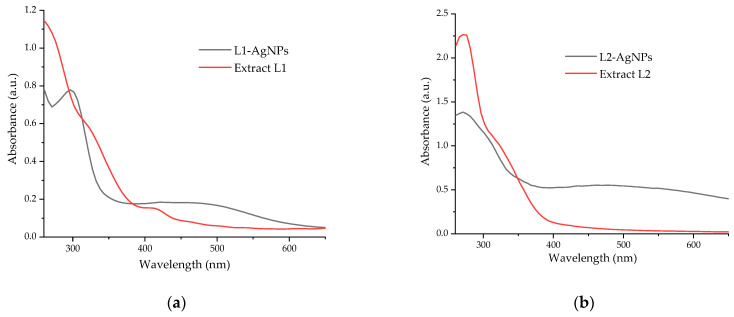
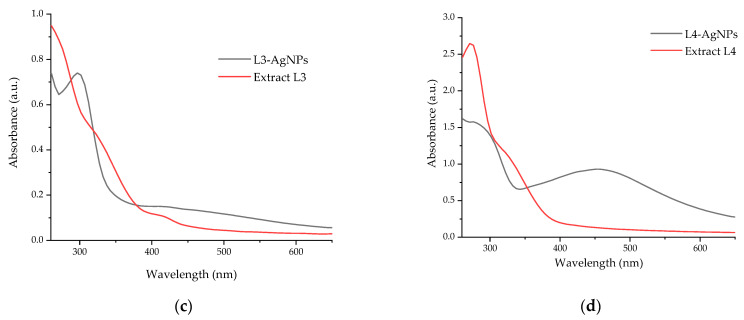
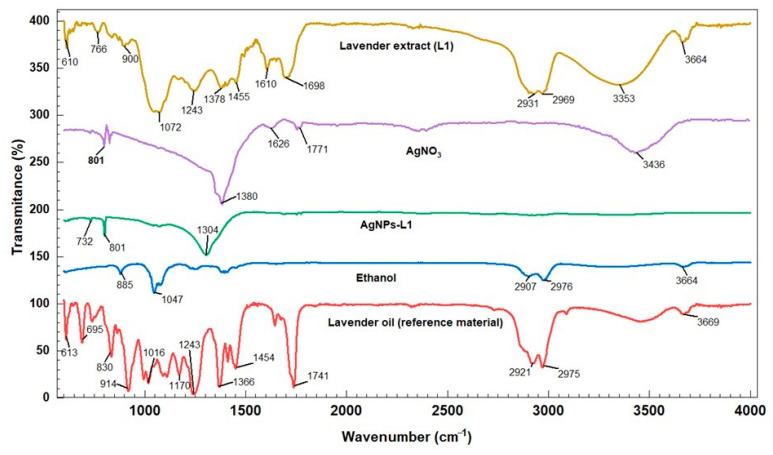
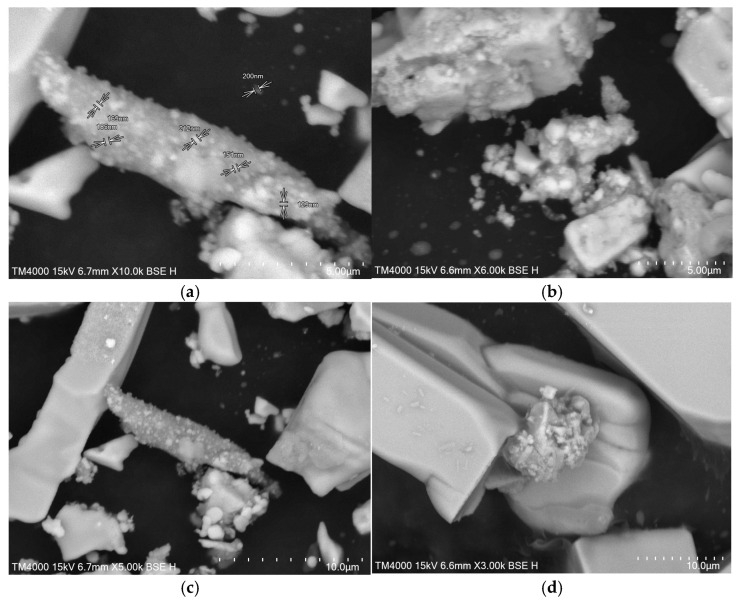
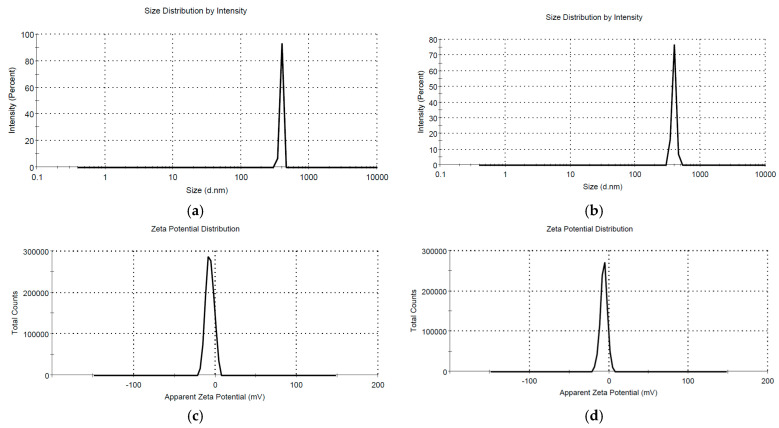
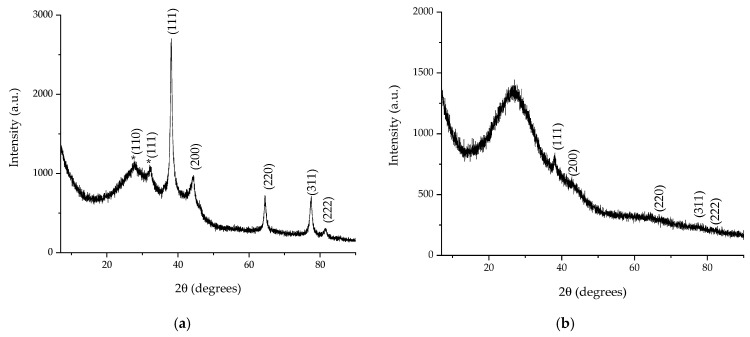
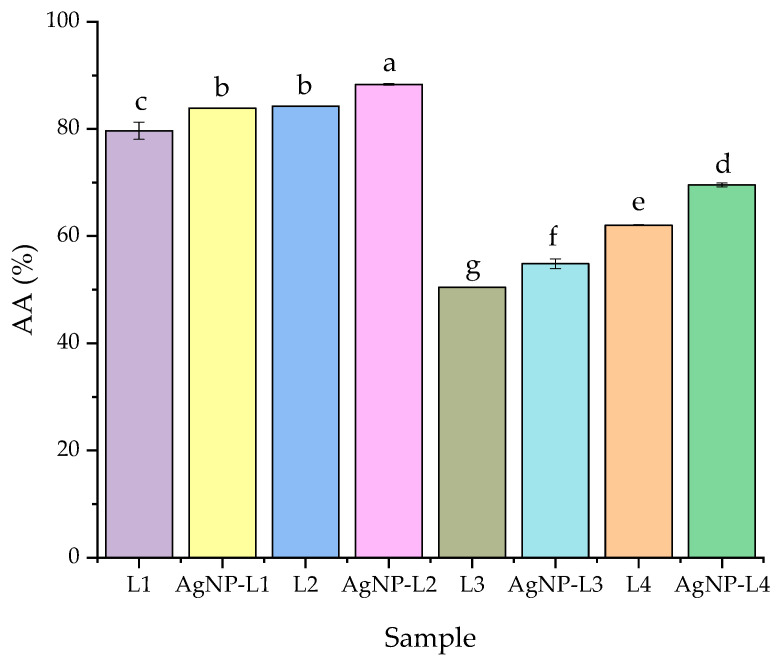
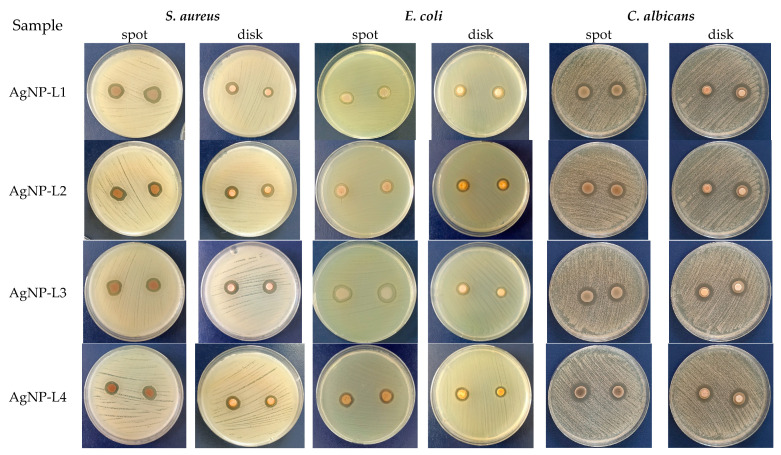
Nanotechnology can offer a series of new "green" and eco-friendly methods for developing different types of nanoparticles, among which the development of nanomaterials using plant extracts (phytosynthesis) represents one of the most promising areas of research. This present study details the use of lavender flowers (Lavandula angustifolia Mill., well-known for their use in homeopathic applications) for the biosynthesis of silver nanoparticles with enhanced antioxidant and antibacterial properties. Several qualitative and quantitative assays were carried out in order to offer an image of the extracts' composition (the recorded total phenolics content varied between 21.0 to 40.9 mg GAE (gallic acid equivalents)/g dry weight (d.w.), while the total flavonoids content ranged between 3.57 and 16.8 mg CE (catechin equivalents)/g d.w.), alongside modern analytical methods (such as gas chromatography-mass spectrometry-GC-MS, quantifying 12 phytoconstituents present in the extracts). The formation of silver nanoparticles (AgNPs) using lavender extract was studied by UV-Vis spectroscopy, Fourier-transform infrared spectrometry (FTIR), scanning electron microscopy (SEM), X-ray diffraction (XRD), and dynamic light scattering (DLS)/zeta potential, with the selected nanoparticles having crystallite sizes of approx. 14.55 nm (AgNP-L2) and 4.61 nm, respectively (for AgNP-L4), and hydrodynamic diameters of 392.4 nm (for AgNP-L2) and 391.6 nm (for AgNP-L4), determined by DLS. A zeta potential of around -6.4 mV was displayed for both samples while presenting as large aggregates, in which nanoparticle clusters with dimensions of around 130-200 nm can be observed. The biomedical applications of the extracts and the corresponding phytosynthesized nanoparticles were evaluated using antioxidant and antimicrobial assays. The obtained results confirmed the phytosynthesis of the silver nanoparticles using Lavandula angustifolia Mill. extracts, as well as their antioxidant and antimicrobial potential.
Keywords: DLS; SEM; UV-Vis; XRD; antimicrobial; lavender; phytochemical analysis; silver nanoparticles.
Conflict of interest statement
The authors declare no conflicts of interest.
Figures
References
-
- Adhikari A., Lamichhane L., Adhikari A., Gyawali G., Acharya D., Baral E.R., Chhetri K. Green synthesis of silver nanoparticles using Artemisia vulgaris extract and its application toward catalytic and metal-sensing activity. Inorganics. 2022;10:113. doi: 10.3390/inorganics10080113. - DOI
-
- Šimat V., Skroza D., Tabanelli G., Čagalj M., Pasini F., Gómez-Caravaca A.M., Fernández-Fernández C., Sterniša M., Smole Možina S., Ozogul Y., et al. Antioxidant and Antimicrobial Activity of Hydroethanolic Leaf Extracts from Six Mediterranean Olive Cultivars. Antioxidants. 2022;11:1656. doi: 10.3390/antiox11091656. - DOI - PMC - PubMed
-
- Ettadili F.E., Aghris S., Laghrib F., Farahi A., Saqrane S., Bakasse M., Lahrich S., El Mhammedi M.A. Recent advances in the nanoparticles synthesis using plant extract: Applications and future recommendations. J. Mol. Struct. 2022;1248:131538. doi: 10.1016/j.molstruc.2021.131538. - DOI
Grants and funding
LinkOut - more resources
Full Text Sources
Miscellaneous
