


T-Cell Receptor Sequences Identify Combined Coxsackievirus- Streptococci Infections as Triggers for Autoimmune Myocarditis and Coxsackievirus- Clostridia Infections for Type 1 Diabetes
- PMID: 38339075
- PMCID: PMC10855694
- DOI: 10.3390/ijms25031797
T-Cell Receptor Sequences Identify Combined Coxsackievirus- Streptococci Infections as Triggers for Autoimmune Myocarditis and Coxsackievirus- Clostridia Infections for Type 1 Diabetes
Abstract
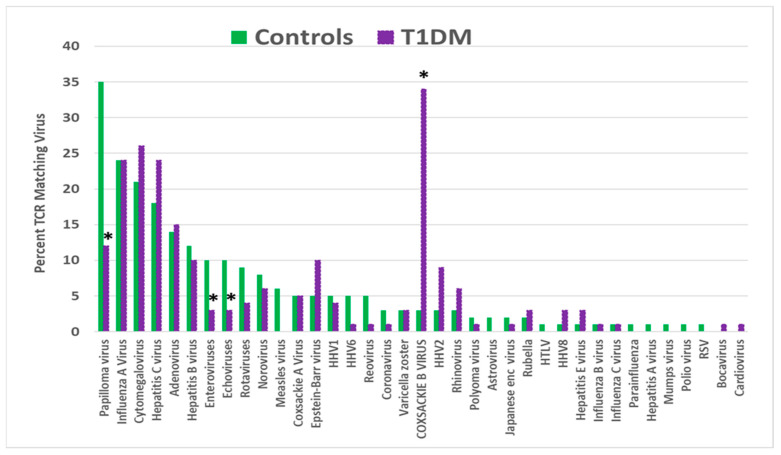
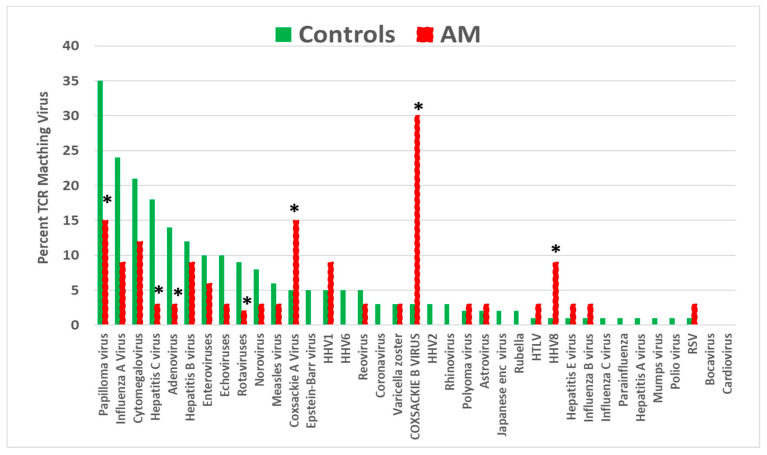
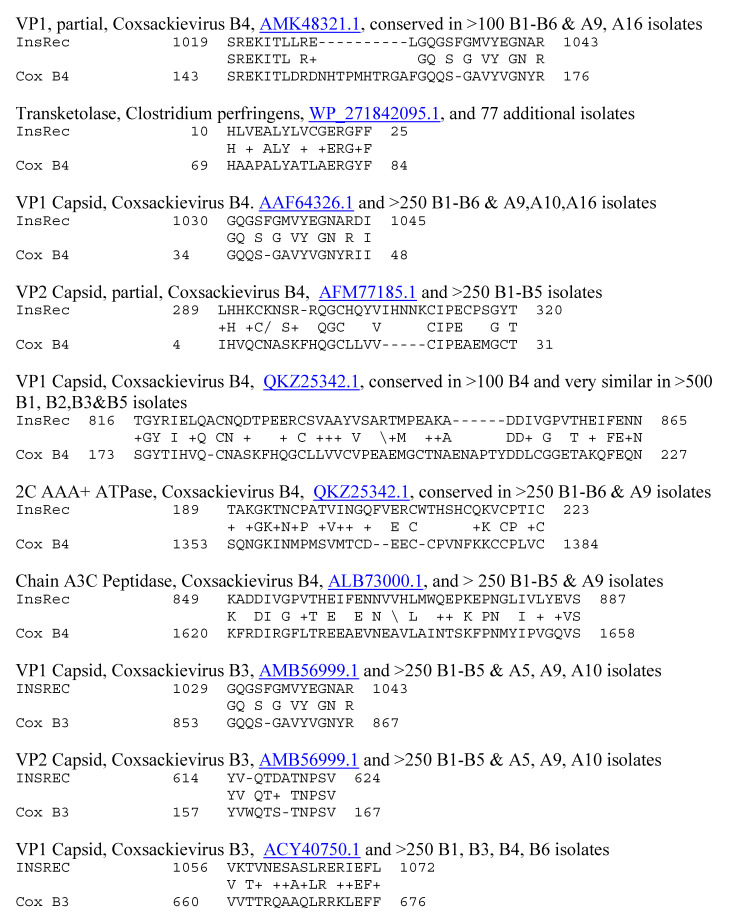
Recent research suggests that T-cell receptor (TCR) sequences expanded during human immunodeficiency virus and SARS-CoV-2 infections unexpectedly mimic these viruses. The hypothesis tested here is that TCR sequences expanded in patients with type 1 diabetes mellitus (T1DM) and autoimmune myocarditis (AM) mimic the infectious triggers of these diseases. Indeed, TCR sequences mimicking coxsackieviruses, which are implicated as triggers of both diseases, are statistically significantly increased in both T1DM and AM patients. However, TCRs mimicking Clostridia antigens are significantly expanded in T1DM, whereas TCRs mimicking Streptococcal antigens are expanded in AM. Notably, Clostridia antigens mimic T1DM autoantigens, such as insulin and glutamic acid decarboxylase, whereas Streptococcal antigens mimic cardiac autoantigens, such as myosin and laminins. Thus, T1DM may be triggered by combined infections of coxsackieviruses with Clostridia bacteria, while AM may be triggered by coxsackieviruses with Streptococci. These TCR results are consistent with both epidemiological and clinical data and recent experimental studies of cross-reactivities of coxsackievirus, Clostridial, and Streptococcal antibodies with T1DM and AM antigens. These data provide the basis for developing novel animal models of AM and T1DM and may provide a generalizable method for revealing the etiologies of other autoimmune diseases. Theories to explain these results are explored.
Keywords: Clostridia; Streptococci; T-cell receptors; anti-idiotype; antigen complementarity; autoimmune myocarditis; autoimmunity; coxsackievirus; diabetes; insulin; laminin; mimicry; myosin; synergism.
Conflict of interest statement
The author declares no conflict of interest.
Figures






References
-
- Moise L., Beseme S., Tassone R., Liu R., Kibria F., Terry F., Martin W., De Groot A.S. T cell epitope redundancy: Cross-conservation of the TCR face between pathogens and self and its implications for vaccines and autoimmunity. Expert Rev. Vaccines. 2016;15:607–617. doi: 10.1586/14760584.2016.1123098. - DOI - PubMed
-
- Moise L., Terry F., Gutierrez A.H., Tassone R., Losikoff P., Gregory S.H., Bailey-Kellogg C., Martin W.D., De Groot A.S. Smarter vaccine design will circumvent regulatory T cell-mediated evasion in chronic HIV and HCV infection. Front. Microbiol. 2016;5:502. doi: 10.3389/fmicb.2014.00502. - DOI - PMC - PubMed
MeSH terms
Substances
LinkOut - more resources
Full Text Sources
Medical
Miscellaneous
