


The effect of oral synbiotics on the gut microbiota and inflammatory biomarkers in healthy adults: a systematic review and meta-analysis
- PMID: 38341803
- PMCID: PMC12086677
- DOI: 10.1093/nutrit/nuae002
The effect of oral synbiotics on the gut microbiota and inflammatory biomarkers in healthy adults: a systematic review and meta-analysis
Abstract
Context: Prior research has explored the effect of synbiotics, the combination of probiotics and prebiotics, on the gut microbiota in clinical populations. However, evidence related to the effect of synbiotics on the gut microbiota in healthy adults has not been reviewed to date.
Objective: A systematic review and meta-analysis was conducted to comprehensively investigate the effect of synbiotics on the gut microbiota and inflammatory markers in populations of healthy adults.
Data sources: Scopus, PubMed, Web of Science, ScienceDirect, MEDLINE, CINAHL, and The Cochrane Library were systematically searched to retrieve randomized controlled trials examining the primary outcome of gut microbiota or intestinal permeability changes after synbiotic consumption in healthy adults. Secondary outcomes of interest were short-chain fatty acids, inflammatory biomarkers, and gut microbiota diversity.
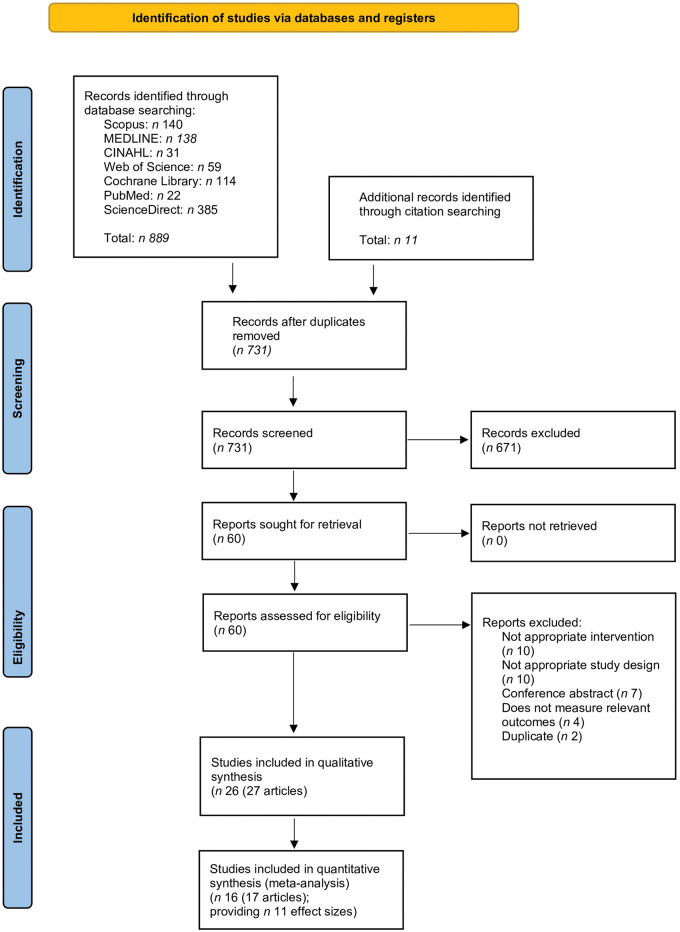
Data extraction: Weighted (WMD) or standardized mean difference (SMD) outcome data were pooled in restricted maximum likelihood models using random effects. Twenty-seven articles reporting on 26 studies met the eligibility criteria (n = 1319).
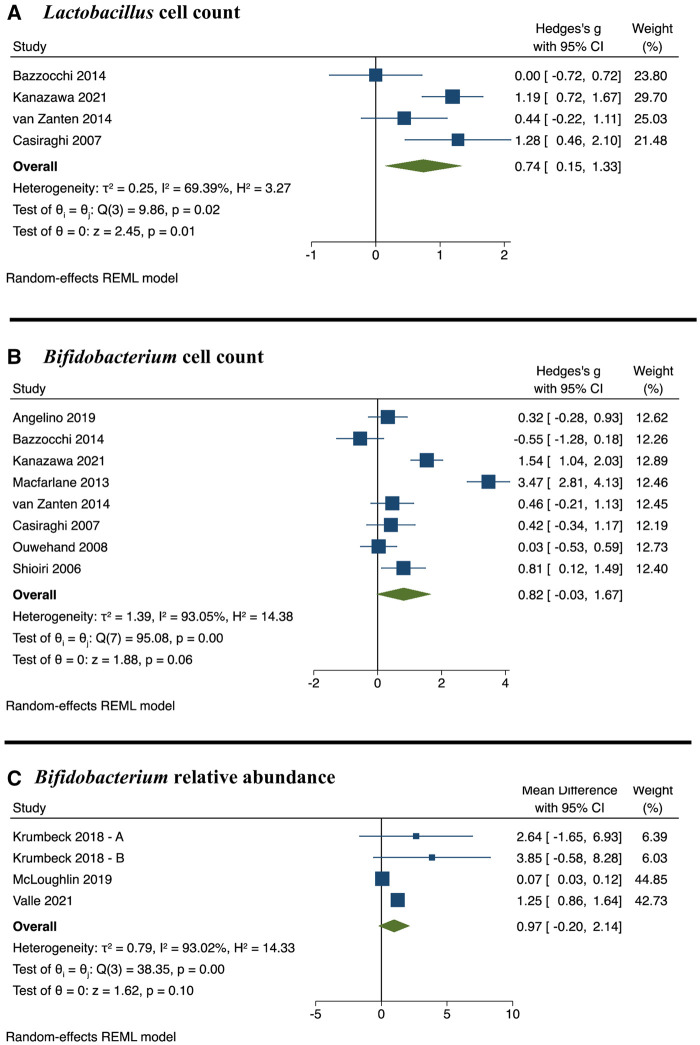
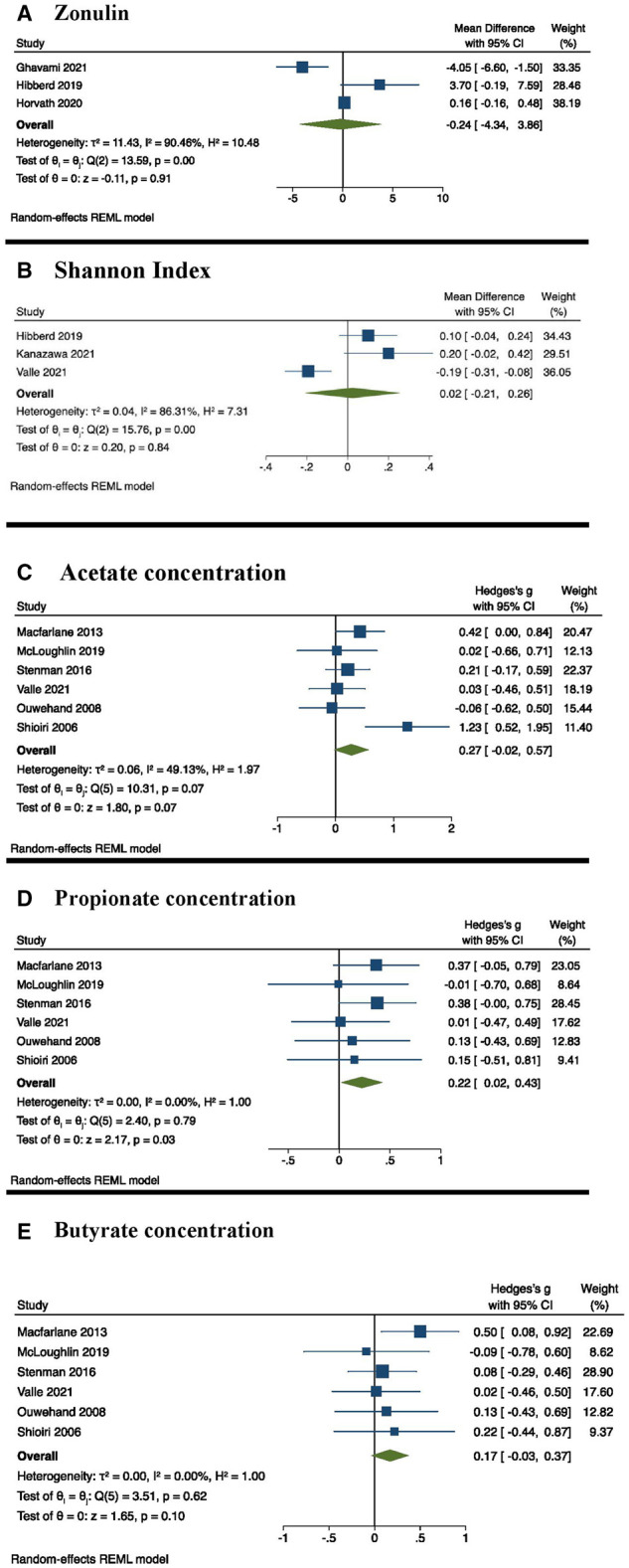
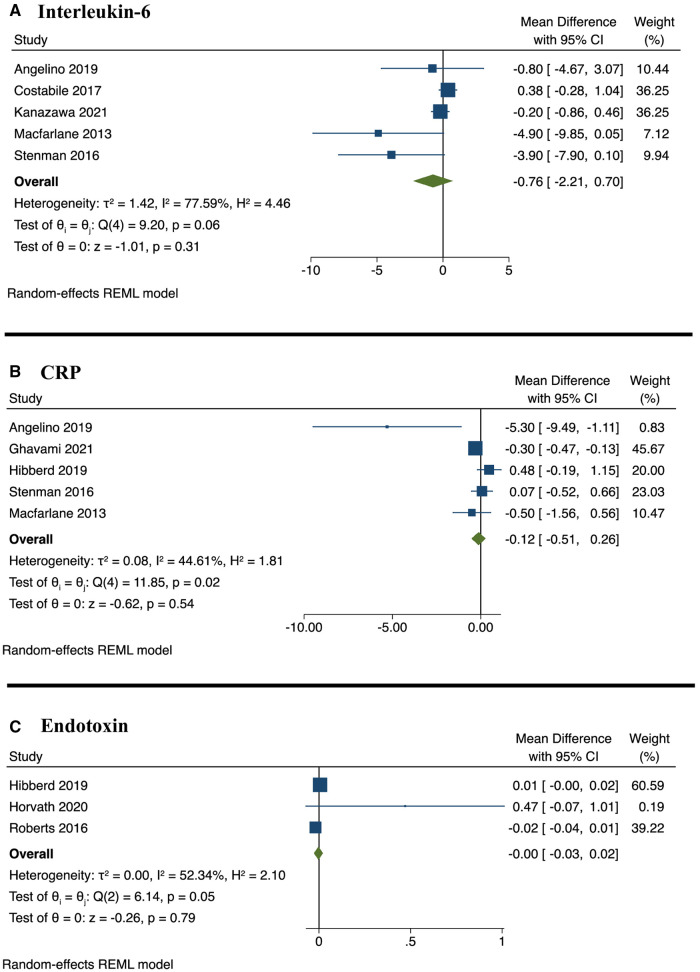
Data analysis: Meta-analyses of 16 studies showed synbiotics resulted in a significant increase in Lactobacillus cell count (SMD, 0.74; 95% confidence interval [CI], 0.15, 1.33; P = 0.01) and propionate concentration (SMD, 0.22; 95% CI, 0.02, 0.43; P = 0.03) compared with controls. A trend for an increase in Bifidobacterium relative abundance (WMD, 0.97; 95% CI, 0.42, 2.52; P = 0.10) and cell count (SMD, 0.82; 95% CI, 0.13, 1.88; P = 0.06) was seen. No significant differences in α-diversity, acetate, butyrate, zonulin, IL-6, CRP, or endotoxins were observed.
Conclusion: This review demonstrates that synbiotics modulate the gut microbiota by increasing Lactobacillus and propionate across various healthy adult populations, and may result in increased Bifidobacterium. Significant variations in synbiotic type, dose, and duration should be considered as limitations when applying findings to clinical practice.
Systematic review registration: PROSPERO no. CRD42021284033.
Keywords: gut microbiome; gut microbiota; healthy adult; inflammation; prebiotic; probiotic; symbiotic.
© The Author(s) 2024. Published by Oxford University Press on behalf of the International Life Sciences Institute.
Figures
References
-
- Chr. Hansen Holding A/S. New Study of Consumer Understanding of Probiotics Points to Significant Opportunities for the Food Industry. Denmark: Chr. Hansen Holding A/S; 2022.
-
- Hill C, Guarner F, Reid G, et al. Expert consensus document: the International Scientific Association for Probiotics and Prebiotics consensus statement on the scope and appropriate use of the term probiotic. Nat Rev Gastroenterol Hepatol. 2014;11:506–514. - PubMed
Publication types
MeSH terms
Substances
Grants and funding
LinkOut - more resources
Full Text Sources
Research Materials
Miscellaneous
