


Impaired sleep is associated with tau deposition on 18F-flortaucipir PET and accelerated cognitive decline, accounting for medications that affect sleep
- PMID: 38341949
- PMCID: PMC10947806
- DOI: 10.1016/j.jns.2024.122927
Impaired sleep is associated with tau deposition on 18F-flortaucipir PET and accelerated cognitive decline, accounting for medications that affect sleep
Abstract
Background: Impaired sleep is commonly associated with Alzheimer's disease (AD), although the underlying mechanisms remain unclear. Furthermore, the moderating effects of sleep-affecting medications, which have been linked to AD pathology, are incompletely characterized. Using data from the Alzheimer's Disease Neuroimaging Initiative, we investigated whether a medical history of impaired sleep, informant-reported nighttime behaviors, and sleep-affecting medications are associated with beta-amyloid and tau deposition on PET and cognitive change, cross-sectionally and longitudinally.
Methods: We included 964 subjects with 18F-florbetapir PET scans. Measures of sleep impairment and medication use were obtained from medical histories and the Neuropsychiatric Inventory Questionnaire. Multivariate models, adjusted for covariates, were used to assess associations among sleep-related features, beta-amyloid and tau, and cognition. Cortical tau deposition, categorized by Braak stage, was assessed using the standardized uptake value peak alignment (SUVP) method on 18F-flortaucipir PET.
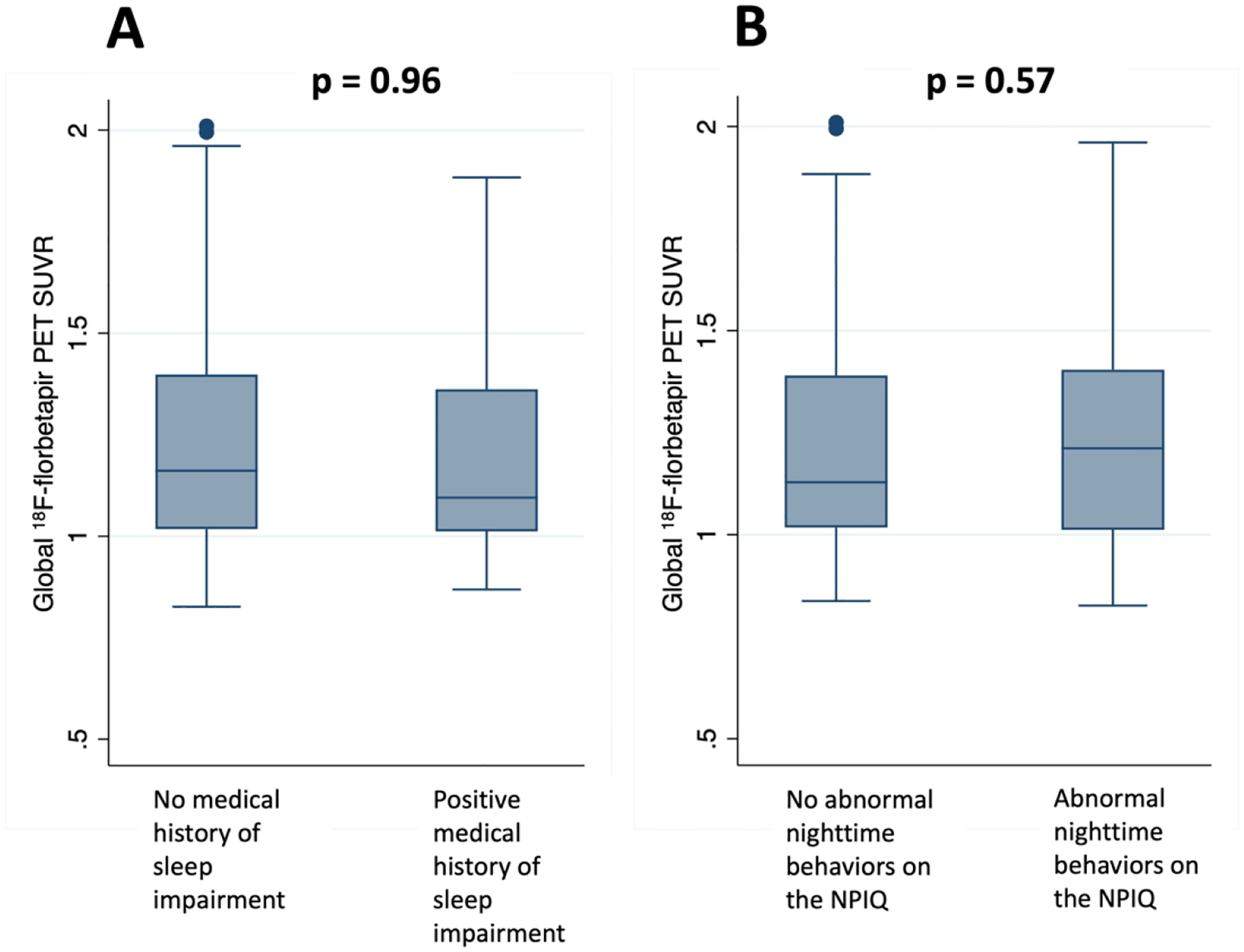
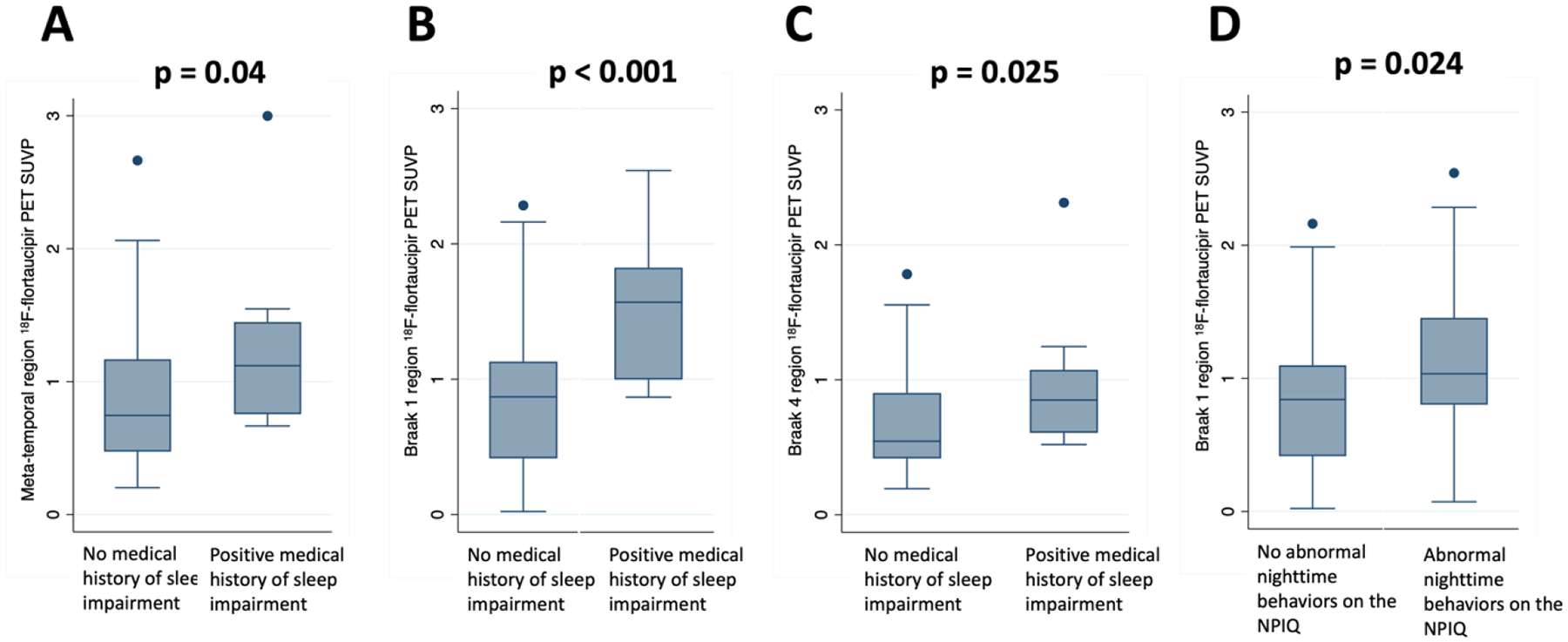
Results: Medical history of sleep impairment was associated with greater baseline tau in the meta-temporal, Braak 1, and Braak 4 regions (p = 0.04, p < 0.001, p = 0.025, respectively). Abnormal nighttime behaviors were also associated with greater baseline tau in the meta-temporal region (p = 0.024), and greater cognitive impairment, cross-sectionally (p = 0.007) and longitudinally (p < 0.001). Impaired sleep was not associated with baseline beta-amyloid (p > 0.05). Short-term use of selective serotonin reuptake inhibitors and benzodiazepines slightly weakened the sleep-tau relationship.
Conclusions: Sleep impairment was associated with tauopathy and cognitive decline, which could be linked to increased tau secretion from neuronal hyperactivity. Clinically, our results help identify high-risk individuals who could benefit from sleep-related interventions aimed to delay cognitive decline and AD.
Keywords: Alzheimer's disease; Insomnia; Neuroimaging; Positron emission tomography; Sleep; Tau.
Copyright © 2024 Elsevier B.V. All rights reserved.
Conflict of interest statement
Declaration of competing interest G.C. previously served on the Biogen Medical Advisory Board and received an honorarium. G.C. currently serves as a consultant for Life Molecular Imaging, providing education on the interpretation of amyloid PET scans and receives compensation.
Figures

References
Publication types
MeSH terms
Substances
Grants and funding
LinkOut - more resources
Full Text Sources
Medical
