


Efficacy of splanchnic nerve neurolysis in the management of upper abdominal cancer pain: A systematic review and meta-analysis
- PMID: 38343676
- PMCID: PMC10858689
- DOI: 10.4103/ija.ija_439_23
Efficacy of splanchnic nerve neurolysis in the management of upper abdominal cancer pain: A systematic review and meta-analysis
Abstract
Background and aims: Neurolytic splanchnic nerve block (NSNB) is practised in intractable abdominal pain secondary to intra-abdominal malignancies. This review evaluated the efficacy of NSNB.
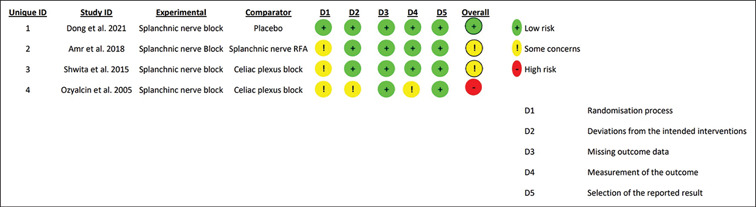
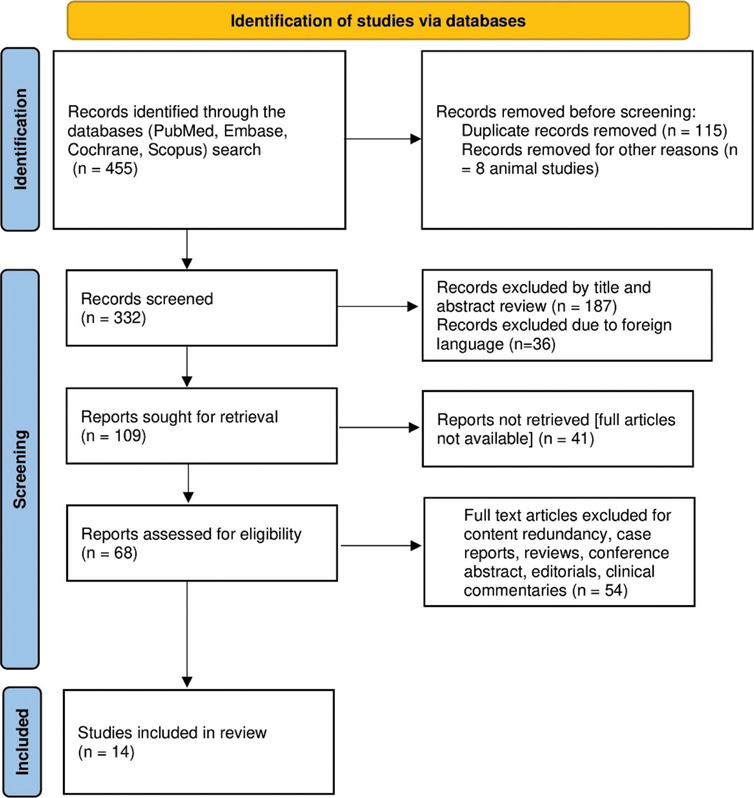
Methods: PubMed, Embase, Scopus, and Cochrane databases were searched for articles published from January 2001 to October 2023. Two independent reviewers extracted the data from the included studies. The quality of randomised controlled trials (RCTs) was assessed using the revised Cochrane risk-of-bias tool (RoB 2), and the Newcastle-Ottawa scale was used for cohort studies.
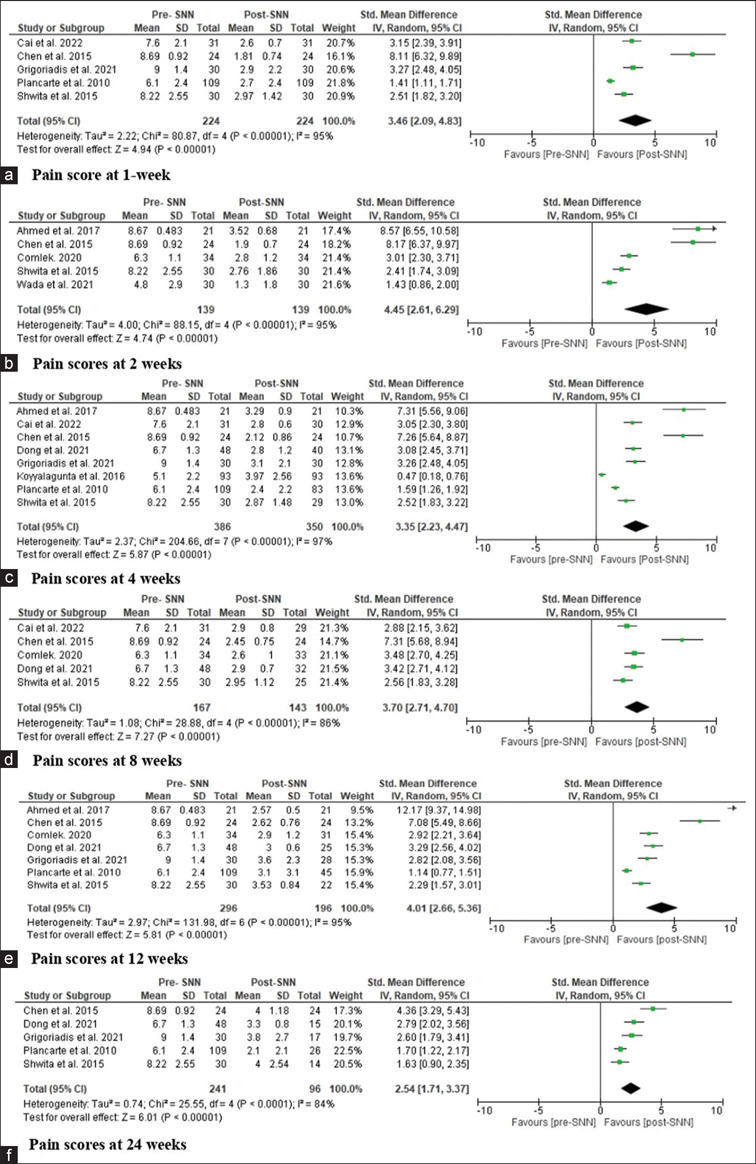
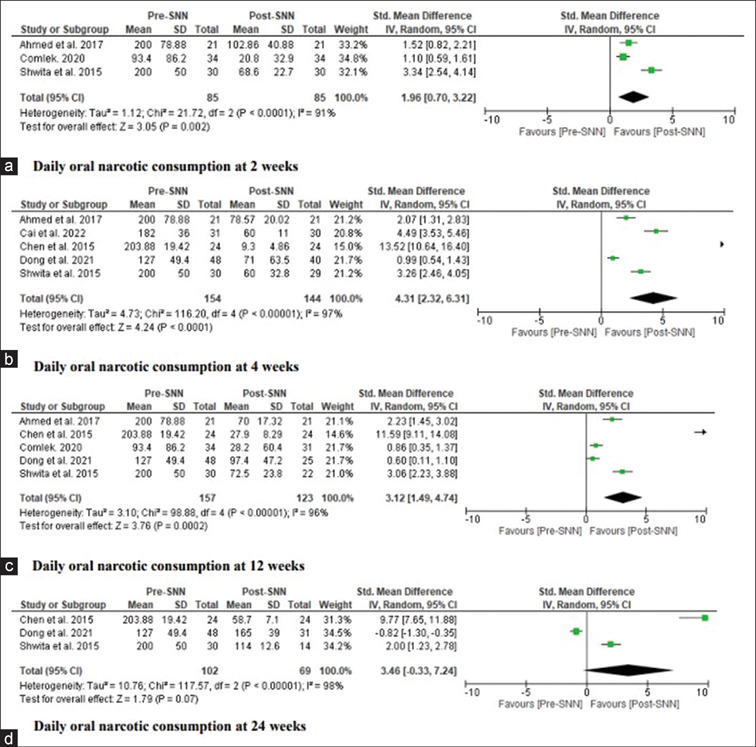
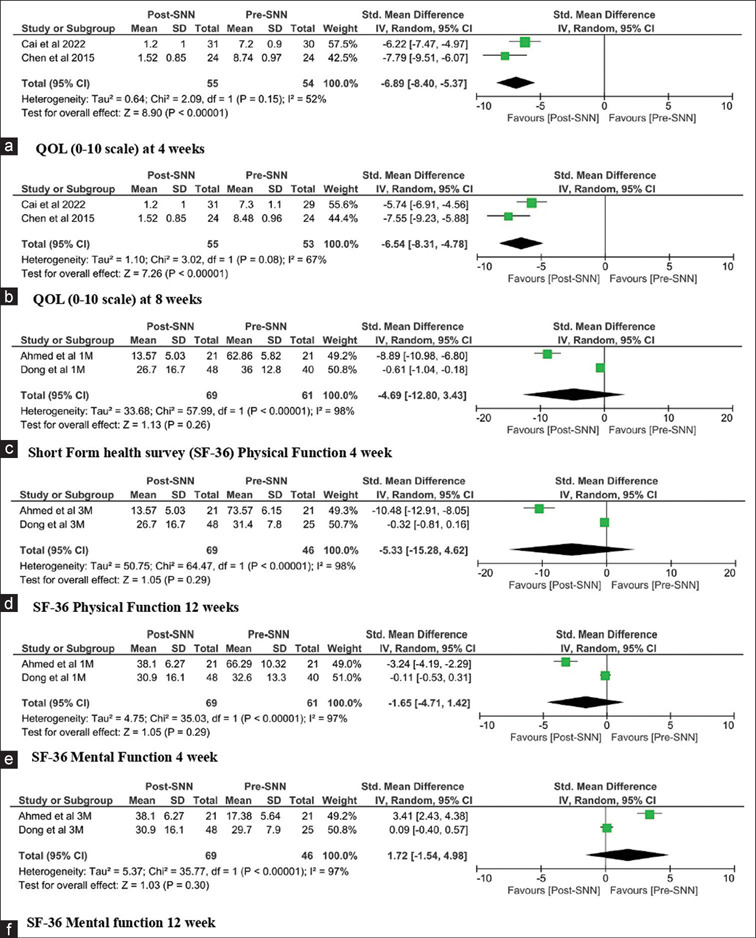
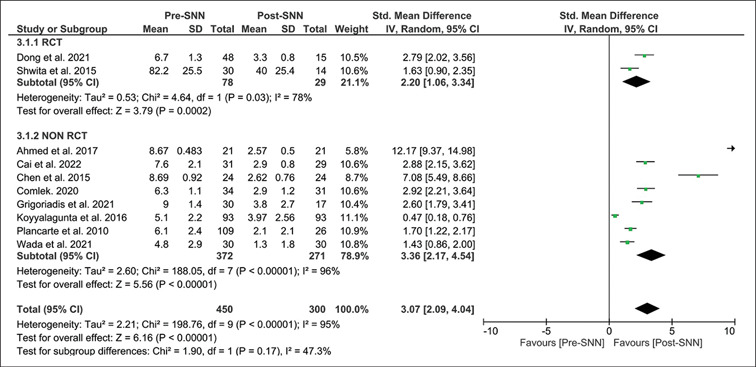
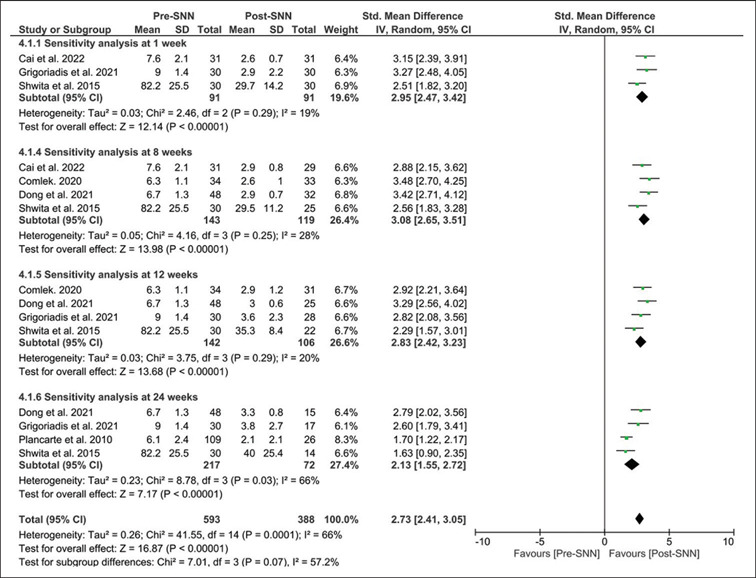
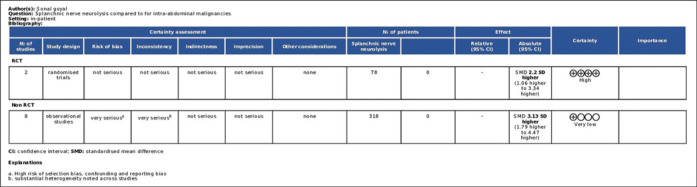
Results: Fourteen articles (4 RCTs, 3 non-randomised prospective, and 7 retrospectives) were included. Ten articles were quantitatively assessed and demonstrated significant pain relief at 1 week (standardised mean difference (SMD): 3.46 [2.09, 4.83], P < 0.001, I2 = 95%), 2 weeks (SMD: 4.45 [2.61, 6.29], P < 0.001, I2 = 95%), 4 weeks (SMD: 3.35 [2.23, 4.47], P < 0.001, I2 = 97%), 8 weeks (SMD: 3.7 [2.71, 4.7], P < 0.001, I2 = 86%), 12 weeks (SMD: 4.01 [2.66, 5.36], P < 0.001, I2 = 95%), and 24 weeks (SMD: 2.54 [1.71,3.37], P < 0.001, I2 = 84%). Daily narcotic consumption and quality of life (QOL) significantly improved post neurolysis, but survival rates showed controversial results. Significant heterogeneity was reported, and sub-group analysis revealed a moderate level of variability [I2 = 47.3%] pertaining to study design as a source of heterogeneity. The Grading of Recommendations, Assessment, Development and Evaluation (GRADE) Pro GDT recommendation for the primary objective was 'high' for the analysis of RCTs and 'very low' evidence quality for observational studies. Only transient minor complications were reported.
Conclusion: NSNB appears to be an efficacious technique that provides substantial pain relief, reduces opioid consumption, and ameliorates QOL.
Keywords: Abdominal pain; chemical neurolysis; chronic pain; intractable pain; neoplasms; neurolysis; opioid; quality of life; splanchnic nerve block; sympathetic.
Copyright: © 2023 Indian Journal of Anaesthesia.
Conflict of interest statement
There are no conflicts of interest.
Figures
References
-
- Porta M, Fabregat X, Malats N, Guarner L, Carrato A, de Miguel A, et al. Exocrine pancreatic cancer: Symptoms at presentation and their relation to tumour site and stage. Clin Transl Oncol. 2005;7:189–97. - PubMed
-
- World Health Organization. 2nd. Geneva, Switzerland: WHO; 1996. 1996. Cancer Pain Relief.
-
- McNicol E. Opioid side effects and their treatment in patients with chronic cancer and noncancer pain. J Pain Palliat Care Pharmacother. 2008;22:270–81. - PubMed
-
- Caraceni A, Portenoy RK. Pain management in patients with pancreatic carcinoma. Cancer. 1996;78:639–53. - PubMed
-
- Firdousi FH, Sharma D, Raina VK. Palliation by coeliac plexus block for upper abdominal visceral cancer pain. Trop Doct. 2002;32:224–6. - PubMed
LinkOut - more resources
Full Text Sources