


Randomized Trial of SGLT2 Inhibitor Identifies Target Proteins in Diabetic Kidney Disease
- PMID: 38344728
- PMCID: PMC10851015
- DOI: 10.1016/j.ekir.2023.11.020
Randomized Trial of SGLT2 Inhibitor Identifies Target Proteins in Diabetic Kidney Disease
Abstract
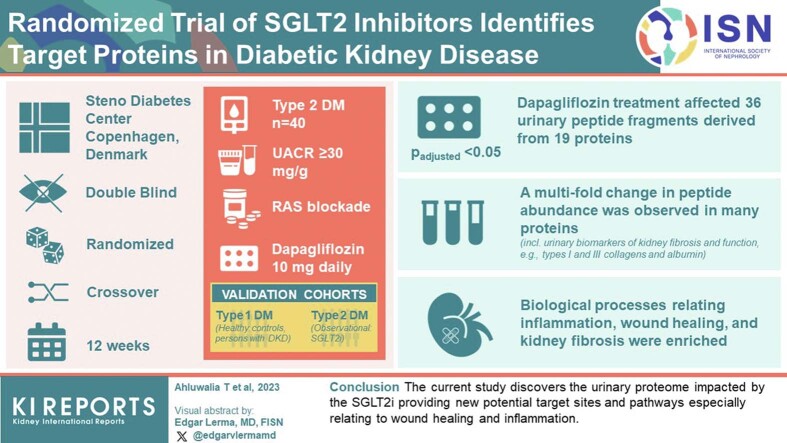
Introduction: Sodium-glucose cotransporter 2 inhibitors (SGLT2i) have emerged as novel therapeutics to treat diabetic kidney disease (DKD). Although the beneficial effects of SGLT2i have been demonstrated, their target mechanisms on kidney function are unknown. The current study aimed to elucidate these mechanisms by studying SGLT2i-induced changes in the urinary proteome of persons with type 2 diabetes (T2D) and DKD.
Methods: A total of 40 participants with T2D were enrolled in a double-blinded randomized cross-over trial at the Steno Diabetes Center Copenhagen, Denmark. They were treated with 10 mg of dapagliflozin for 12 weeks. Thirty-two participants with complete urinary proteomics measures before and after the trial were included. All participants received renin-angiotensin system blockade and had albuminuria, (urine albumin-to-creatinine ratio [UACR] ≥30 mg/g). A type 1 diabetes (T1D) cohort consisting of healthy controls and persons with DKD was included for validation. Urinary proteome changes were analyzed using Wilcoxon signed-rank test. Functional enrichment analysis was conducted to discover affected biological processes.
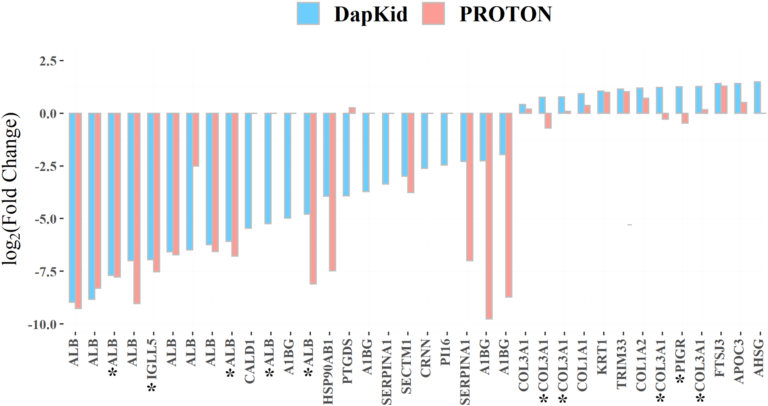
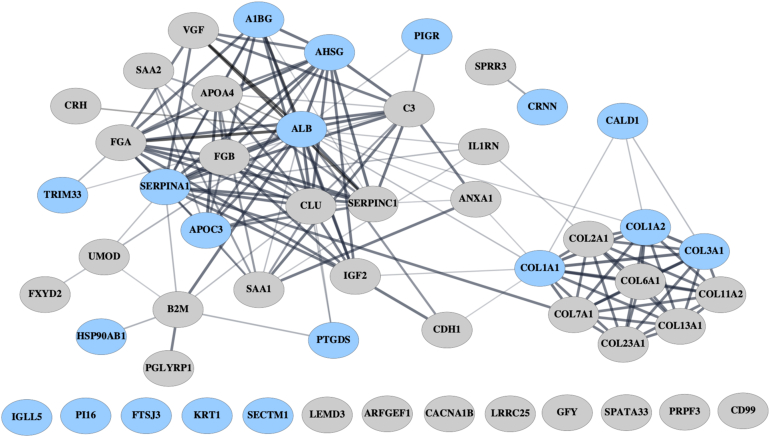
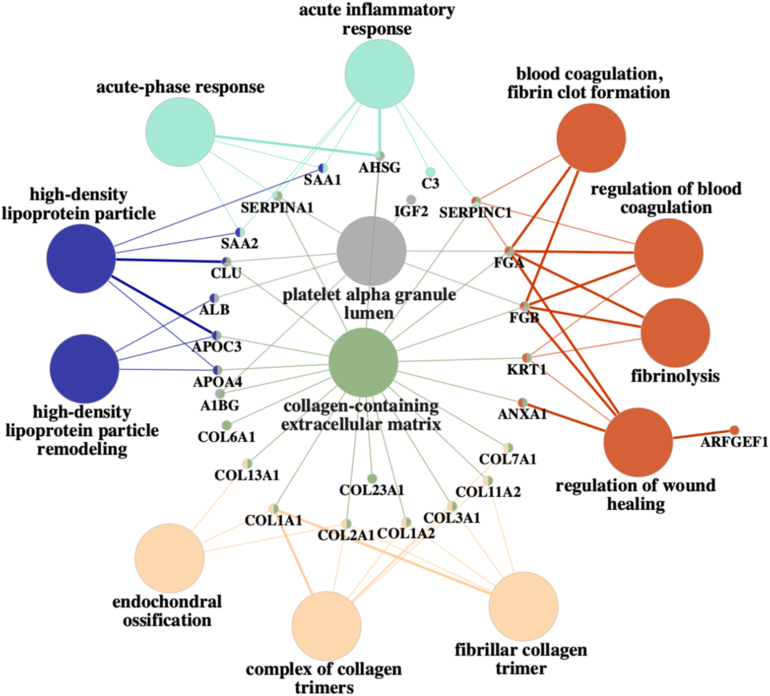
Results: Dapagliflozin treatment significantly (Padjusted < 0.05) affected 36 urinary peptide fragments derived from 19 proteins. Eighteen proteins were correspondingly reflected in the validation cohort. A multifold change in peptide abundance was observed in many proteins (A1BG, urinary albumin [ALB], Caldesmon 1, COLCRNN, heat shock protein 90-β [HSP90AB1], IGLL5, peptidase inhibitor 16 [PI16], prostaglandin-H2-D-isomerase [PTGDS], SERPINA1). These also included urinary biomarkers of kidney fibrosis and function (type I and III collagens and albumin). Biological processes relating to inflammation, wound healing, and kidney fibrosis were enriched.
Conclusion: The current study discovers the urinary proteome impacted by the SGLT2i, thereby providing new potential target sites and pathways, especially relating to wound healing and inflammation.
Keywords: SGLT2; dapagliflozin; diabetic kidney disease; randomized controlled trial; sodium-glucose cotransporter 2 inhibitors; urinary proteomics.
© 2023 International Society of Nephrology. Published by Elsevier Inc.
Figures
References
LinkOut - more resources
Full Text Sources
Research Materials
Miscellaneous
