Circuit-based intervention corrects excessive dentate gyrus output in the fragile X mouse model
- PMID: 38345852
- PMCID: PMC10942577
- DOI: 10.7554/eLife.92563
Circuit-based intervention corrects excessive dentate gyrus output in the fragile X mouse model
Abstract
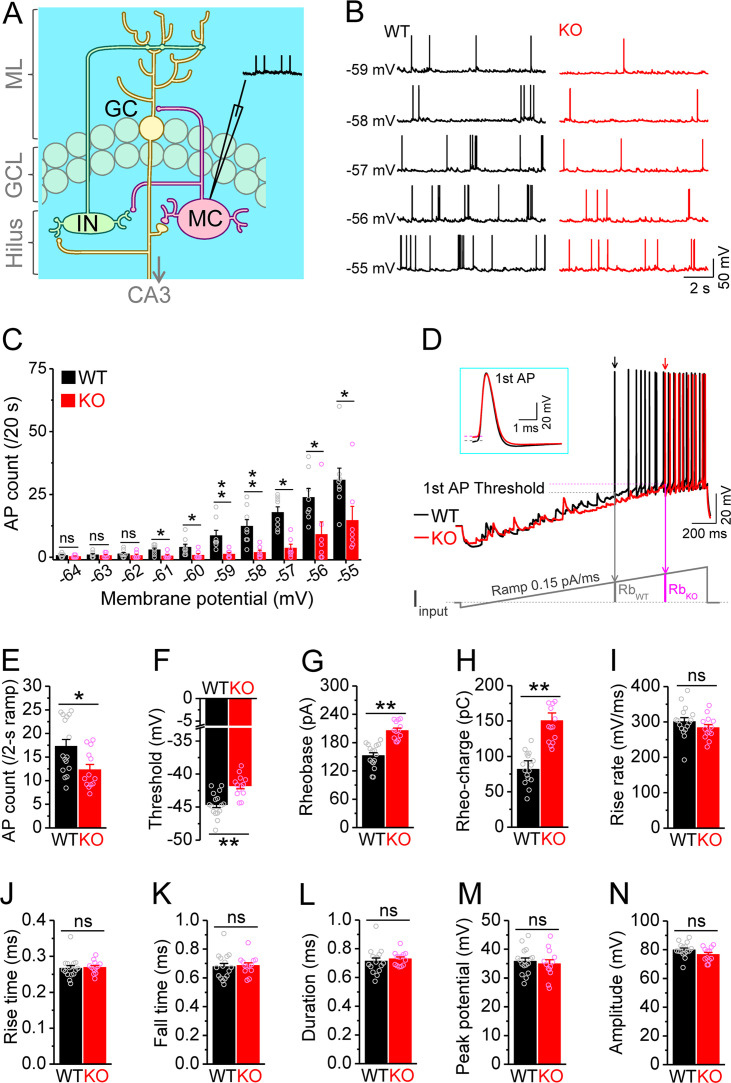
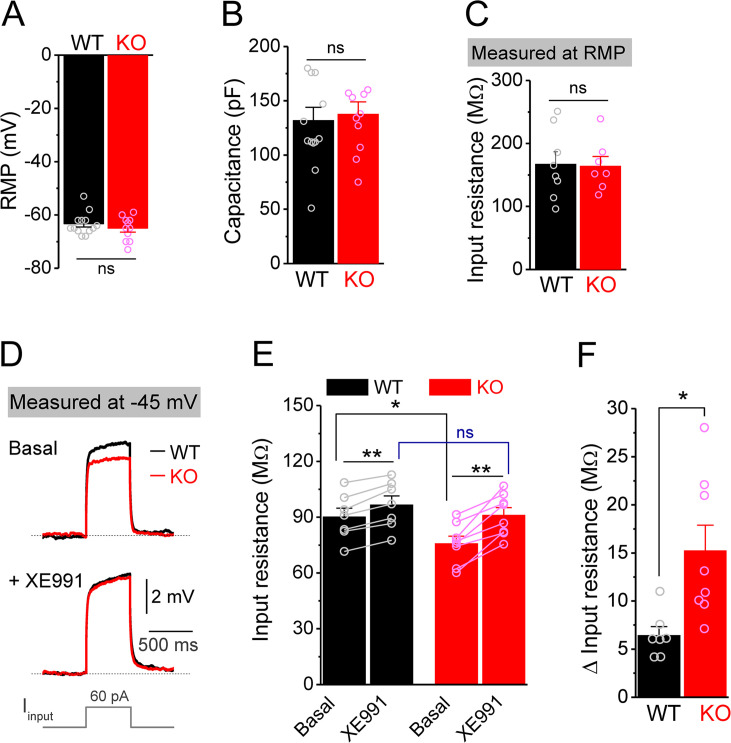
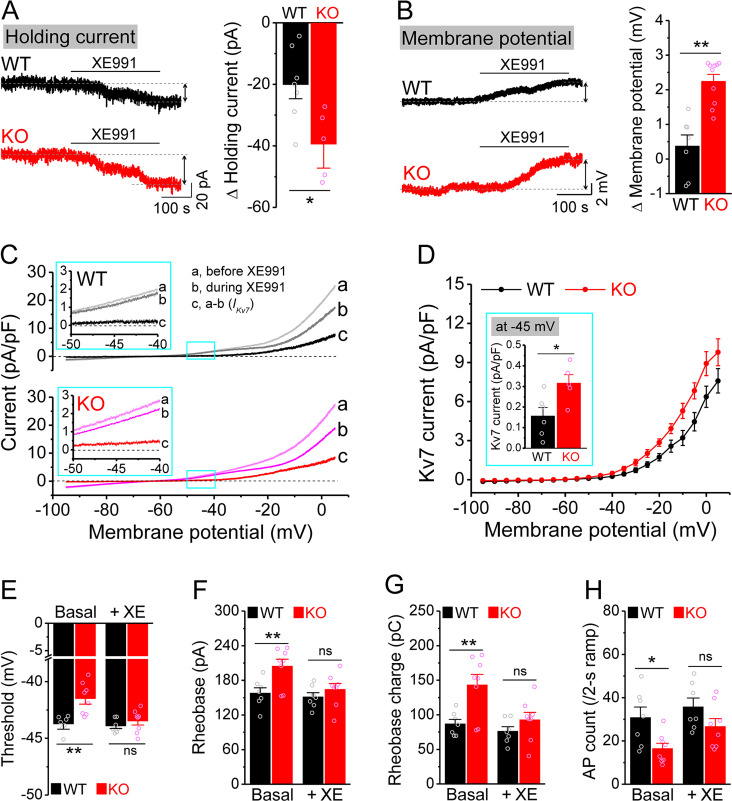
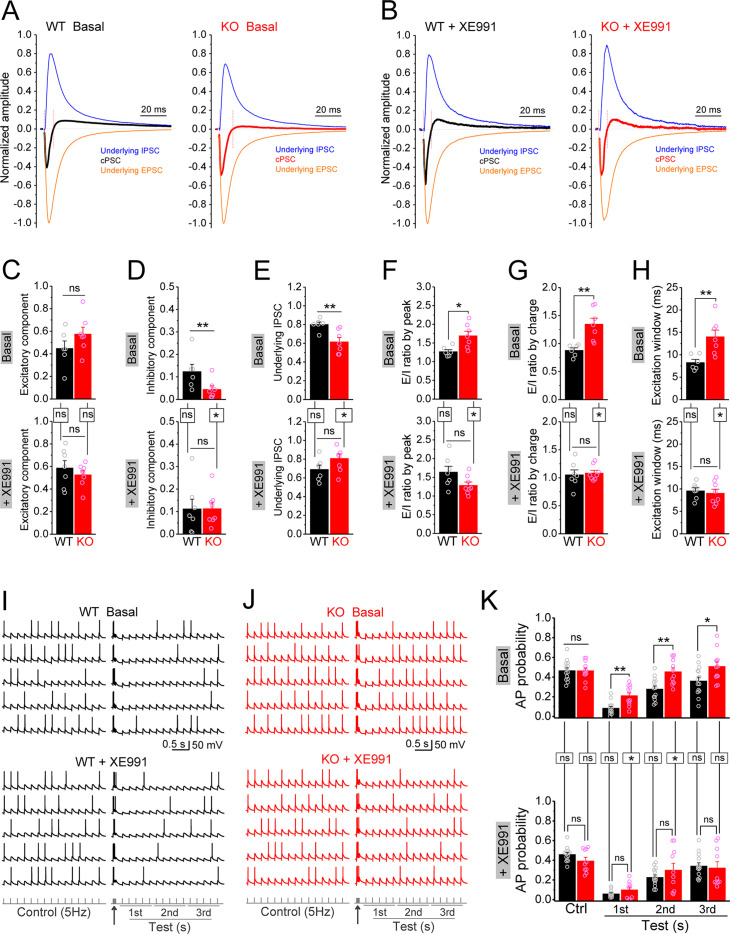
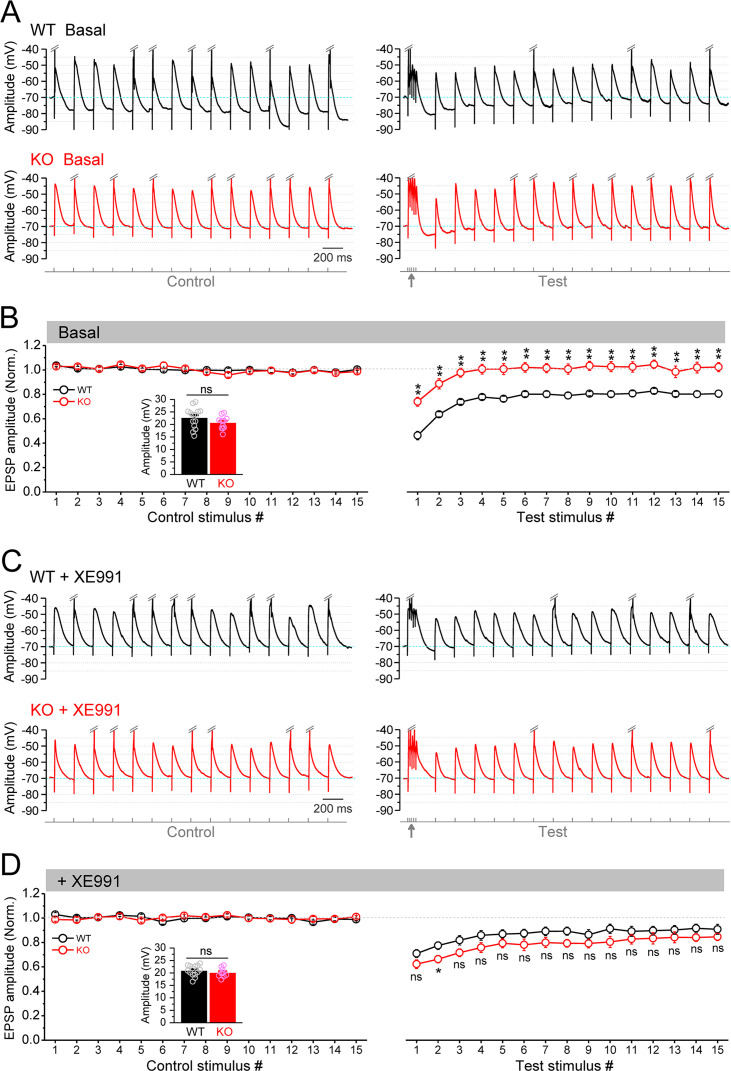
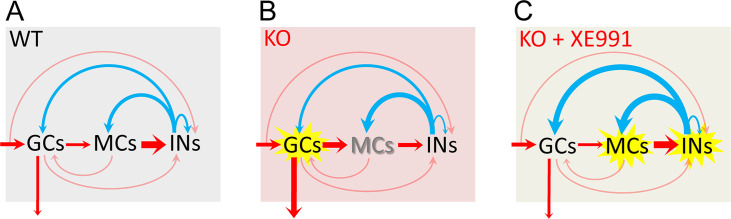
Abnormal cellular and circuit excitability is believed to drive many core phenotypes in fragile X syndrome (FXS). The dentate gyrus is a brain area performing critical computations essential for learning and memory. However, little is known about dentate circuit defects and their mechanisms in FXS. Understanding dentate circuit dysfunction in FXS has been complicated by the presence of two types of excitatory neurons, the granule cells and mossy cells. Here we report that loss of FMRP markedly decreased excitability of dentate mossy cells, a change opposite to all other known excitability defects in excitatory neurons in FXS. This mossy cell hypo-excitability is caused by increased Kv7 function in Fmr1 knockout (KO) mice. By reducing the excitatory drive onto local hilar interneurons, hypo-excitability of mossy cells results in increased excitation/inhibition ratio in granule cells and thus paradoxically leads to excessive dentate output. Circuit-wide inhibition of Kv7 channels in Fmr1 KO mice increases inhibitory drive onto granule cells and normalizes the dentate output in response to physiologically relevant theta-gamma coupling stimulation. Our study suggests that circuit-based interventions may provide a promising strategy in this disorder to bypass irreconcilable excitability defects in different cell types and restore their pathophysiological consequences at the circuit level.
Keywords: Kv7; circuit-based interventions; dentate gyrus; excitation/inhibition balance; fragile X syndrome; mossy cell; mouse; neuroscience.
© 2023, Deng et al.
Conflict of interest statement
PD, AK, VC, VK No competing interests declared
Figures
Update of
-
Circuit-based intervention corrects excessive dentate gyrus output in the Fragile X mouse model.bioRxiv [Preprint]. 2023 Nov 13:2023.09.27.559792. doi: 10.1101/2023.09.27.559792. bioRxiv. 2023. Update in: Elife. 2024 Feb 12;12:RP92563. doi: 10.7554/eLife.92563. PMID: 37808793 Free PMC article. Updated. Preprint.
References
MeSH terms
Substances
Grants and funding
LinkOut - more resources
Full Text Sources
Medical
Molecular Biology Databases
Research Materials